


A South African legal firm has launched a court application against the Road Accident Fund (RAF) for allegedly failing to pay over 430 settled claims.
The application, filed by de Broglio Attorneys, states that the affected claimants have not been paid within the RAF’s 180-day payment window.
Furthermore, some of these claims have allegedly been unresolved for over two years.
The application seeks an order to compel the RAF to provide a full explanation for each case, detailing the exact reasons for the failure to pay in every situation where a settlement agreement was reached, but payment was not made within the established timeframe.
Some of the claimants passed away before the payment was received, leaving the families of the deceased with unresolved financial issues, reported IOL.
In other cases, claimants who have yet to be paid are facing ongoing medical and rehabilitation expenses, including specialised care and home adaptations.
“These are not numbers on a spreadsheet. They are individuals whose lives have already been fundamentally changed by serious road accidents,” said Michael de Broglio, director of de Broglio Attorneys.
“Once a matter is settled or a court order is granted, there is a legitimate expectation that payment will follow within a reasonable and defined period.”
“Continued delays undermine that expectation and prolong hardship for people who should already have received their compensation.”
Government wants a new tax to pay for the RAF
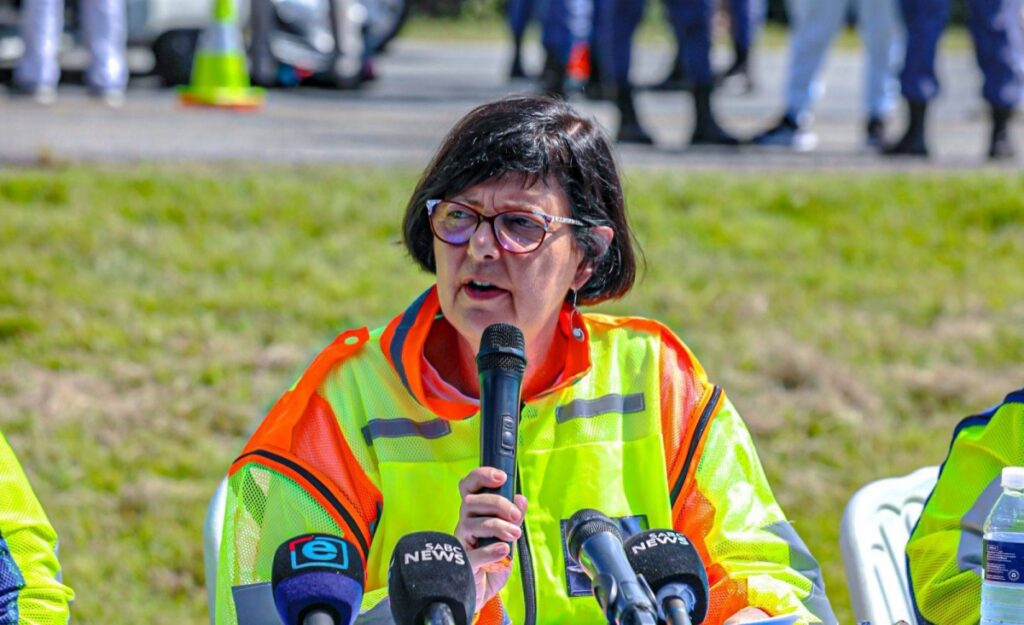
The Minister of Transport, Barbara Creecy, recently announced that her department plans to introduce a new tax for motorists renewing their car licence discs.
The tax would be introduced as a mandatory fee on vehicle registrations and licence disc renewals, and is meant to help pay for the RAF.
The RAF gets its revenue from the Road Accident Fund Levy, a tax that adds R2.25 to every litre of petrol and diesel sold in South Africa.
Creecy said that electric vehicle (EV) owners do not contribute to the RAF since they do not pay for fuel.
Therefore, a new tax must be implemented to capture revenue from all road users as EV adoption continues to grow in South Africa.
This proposal has been heavily criticised by the public, political parties, and civil action groups, who argue that motorists are already paying too much for the RAF.
The RAF receives over R45 billion per year in fuel taxes but is technically insolvent – the result of years of corruption and mismanagement.
The Democratic Alliance argued that vehicle owners are taxed enough and that the government should address core issues at the RAF to solve its financial issues instead of pouring more resources into an entity bleeding money.
“The RAF is not in crisis because motorists are not paying enough, the RAF is in crisis because years of mismanagement, corruption, waste and poor governance have left it financially crippled,” it said.
“South Africans should not be forced to foot the bill for the government’s failures.”
AfriForum highlighted that Creecy had singled out EVs as the cause of the RAF’s reduced revenue, but proposed a new tax that would apply to all vehicle owners.
“If this proposal goes ahead the way it is currently being presented, owners of fuel-powered vehicles will effectively pay twice,” he said.
“They already contribute through the fuel levy, and they would then face an extra charge when renewing their licence discs.”
It’s also important to bear in mind that EV owners pay value-added tax on electricity, while fuel sales are VAT exempt.



 Loading ...