
South Africa already a global leader in electric car adoption


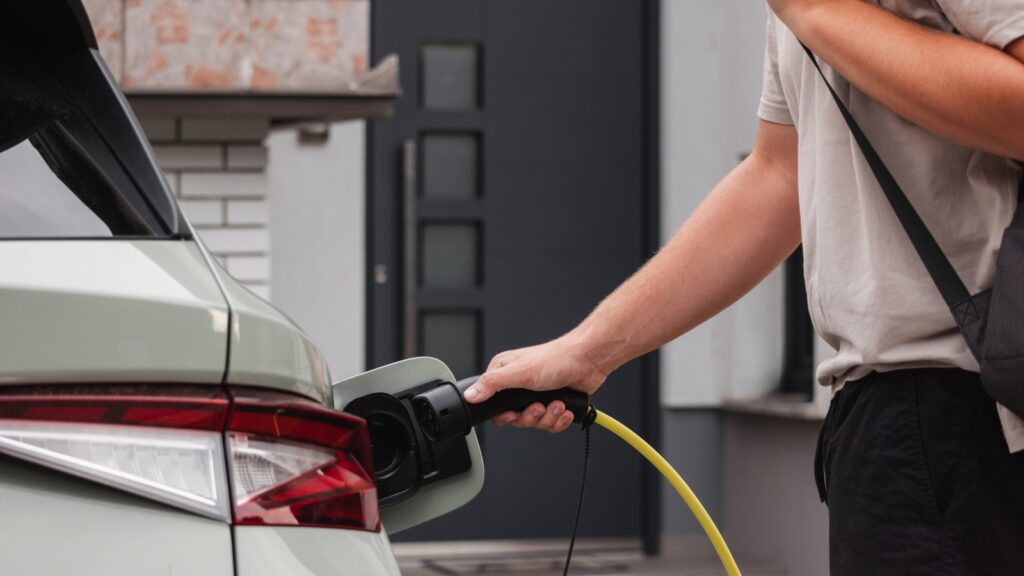
Despite local electric vehicle (EV) adoption being in its infancy, the trend is accelerating, making South Africa one of the global leaders in the new energy transition.
This is according to the International Energy Agency (IEA), which was present at the recently concluded Inaugural Fuels Industry Imbizo.
According to the IEA, South Africa ranks within the top 25 globally for the average number of electric vehicles per public charging point.
Additionally, the South African Photovoltaic Industry Association (SAPVIA) reported 12.5 gigawatts of private solar generation capacity registered in South Africa by the end of 2025.
During the imbizo held in Johannesburg, prominent local EV advocates, the Electric Mission, participated in the panel discussion, “What the New Energy Vehicle Revolution Means for the Petroleum Sector”.
The discussion included industry representatives from Toyota South Africa Motors (TSAM), Volvo Car South Africa, Chery South Africa, First National Bank (FNB) and Accenture South Africa.
Hiten Parmar, Executive Director of The Electric Mission, noted that globally, the sale of internal combustion engine (ICE) vehicles had already peaked in 2017.
“Today, more evidently, consumers are voting with their purchasing power and considering their energy security with the transition to electric vehicles,” he said.
According to the National Department of Transport (DoT), road transport contributes to 97% of transport sector emissions.
The Electric Mission noted that this is because South Africa has relied on fuel quality standards that largely align with outdated Euro 2 emissions specifications that were introduced globally in 1996.
As such, the organisation and its Executive Director are challenging South Africa’s national policy coherence, calling for a policy update.
South Africa’s growing EV parc

Parmar went on to explain that the Electric Mission’s independent data reports that South Africa’s battery electric vehicle (BEV) stocks sat at 7,940 by the end of 2025.
On top of this, a report by the IEA highlights that 30% of global car sales this year will be electric, rising to 50% by 2035, even without new policy announcements.
While South African consumers are accelerating into the early stages of EV adoption, the Electric Mission said a statement by International Energy Agency Executive Director Fatih Birol on the global energy crisis remains true.
“The vase is broken, and trust in fossil fuels will not be fully restored. Electric vehicle adoption will continue to accelerate,” he said.
Commenting on this, Parmar explained that, when it comes to the technology pathway, hybrids are a flawed intermediate choice in the transition.
He added that plug-in hybrids (PHEV) specifically are reported with as much as five times higher emissions than advertised by vehicle manufacturers.
“Under an industry transition, we must evaluate the technologies based on their emission reduction potential, versus the investments required to make them practical,” Parmar said.
Concluding, he mentioned that South Africa requires national policy coherence to make the EV transition work.
“With the long-awaited Cleaner Fuels 2 policy expected with implementation from mid-2027, this must include the framework of fuel efficiency standards,” Parmar declared.
The Electric Mission explained that as the global and local energy ecosystems evolve, South Africa has the opportunity to position itself for a sustainable, efficient, and low-carbon future.
This includes equipping stakeholders with the insights, regulatory clarity, and strategic direction needed to thrive amid technological, environmental, and policy shifts.




 Loading ...