The salary you need to afford the new Isuzu D-Max in South Africa


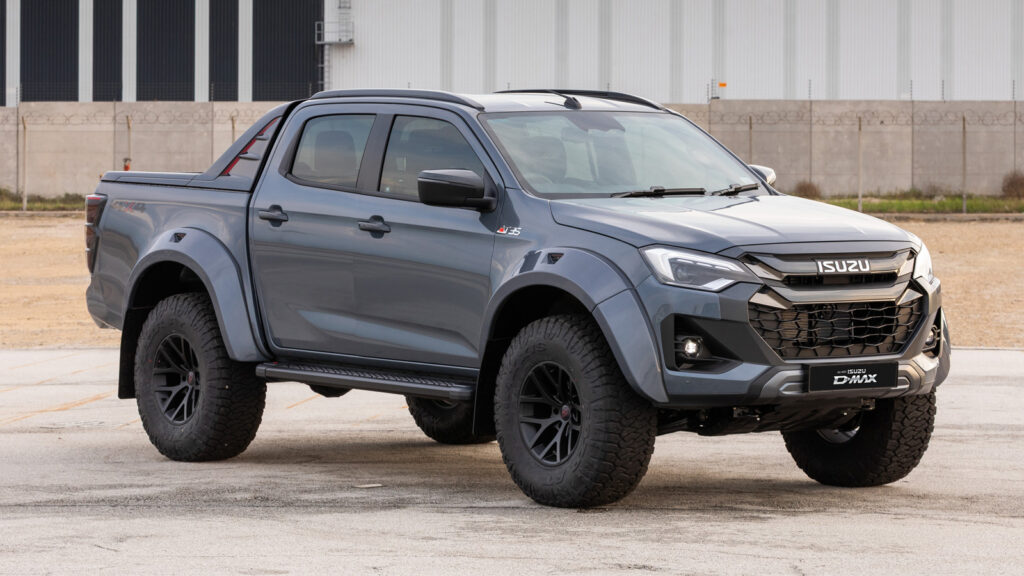
You will need to earn around R47,000 per month to afford the new Isuzu D-Max if you decide to finance it, according to a TopAuto calculation.
The D-Max, one of South Africa’s most popular vehicles, recently received a mid-life facelift, updating its look while adding new features and making significant changes to the roster.
The new bakkie series, which is built in the Eastern Cape, features seven single cab, eight extended cab, and 18 double cab derivatives, with prices ranging from R433,860 to R1,211,910.
It is still sold with either a 1.9-litre or 3.0-litre turbocharged engine, though the former has been updated to provide better performance.
The 1.9-litre produces 110kW and 350Nm, while the 3.0-litre generates 140kW and 450Nm.
Depending on the model, the D-Max uses either a six-speed manual or six-speed automatic gearbox. Buyers also have a choice of rear-wheel-drive and four-wheel-drive configurations.
Fuel consumption works out to between 7.0l/100km to 8.1l/100km.
Standard features on the new pickup start with new LED headlights and daytime running lights, 17-inch rims, manual air conditioning, a 4.2-inch TFT instrument cluster, and an 8-inch infotainment screen with wireless Apple CarPlay and Android Auto.
The D-Max also comes standard with ABS, Electronic Stability Control with Traction Control, Hill Start Assist, Electronic Brake Force Distribution, Brake Override Accelerator, and a minimum of dual front airbags.
The LS grade then adds 17-inch alloy rims, rain-sensing wipers, automatic headlights, lumbar support for the front seats, and front and rear USB Type-C ports.
The next trim level, the X-Rider, includes exclusive exterior details such as red decals, a redesigned sports bar, and X-Rider badges.
The interior has been given similar treatment, as you’ll find red accents on the dash and gearshift, black leather seats with red stitching and an X badge embroidered on the headrests, and a 7-inch driver display with X decorations.
Moving on, the LSE trim includes 18-inch alloy wheels, a new 9-inch touchscreen with two dials and five touch switches, heated seats, and paddle shifters on the steering wheel for the automatic versions.
The range-topping V-Cross has adaptive cruise control, traffic sign recognition, forward collision warning, autonomous emergency braking, turn assist, lane departure warning, emergency lane keeping, and blind spot detection.
Finally, there’s the halo-model AT35 developed by Arctic Trucks, which features specially developed 17-inch alloy rims and 35-inch all-terrain BF Goodrich tyres.
It also has a specially-developed lift kit that raises the ride height, ground clearance, water-wading depth, approach and departure angles, and break-over angle.
On top of this, the bakkie has AT35 side steps and mud flaps, a ResQ puncture repair kit, an 18-inch spare wheel, and exclusive Arctic Trucks branding for the gearshift, headrests, and floor mats.
Each purchase comes with a 5-year/120,000km warranty with roadside assistance, and a 6-year/90,000km service plan.
What you need to earn

We can use the following formula to work out the monthly payments on the new Toyota:
- Car price – R433,860/R1,211,910
- Payment term – 60 months (5 years)
- Interest – 10.50%
- Deposit – 0%
- Balloon – No balloon payment
- Extras – No optional extras
According to this, you’ll need to pay at least R9,420 per month for the cheapest single cab, and up to R26,144 per month for the range-topping AT35.
Financial experts then recommend that you do not spend more than 20% of your gross monthly salary on vehicle payments.
This means you’ll need to earn anywhere from R47,100 per month to R130,720 per month to afford the new D-Max on a finance plan, assuming you don’t pay a deposit.
In the latter case, a 20% deposit of R242,382 would reduce the instalments to R20,934 per month, requiring a household income of R104,670.
Note that this figure does not account for insurance, fuel, and maintenance, which must all be factored into your budget.



 Loading ...