Chery has officially acquired Nissan’s factory in South Africa, setting the company up for an ambitious roadmap that includes at least five new locally built cars.
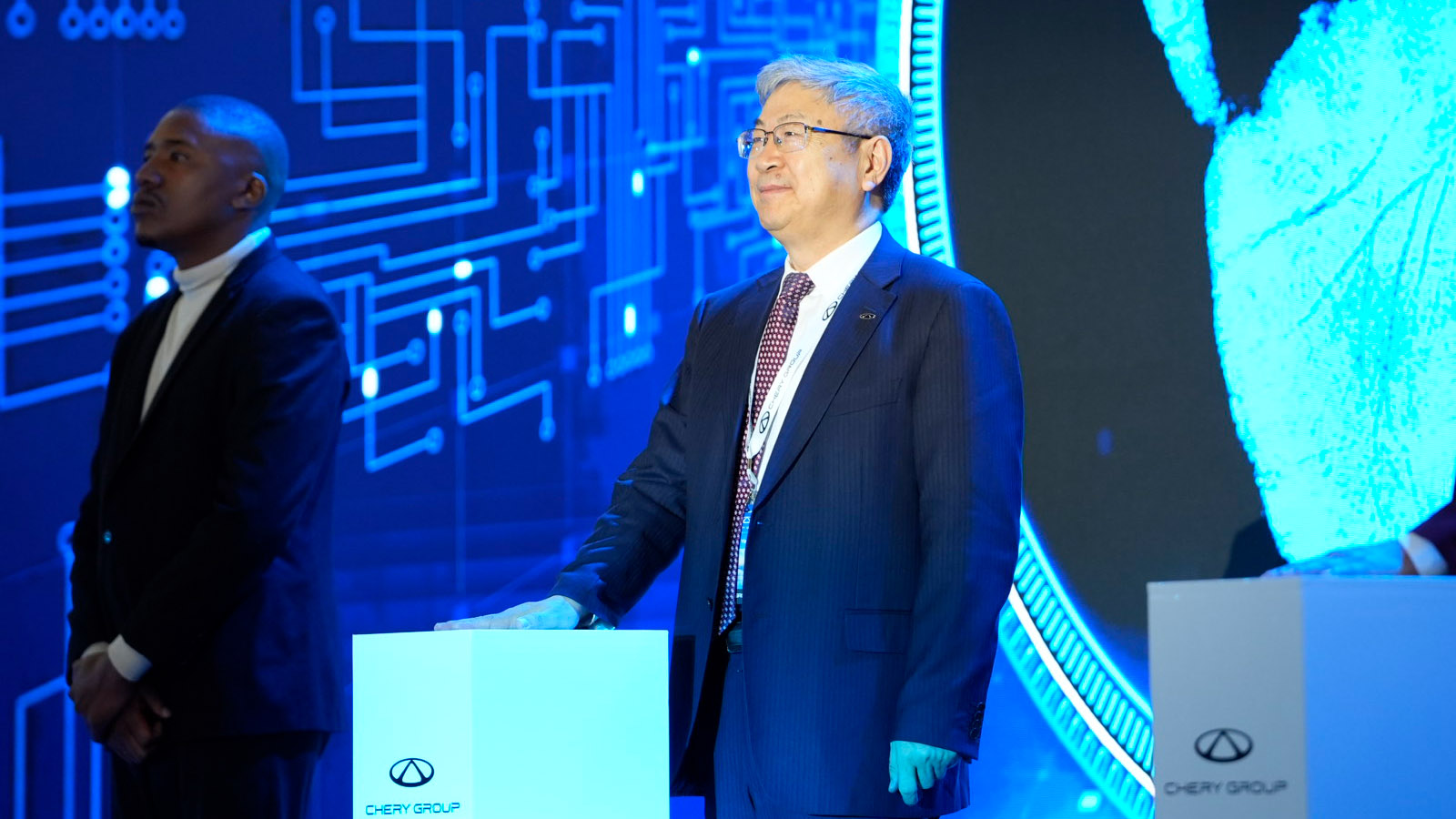
TopAuto attended the official opening of Chery’s manufacturing facility on Friday, 3 July 2026, where we found out more about what the Chinese carmaker has in store for our market.
For those who are not aware, back in January, Nissan Africa announced that it would sell its production plant and stamping facility in Rosslyn, Gauteng, due to financial difficulties.
Nissan has been in dire financial straits for years and has been shutting down factories around the world, including two in its home country of Japan. The company has explored mergers with other carmakers, such as Honda, but these plans fell through.
In South Africa, Nissan decided to sell its plant, which has produced bakkies such as the NP300 Hardbody, NP200, and Navara, to the Chery Group, ensuring the site and its staff would continue to operate.
“Subject to the fulfilment of certain conditions, including regulatory approvals, Chery SA will purchase the land, buildings and associated assets of the Nissan facilities, including of its nearby stamping plant, in mid-2026,” Nissan said at the time.
This process has officially started, as Chery held an opening ceremony last Friday and is now set to begin on the extensive retooling process required to prepare the facilities for the new vehicles it will produce.
“We gather to celebrate a new chapter for Chery and another milestone in South Africa’s industrial development. This moment is a living testament to the confidence in our nation’s future, reinforcing the optimism that continues to define our development path,” said Paul Mashatile, Deputy President of the Republic of South Africa, who delivered the keynote address on Friday.
The first units are expected to roll off the assembly line in mid-2027. Chery said that during the “ramp-up period” (Q3 and Q4 2027), the planned production total will be 15,000 units.
Once the site is running at full capacity, the company aims to produce 50,000 units per annum.
Importantly, Chery is retaining all 692 existing former Nissan employees to ensure operational continuity. It added that it expects to create 3,000 new direct jobs at the site and thousands more indirectly at various points in the local supply chain.
“The automotive industry remains one of South Africa’s most important economic sectors. We truly welcome you Chery, and your long-term vision and commitment to manufacturing excellence, innovation, localisation, skills development and sustainability,” said Gauteng Premier, Panyaza Lesufi, who spoke at the event.
“We appreciate the succession of nearly 700 employees who carry with them decades of experience. This is a firm commitment that you are here to stay.”
Chery has launched an extensive localisation programme, surveying Tier-1 suppliers as it works towards achieving its localisation targets by 2028.
The automaker said its long-term vision is to develop its South African plant into a comprehensive automotive space encompassing R&D, supply chain operations, and skills development, evolving into an automotive and industrial ecosystem that will serve as its manufacturing hub for the continent.
All of this is in service of the brand’s goal of surpassing 100,000 annual sales in South Africa.
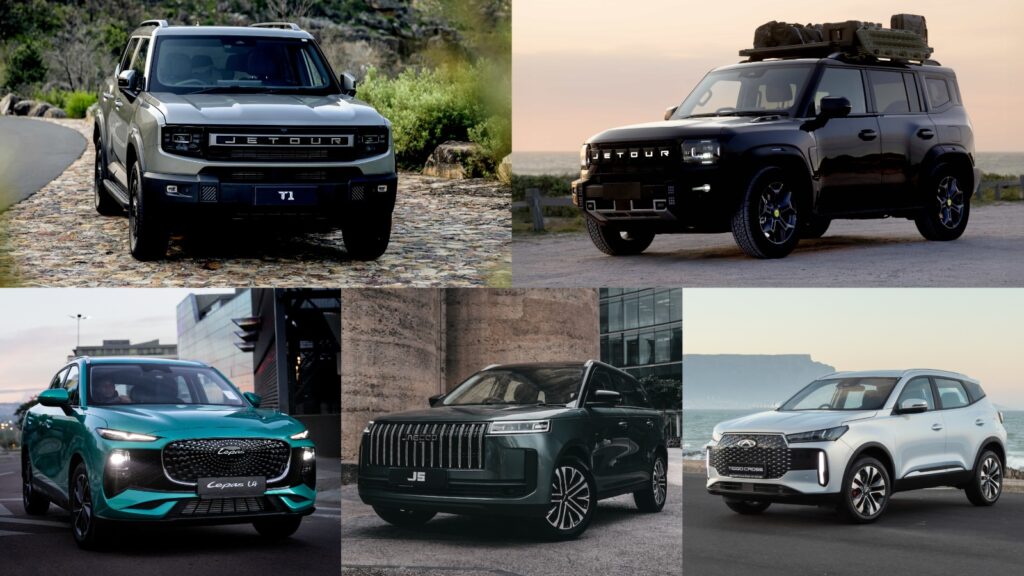
5 new locally-made Chinese cars for South Africa
The Rosslyn plant will not be limited to Chery vehicles, as the company intends to use the site to manufacture cars across its family of brands.
Three vehicles have been officially confirmed thus far, though we received word that two more have also been approved.
First up is the Jetour T-Series, comprising both the T1 and T2 Adventure SUVs.
Back in April, Jetour announced that it would produce both SUVs at the newly-acquired factory to capitalize on the success of the T-Series.
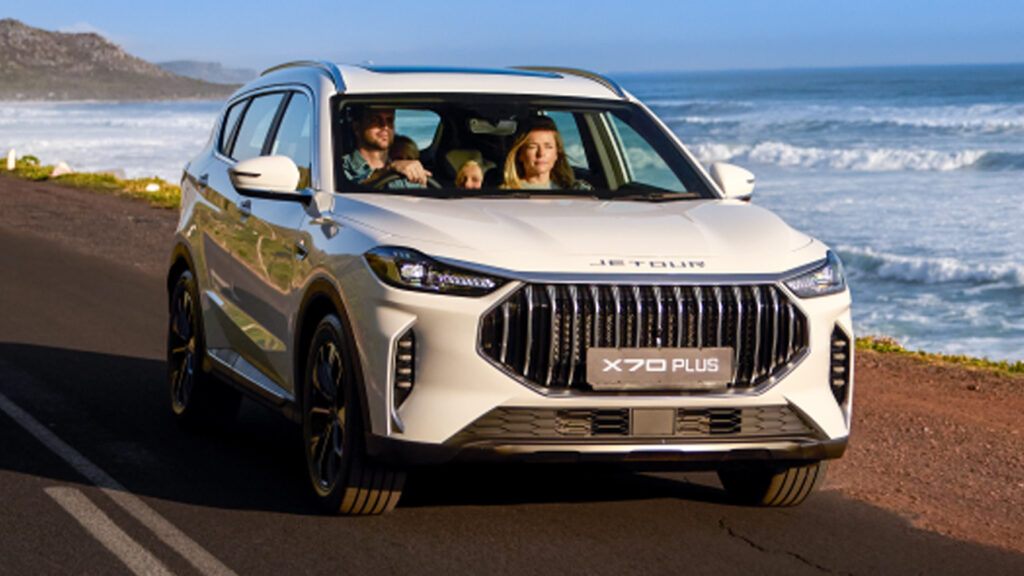
Jetour first launched in South Africa in 2024 with two urban-focused SUVs, the Dashing and the X70 Plus, which were moderately popular.
However, the brand’s sales skyrocketed with the introduction of the T1 and T2, firmly securing Jetour’s spot as a top 10 best-selling carmaker in South Africa.
With this in mind, it’s not surprising to see that the Chery Group wants to leverage the success of the T-Series by building it in South Africa.
“The increasingly popular T-Series, launched in South Africa in October last year, will begin local production at the plant from next year,” Jetour said in an official statement.
The other car that has received an official announcement is the Jaecoo J5, which was confirmed on Friday, 3 July.
“Omoda & Jaecoo South Africa has confirmed that the Jaecoo J5 will form part of the core production line-up at Chery Group’s first South African manufacturing plant, following the official groundbreaking of the facility,” it said in a press release.
The J5 is the brand’s entry-level model, sitting alongside the Omoda C5 as one of the most affordable crossovers in the country.
Notably, the J5 will be produced in both internal combustion engine (ICE) and new-energy vehicle (NEV) forms.
The latter is important since it represents a considerably larger investment on the Chery Group’s part, as NEV models require additional skills, components, and equipment to produce.
Right now, the J5 is only available with a petrol engine, but the automaker plans to introduce the J5 SHS (Super Hybrid System) and BEV (Battery Electric Vehicle) later this year.
Jaecoo has yet to clarify whether it will build both the hybrid and electric versions in South Africa.
The T1, T2, and J5 are not the only vehicles we can expect, however, as Chery and Lepas are also set to build their cars at Rosslyn.
We learned that the company also plans to produce the Chery Tiggo Cross and Lepas L4 at the factory.
Like the J5, the Tiggo Cross and L4 are the entry-level models for their respective brands, and both are very popular, so producing them locally seems like a logical next step.
The only brand seemingly off the cards for now is Omoda, as the C5 hasn’t been approved for the site.
However, the representative we chatted to mentioned that the C5 or the upcoming C4 could be on the cards for future production, provided they are popular enough to justify the necessary investment.
Similarly, Chery’s senior management hinted that something like the upcoming Himla or KP31 bakkie could be added further down the line if they gain sufficient traction.
The main takeaway from all of this is that the Chery Group has big plans for South Africa and is keeping an open mind about introducing new models to the assembly line, but it remains to be seen just how expansive Chery’s locally-built roster will eventually become.



 Loading ...