


VW’s labour leaders haven’t been looped in on plans to cut as many as 100,000 positions in Germany to boost competitiveness, laying bare governance tensions at Europe’s biggest carmaker.
While top labour representative Daniela Cavallo has been part of VW’s broader renewed attempts to reduce costs, the discussions didn’t detail specific job reduction targets, the works council and IG Metall union said Monday in an internal document published on VW’s intranet and seen by Bloomberg News.
As part of the talks on efficiencies, top management late last week responded to an extensive list of questions from worker representatives.
The answers didn’t indicate plans to shrink the workforce beyond a previously agreed target of shedding 50,000 positions, the labour leaders said.
Manager Magazin last week reported that VW could double planned job cuts to 100,000 and close four plants in Germany, citing meetings among managers.
Major strategic decisions at VW need approval from its supervisory board, where labour representatives normally hold half the seats.
Currently, they occupy a majority after independent board member Susanne Wiegand didn’t stand for reelection.
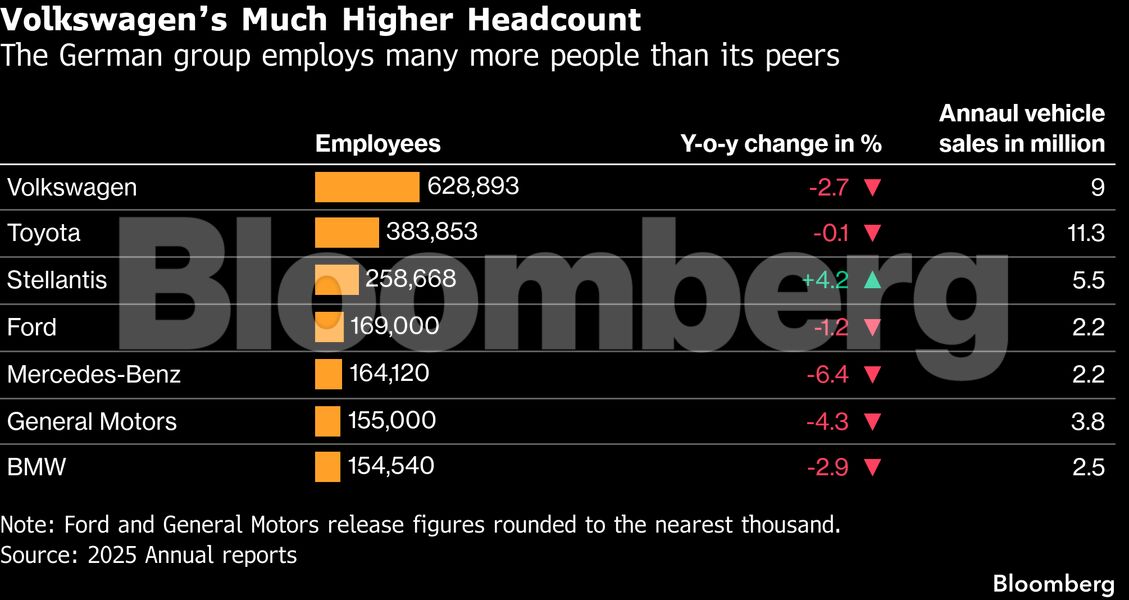
During separate previous committee meetings between top management and works council representatives, “management had indicated that the previously agreed cuts wouldn’t be sufficient, in its view,” according to the statement.
“But there were no indications of the size of such reductions.”
VW is entering another period of upheaval after Chief Executive Officer Oliver Blume and other executives signalled internally that the group remains uncompetitive in key areas.
The company’s supervisory board is due to meet on 9 July.
The clash shows how difficult it will be for Blume to push through deeper cuts at Volkswagen.
Labour leaders wield significant influence, Lower Saxony often sides with workers, and the VW law gives the state a veto over key decisions while making it harder to close major German plants.





 Loading ...
-2026.10.webp)



-2026.10.webp)