
7 car brands that receive R40 billion from South African taxpayers every year


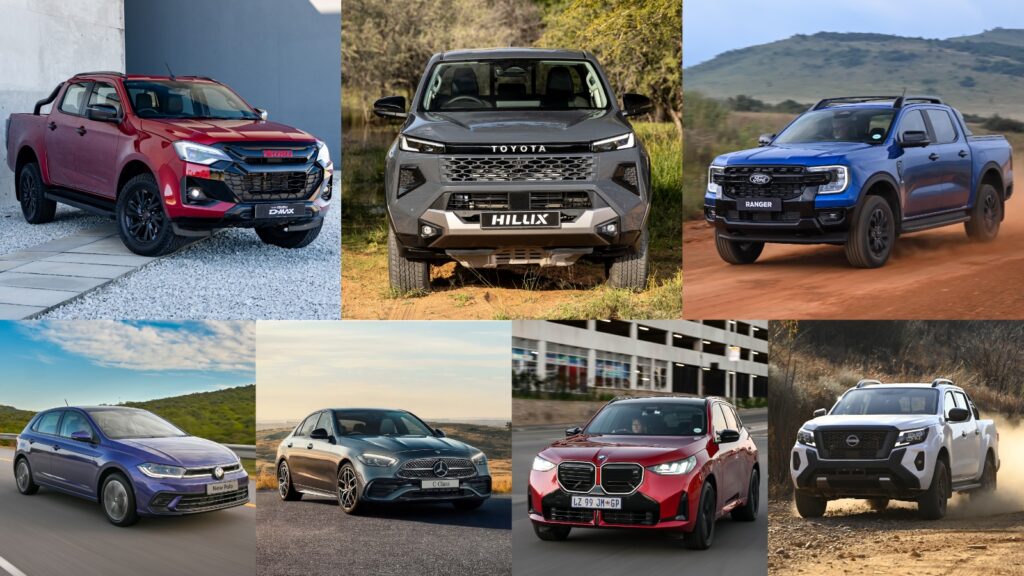
The South African car industry is supported by an incentive programme worth more than R40 billion per year.
This system currently supports seven major car brands through tax breaks, rebates, and grants designed to keep local production competitive.
Right now, the incentive programme supports BMW, Ford, Isuzu, Mercedes-Benz, Nissan, Toyota and Volkswagen, all of which have factories in South Africa.
However, this list is about to change, as Chery is set to take Nissan’s place within the incentive programme.
Earlier this year, Nissan announced that it would sell its production plant in Rosslyn, which assembles the Navara bakkie, to the Chinese car brand Chery.
The takeover process has officially begun, as Chery held the official opening ceremony for its new factory in Rosslyn on Friday, 3 July 2026.
According to the founder and CEO of XA Global Trade Advisors, Donald MacKay, Chery is set to benefit from South Africa’s automotive support systems.
The country’s manufacturing incentives are provided by the Automotive Production and Development Programme (APDP2), which supports large-scale vehicle production and exports.
The carmakers do not receive an annual government paycheck; rather, they benefit from customs duty rebates, tax incentives, and investment grants.
That being said, the support comes at a cost to the state in the form of lost tax revenue and direct funding, meaning that taxpayers are ultimately the ones paying for it all.
In an interview with BizNews, MacKay said that the subsidy programme is at the heart of manufacturing cars in South Africa.
“Put differently, if you took away the subsidy, we wouldn’t make cars in South Africa.”
The largest contribution comes in the form of customs duty rebates and exemptions. South African manufacturers earn credits that allow them to import other vehicles and components without paying the standard customs duties.
Carmakers also qualify for the Volume Assembly Localisation Allowance, which rewards high production volumes and greater use of locally produced components.
Additionally, there are production incentives that provide additional credits based on the value manufacturers add within South Africa.
However, the companies also receive direct cash grants from the Automotive Investment Scheme.
The government contributes up to 25% of qualifying investments in new factories, machinery, and equipment, which increases to 35% for new-energy vehicle component projects for hybrid and electric models.
South Africa’s incentive programme is unsustainable

The Department of Trade, Industry and Competition revealed that the scheme has paid out more than R20.7 billion since its launch, attracting over R76 billion in private investment.
However, carmakers must meet strict conditions to qualify for the programme. This includes production thresholds, employment targets, and a minimum of a Level 4 Broad-Based Black Economic Empowerment compliance.
If a company is unable to meet the ownership requirements, it can instead contribute 2.75% of its annual turnover over 10 years to the Automotive Industry Transformation Fund, which supports black-owned suppliers.
MacKay explained that Chery’s acquisition of Nissan’s factory in Gauteng was closely linked to the availability of these incentives.
“Chery, just like all of the other producers, is going to take full advantage of that programme. Otherwise, they would never have done the deal to purchase the Nissan factory.”
He said it was difficult to calculate the exact value of the incentives each manufacturer receives because they are comprised of several mechanisms, rather than direct payments. However, he warned that the cost of maintaining the incentive programme was enormous.
“The consumer in South Africa effectively funds the subsidies,” MacKay said.
“We do that in a couple of ways. The one is we pay a fairly significant premium on our cars because they are made locally or even because they are imported by a local manufacturer.”
“In the last Treasury set of numbers, we were over R40 billion a year if we combine all of the different types of subsidies for automotive, which is effectively going to seven companies,” he said.
This is equivalent to around three percentage points of VAT, illustrating the scale of the government’s support for the auto sector.
Mackay explained that, while it was good to keep local factories open, South Africa has become less attractive for global manufacturing because of infrastructure failures like load-shedding, and logistic problems like the collapse of its rail network and sluggish ports.
“The programme was never meant to be evergreen, whereas now it looks like it will never ever end. We’re using subsidies, tariffs, all of these things as an alternative to fixing the basics. And that simply is not sustainable,” he said.



 Loading ...
-2026.09.webp)