Uber shutting down major service after 12 years in South Africa


Uber is shutting down its low-cost UberX ride option, ending a service that has been available in South Africa for 12 years.
UberX was originally introduced in Cape Town all the way back in June 2014, one year after it started operating in South Africa. Johannesburg received the option in August that year.
However, the ride-hailing platform recently informed consumers that the UberX ride type will be discontinued in South Africa next month.
This is an update on a previous notice sent to users in Johannesburg in May 2026, informing them that UberX would be phased out of their area on 1 September 2026.
However, in a new notice sent to customers on Monday, 10 August, Uber explained that it was ending its “trusty go-to product” in favour of a streamlined ride lineup.
Starting next month, Uber will offer the following four ride options in South Africa:
- Uber Go — The cheapest option, intended for short trips around town in small cars
- Uber Comfort — Newer vehicle models with more spacious cabins, with an ability to request a quiet drive
- Uber Black — Features top-rated drivers with luxury cars and an extended wait time
- Uber Reserve — Allows users to book trips up to 90 days in advance at a fixed price and an on-time pickup guarantee
UberX was previously described as the platform’s flagship service. It served as an everyday ride-hailing option at affordable prices.
“This new service means that you can now enjoy the seamless, efficiency, and industry-leading safety features of Uber at an extremely affordable price,” the company previously said when the service was introduced in 2014.
Concerns over e-hailing service quality in South Africa

The South African e-hailing industry has increasingly focused on budget offerings to cater towards lower-income users in recent years, according to MyBroadband.
This has led to concerns about a “race to the bottom” among e-hailing operators, with cost-cutting coming at the expense of the service’s quality.
Uber, in particular, has faced criticisms that the platform has deteriorated since it launched in South Africa over a decade ago, with poorly maintained vehicles and unreliable drivers.
During the launch of UberX in 2014, the company stated that a big part of its local strategy was to promote entrepreneurship and job creation.
“Traditionally, the metered taxi industry is one where drivers are salaried employees working specified shifts, without much freedom or flexibility,” it said.
“We partner with hundreds of independent business owners, who now have the flexibility to work as much and whenever they want. Drivers make far more – and with greater flexibility – than any other option available to them.”
However, over the years, the e-hailing industry has repeatedly come into conflict with the minibus taxi industry, which has accused the former of stealing their customers.
This has led to violent altercations where e-hailing drivers have been targeted, often with their cars being burned.
The Department of Transport has since introduced new operating regulations for e-hailing services in an attempt to address some of these issues.
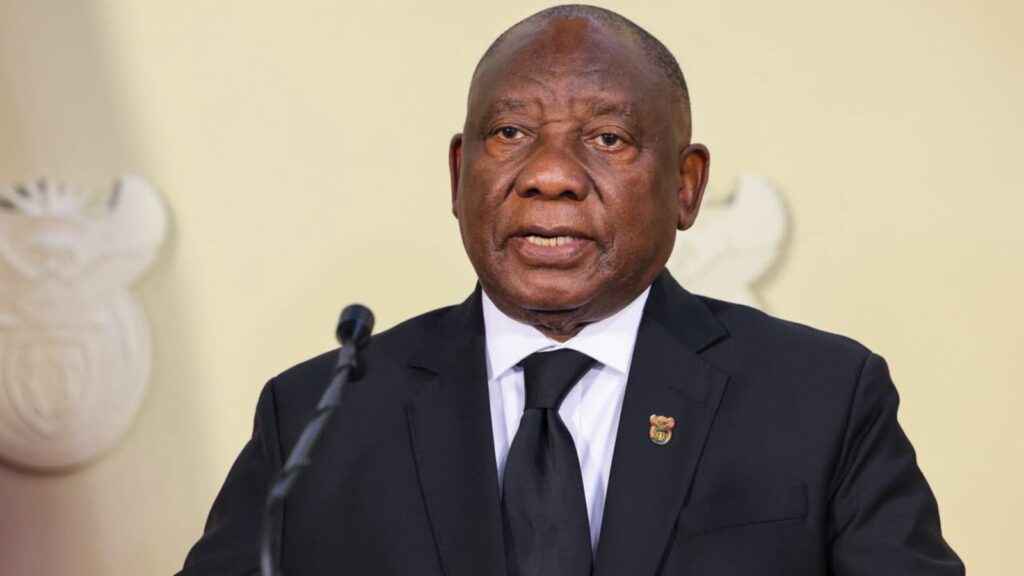
President Cyril Ramaphosa recently signed the National Land Transport Amendment Act (NLTAA), Act 23 of 2023, into law.
This introduced new regulations for drivers on platforms like Bolt, Uber, and inDrive, such as:
- Registration of e-hailing platform providers/ companies with the National Public Transport Regulator (NPTR), for compliance with South African Company laws and operational conditions such as a local physical address where queries or litigation can be submitted/ served;
- Introduction of mandatory operating licenses (OL) for e-hailing services;
- Strict driver vetting;
- Vehicle distinguishing marks;
- Compulsory in-vehicle panic buttons and physical panic buttons linked to emergency response and law enforcement agencies;
- Penalties for App companies that allow drivers to operate using their App without the requisite OL and drivers who operate without an OL.
Transport Minister Barbara Creecy explained that the new framework is intended to bring about stability between the e-hailing and minibus taxi, and metered taxi industries.
“It benefits South African drivers by recognising them as formal public transport operators or drivers, legalising their status,” she said.
“Legitimising the profession means the subsector can benefit from basic conditions of employment and comply with labour and employment laws.”




 Loading ...

-2026.10.webp)