South Africa’s biggest transport company looking to private partners to maintain railways


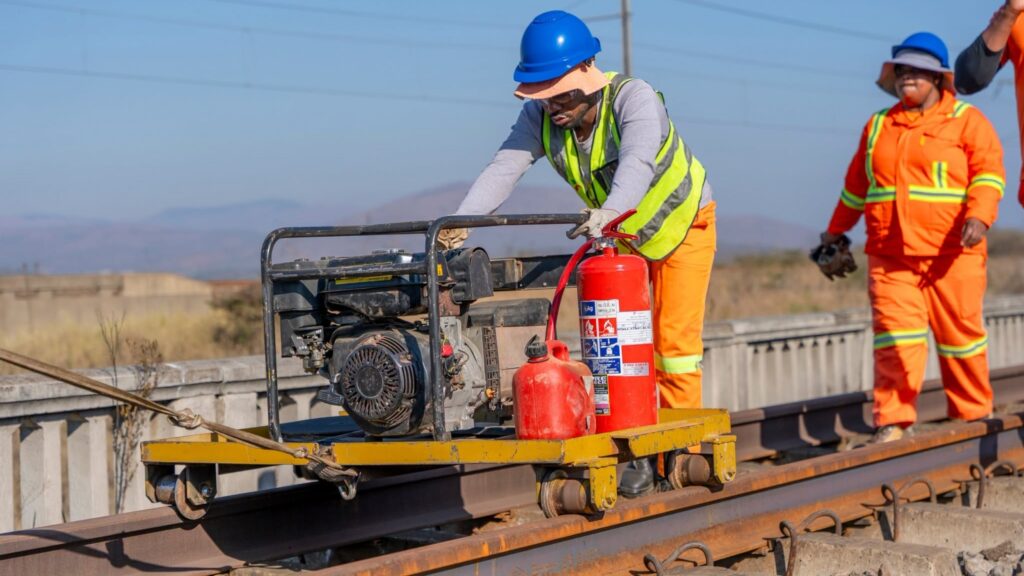
State-owned transport and logistics company Transnet is ramping up efforts to expand private participation in South Africa’s rail network and is seeking new partners.
The government has published a Request for Information (RFI) through the Transnet Rail Infrastructure Manager (TRIM), seeking partners to refurbish and operate South Africa’s B-Network railway lines.
These comprise 9,098km of low-density secondary lines, including branch and feeder routes, and are managed by TRIM as part of its responsibility to develop South Africa’s rail infrastructure network.
Most of the B-Network branch lines also connect to the core rail network, which facilitates the movement of cargo for export, consumption, or destination packaging, said TRIM.
Due to their low volumes, small-scale operations and distinct infrastructure profiles, these lines have also attracted interest for passenger and tourism services.
“The introduction of Private Sector Participation (PSP) opportunities on the B-Network is a critical step in reforming South Africa’s freight logistics system,” said TRIM Chief Executive Moshe Motlohi.
“By inviting market input, TRIM aims to design procurement programmes that are responsive to industry demand and aligned with national policy objectives under the White Paper on National Rail Policy and the Economic Regulation of Transport Act.”
Any information gathered through this RFI will assist the manager in refining and designing one or more procurement programmes on the national rail network to improve performance.
It also builds on Transnet’s progress in opening South Africa’s rail network to 11 new Train Operating Companies, through successful Rail Access Agreements.
According to TRIM, this milestone marked the beginning of open access in South Africa’s rail sector.
“The latest RFI builds on this momentum by extending opportunities to the B-Network, ensuring that feeder and branch lines also benefit from innovation and investment opportunities,” it added.
Further privatisation of Transnet required

Despite Transnet’s commitment to privatising its railway lines and allowing the 11 approved private companies to operate on its freight rail network, the Democratic Alliance has called for greater effort.
Earlier this year, the party said it would write to Transport Minister Barbara Creecy to encourage her to pursue full concessioning of key freight rail corridors to private operators.
The DA’s Deputy Spokesperson on Transport, S’bongiseni Vilakazi, said that Transnet’s interventions do not go far enough and are not implemented fast enough to address South Africa’s logistics crisis.
He added that allowing private train operators onto Transnet’s old and failing infrastructure is not the same as introducing genuine competition into the rail sector.
“South Africa requires privately concessioned management, maintenance, and operation of freight rail lines themselves; not merely limited access to a collapsing state-run network,” Vilakazi said.
President Cyril Ramaphosa has repeatedly acknowledged the need for faster privatisation of the local freight rail network.
According to the DA, Transnet is maintaining its dominant position and perpetuating the delays, inefficiencies, capacity constraints, and operational failures, costing the South African economy billions each year.
It added that every month of delay extends lost export earnings, reduces economic growth, and lowers tax revenues for the fiscus.
Greater privatisation and private-sector participation could provide the capital investment, technical expertise, and operational efficiencies to counter the losses.
The DA declared that Transnet was being kept afloat by the fiscus, including government guarantees that amount to nearly R100 billion in the past year alone.
Despite this funding, rehabilitation of critical export corridors, including the Northern Corridor and Iron Ore lines, continues to rely on state bailouts instead of private-sector partners.
“South African exporters already face an increasingly difficult global trading environment. We cannot continue creating additional domestic obstacles through failing logistics infrastructure,” noted Vilakazi.




 Loading ...