


South Africa is losing bus and truck drivers to European companies that offer better working conditions for better pay.
This comes as countries across the European Union are experiencing a shortage of skilled heavy-duty vehicle operators, with many now running employment drives to find new workers in other countries.
According to the International Road Transport Union (IRU), the EU has an estimated labour shortage of 500,000 drivers across its road sector, largely due to an ageing workforce and a lack of new, local applicants.
Because of this, transport companies in the EU are now scouting for qualified drivers in other countries, with some offering accommodation and visa sponsorships.
The IRU noted that there is a growing demand for skilled drivers and the EU has acknowledged that its domestic workforce alone cannot meet the demand.
Consequently, employers see it as necessary to manage the legal migration of workers from third countries to address the labour shortage.
The union conducted a study across 23 countries, comparing the skills and certificate requirements for drivers against the minimum requirements needed to operate in the EU.
This included South Africa, which was flagged as a potential recruitment country for EU transport companies.
One of the main drivers of this recruitment push has been Dublin Bus, a state-owned company in the Republic of Ireland, which has recruited 93 South African bus drivers to date.
A report by TimesLive found that Dublin Bus has hired a total of 4,650 from across 90 countries, most of which are bus drivers.
Recruits are required to finish a six-week professional driving training course before they can start operating. The intake of South African drivers has been made possible thanks to a licence exchange between South Africa and Ireland.
South Africans who hold a Code 14 driver’s licence can exchange it for an Irish Category C licence for trucks, or a Category D licence for buses.
Drivers who have relocated to Ireland have reported much higher salaries and better working conditions, as there are limits on how many hours they can operate per week.
They are not allowed to work more than 9 hours per day and must take a 45-minute break for every four hours of driving. They are also not allowed to work every second Saturday.
Safety is much better in the EU
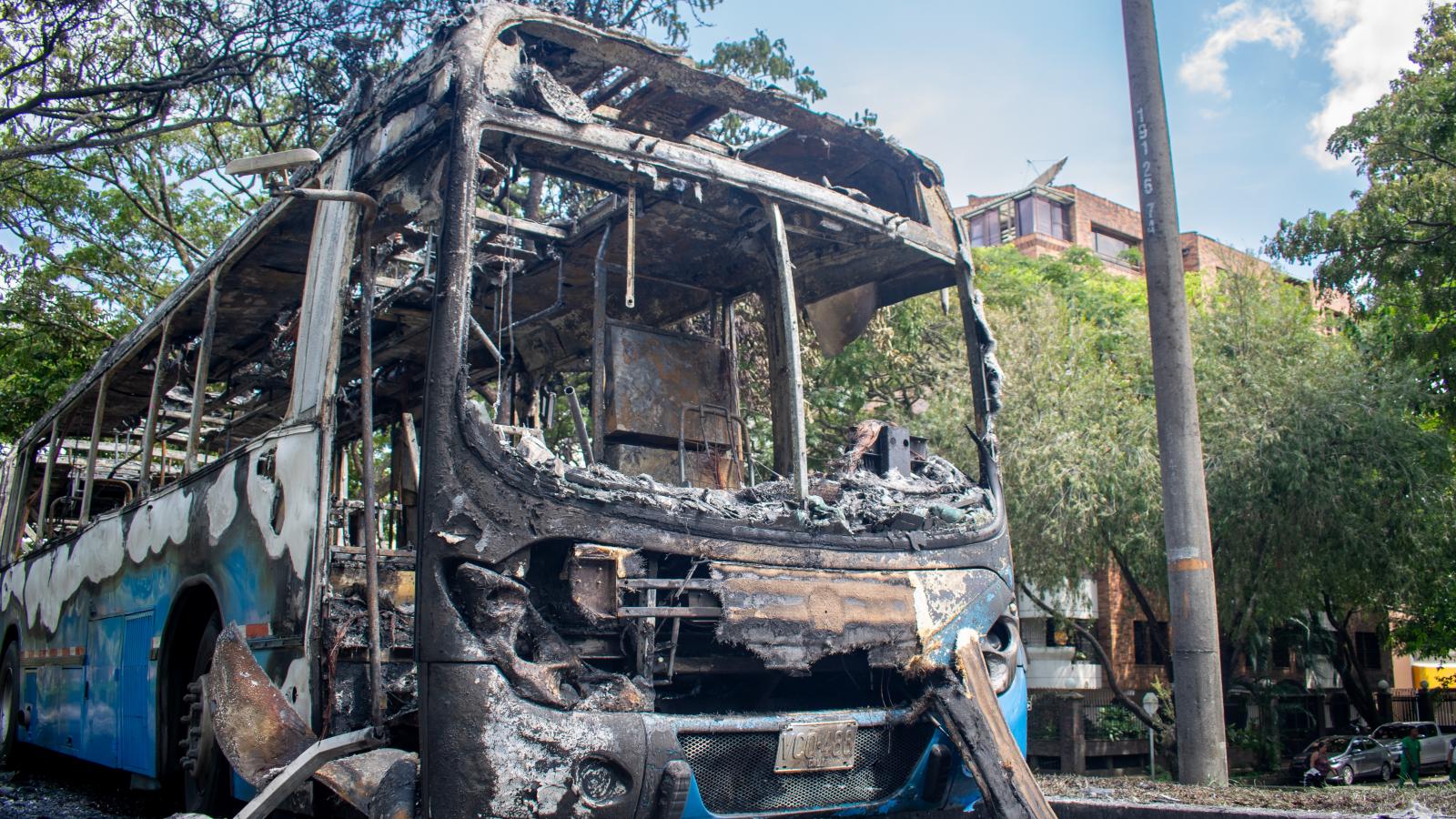
South African drivers also revealed that working in the EU is much safer compared to home, where buses and their drivers are often targeted by criminals and protesters.
Johnny Copelyn, a businessman and former trade unionist, recently pointed out that it has become normal for protesters to burn buses when they assemble.
He noted that Golden Arrow Bus Service loses an average of 12 buses per year to arson and that this is now seen as part of their operating expenses.
Golden Arrow operates a fleet of 1,171 buses across 1,300 routes. It employs 2,534 people and is responsible for ferrying 230,000 commuters every day.
Copelyn explained that the company’s buses have been mercilessly attacked by minibus taxi operators ever since the bus service was subsidized, while the taxi industry was not.
However, buses have become a target whenever there is unrest in South Africa, regardless of whether it is related to the company.
“We regard it as normal if we lose 12 buses a year to arson. That is what normal is in South Africa now,” he said.
“You are insured and have political risk cover. However, the terrible part is that the person who pays for those 12 buses is the passenger.”
“That is how the system works. You need to buy extra buses that are burnt like that, and the passengers have to pay for it.”
He said that protesters burn buses, which then appear on the news, bringing greater attention to whatever they are upset about.



 Loading ...

-facelift-2-2025.10.webp)

Conversation
4 commentsAge-wise, what is the hiring criterion, do they take drivers with C1 + PrDP, or it is only those with C,EB, EC, EC1 and EC with PrDP. How do you contact such a company for employment purposes?