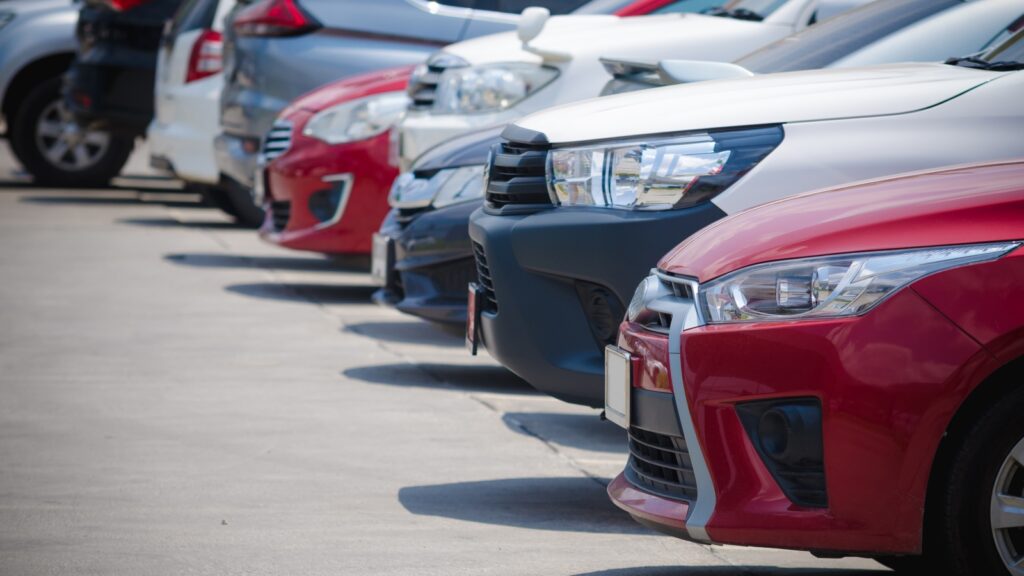
South Africa’s used-vehicle market has shown remarkable growth in recent years, with research showing it looks set to reach R160 billion over the next eight years, while local market leaders believe this has already been achieved.
According to market research company IMARC Group, the South African used-car market size reached $5.113 billion (around R83 billion) in 2025, and is projected to reach $9.85 billion (about R159 billion) by 2034, growing 7.33% between 2026 and 2034.
Its research showed rapid growth driven by affordability, shifting consumer attitudes, and the emergence of several digital sales platforms.
“The industry is characterised by high numbers of automobiles, with a growing demand for SUVs and low-cost vehicles,” the market research company said.
“Digital sales channels are also increasing, with customers having easier access to varied pre-owned automobiles.”
IMARC found that last year, South African customers overwhelmingly sought value and functionality when purchasing second-hand vehicles, valuing reliability, utility, and affordability above all.
As a result, bakkies gained popularity due to versatility and lower cost of ownership, reflecting a trend towards functional ownership where affordability and durability are preferred over novelty or luxury.
“This sustained preference for affordable and efficient options is one of the leading drivers of the South African used car market growth, reiterating its central role in the country’s mobility mix,” IMARC reported.
The local second-hand market has also experienced a rising demand for certified pre-owned cars, which are often still under warranty.
According to the market research, this phenomenon indicates an increased need for certainty and transparency, particularly for first-time customers and those who prefer safer acquisitions.
“As demand for warranted automobiles increases, growth in the South African used car market is favourably affected, supporting the quality assurance and consumer protection development of the market,” noted the IMARC Group.
South Africa’s used car market already surpassed R160 billion

Contrary to IMARC’s findings, AutoTrader in South Africa reported that the used car market generated R160.1 billion in sales alone last year, hitting the market research company’s 2034 target way ahead of schedule.
In the company’s 2025 Annual Report, AutoTrader CEO George Mienie explained that the automotive market did not drift through 2025.
He added that buyers and dealers reshaped themselves under pressure and emerged more disciplined, more data-driven, and more value-aligned than ever before.
This, as well as trends like the shift in what cars are being bought, aligns with what IMARC found, despite the reported market values differing greatly.
“Against a backdrop of interest rate shifts, inflation pressure and global supply changes, one thing became unmistakably clear: the modern South African car buyer has evolved,” he said.
“We are witnessing sophisticated behavioural change in both buyers and sellers. Consumers are researching more, comparing longer, and entering dealerships armed with acute context. Casual browsing has given way to calculated decision-making.”
Touching on the sector’s performance, Mienie revealed that the used car market generated R160.1 billion in sales in 2025, with 383,410 units sold, representing a 7% increase compared to 2024.
AutoTrader also found that buyers preferred affordable, reliable, and practical vehicles, which helped established options like the Ford Ranger, VW Polo Vivo, and Toyota Hilux maintain their dominance.
Pricing dynamics reflected broader market health, with the average used-car price increasing by 3% to R417,584 last year, compared to 2024.
The average model year also advanced from 2019 to 2020, while vehicle age remained consistent at 5 years, confirming a sustained consumer preference for relatively young, affordable used cars.
AutoTrader reported that market performance throughout 2025 reinforced buyers’ commitment to reliable, budget-conscious vehicles that meet essential needs, while respecting financial boundaries.
“Affordability now defines consumer aspiration, and the price-to-value delta shift is real,” Mienie said, in agreement with what IMARC found.



 Loading ...