


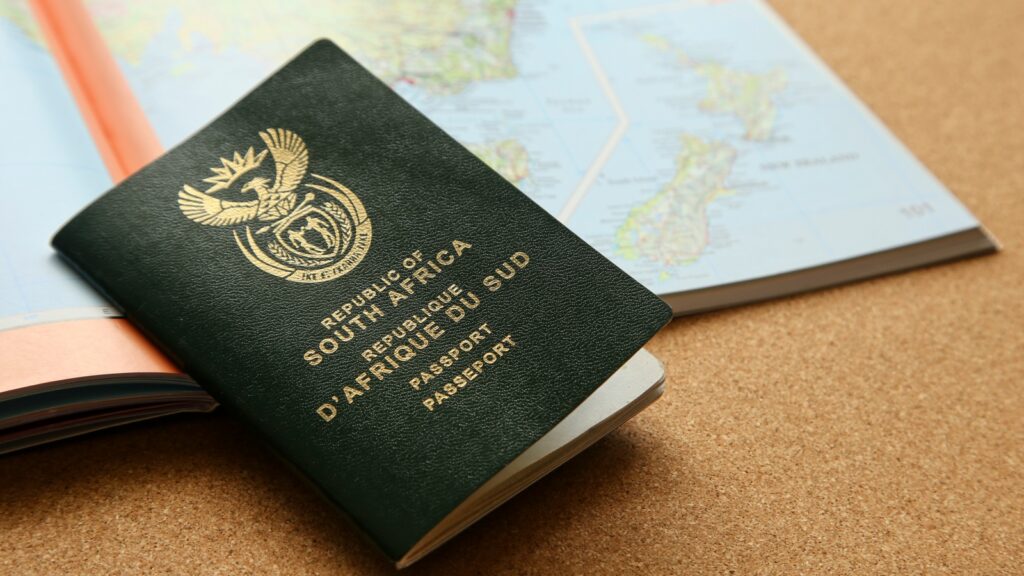
The Department of Home Affairs (DHA) is expanding its services at bank branches in South Africa to include passport applications at any of the 300 branches nationwide, as well as home delivery.
This was confirmed earlier this year by Home Affairs Minister Dr Leon Schreiber, who updated the National Council of Provinces on his department’s budget vote for 2026/27.
The minister noted that while the initial pilot began a decade ago, it was limited to around 30 bank branches. Since July 2026, this has expanded to more than 300 bank branches nationwide.
Absa is the latest bank to join Capitec, Standard Bank and First National Bank, giving South Africans access to Smart ID services through a network of 327 participating bank branches.
As part of the rollout, 12 Absa branches were enabled to provide Home Affairs Smart ID services, joining 109 Capitec branches, 74 Standard Bank branches, and 20 FNB branches, with 60 scheduled to join before the end of 2026.
Previously, only 248 Home Affairs offices and 32 bank branches offered Smart ID replacement services.
Adding nearly 300 bank branches means access to the service has more than doubled since the start of the programme.
The minister said that the new system is part of the Home Affairs @ Home initiative, which aims to bring Home Affairs’ services closer to where people stay.
He added that processing over 400,000 transactions since the project launched is a remarkable achievement and indicates the progress made through the Home Affairs @ Home programme.
“In the context of this spectacular progress, I am excited to share that there is much more still to come,” declared Minister Schreiber.
“Not only will we expand the Smart ID replacement service to 750 branches by the end of this year, but we will shortly also add first-time Smart ID applications, passport applications, and home deliveries to all of these bank branches.”
Receiving your passport at home

In an interview with HOT Business, the minister rejected suggestions that his department was shifting queues from Home Affairs offices to bank branches.
He explained that the old model excluded citizens, as there were only 214 Home Affairs officers across the country and 30 bank branches using an old manual model when he took office.
“It effectively meant that we were forcing 63 million people into those 214 locations. Even if they all worked perfectly, it simply was not enough capacity,” he added.
Schreiber said that instead of excluding citizens, the department is decentralising access by expanding the number of participating branches.
“In the last 4.5 months, we’ve added 327 bank branches that offer Smart ID replacement services, which means in that period we have more than doubled the footprint of access to the service,” he said.
Now, the department is planning to expand the range of services available at these branches, including introducing home delivery of Smart IDs and passports for the first time.
“So, like you get your debit card delivered to your doorstep, you’ll receive your ID and your passport in the same way, and you won’t have to go and collect it,” the minister said.
Going forward, Schreiber said the department aims to expand its network to more than 1,000 bank branches before ultimately introducing digital identity credentials.
“This will enable us to provide digital credentials for your Home Affairs products. Think about how people now use their credit card or their debit card on their smartphone,” the minister explained.
“They’ve got it on the phone, they may also have a physical copy, and that ultimately is going to decentralise access fully into your own hands.”




 Loading ...

-facelift-2-2025.10.webp)

Conversation
2 commentsI do not exactly believe the hype, and while it may be something in the planning stage, how hong before it is widely available?
Years, decades?
We are told fairytales about how easy it is to get your ID Card from a Bank Branch.
The reality is it depends on where you live, and which bank you bank with – most have very few branches offering the service, and they are only relevant to certain would-be clients.
Then, the Banks – or at least Standard Bank – will only assist a Standard Bank Customer – unless you open a STD Bank Account you do not need or want, so that they can earn a monthly fee from it.