Airlines in South Africa regulate the size of lithium-ion batteries allowed on planes, including those found in power banks, electric toothbrushes, and even vapes.
Because these batteries have become a growing concern, especially at altitude, regulators worldwide have updated how passengers may travel with products containing lithium-ion batteries.
According to local airline Lift, this is because of concerns about smoke, fire and heat production, which is why the International Air Transport Association (IATA) implemented updated guidance this year.
Theuns Dreyer, the airline’s Head of Airports and Ground Operations, explained that the main takeaway is that passengers with products containing lithium-ion batteries have to keep these items in the cabin.
“In addition, these items are not to be used onboard during takeoff, landing or during taxiing on the runway at any time,” he noted.
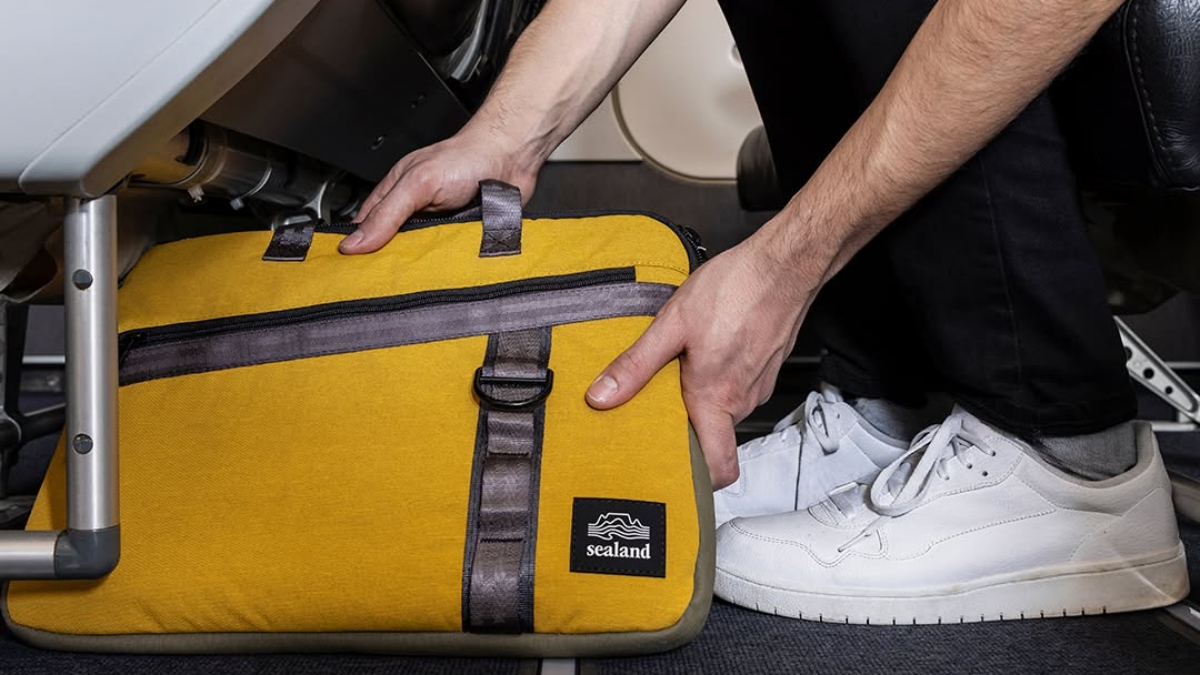
“The items must be stored in the seat pocket in front of the passenger, or on their person, and may not be stored in overhead bins, so passengers can monitor these items during flight.”
Dreyer explained that it is not uncommon for passengers to travel with several battery-operated devices and chargers.
These can include laptops, cell phones, power banks, Bluetooth earbuds and vapes, since passengers are increasingly travelling with more tech.
According to an IATA passenger survey, 83% of passengers carry a phone, 60% bring a laptop, and 44% travel with a power bank.
Most of these products contain lithium-ion batteries, especially power banks, but Dreyer explained that other products with these batteries would also be required to travel in the cabin.
“Travellers often don’t realise that it’s not just power banks they need to consider. Lithium-ion batteries can be found in mobile phones, cameras, electric toothbrushes, some vape devices, e-cigarettes, e-readers and smart watches,” he said.
While most of these fall well below the 100Wh regulation that would allow passengers to travel with battery-powered devices, some may exceed this limit, including larger power banks and even vapes.
Should a device exceed the limit, travellers need airline approval to travel with these devices, while any battery over 160Wh is not permitted on a passenger flight.
FlySafair Chief Marketing Officer Kirby Gordon explained that the rule exists so that in the rare event a lithium‑ion battery overheats or short‑circuits, cabin crew can respond immediately.
Travelling with battery-powered products
Dreyer explained that the change in procedure earlier this year has caused some confusion in travellers, particularly at check-in and at the boarding gates, which has the potential to result in delays.
To counter this, he advised travellers to place battery-powered items in their carry-on luggage to prevent repacking at boarding gates.
“Bring only the items you really need, to avoid having to carry too much in your cabin luggage,” he added.
Dreyer suggested passengers check with their airline regarding larger battery-powered electronics, as different airlines have their own sets of rules regarding batteries over 100Wh.
“IATA recommends travellers monitor their items during a flight. Passengers must report any possible concern to crew immediately, including smoke, heat or other visible damage to a battery product,” he added.
Gordon noted that most snags are avoidable with a little preparation, and knowing how big your electronic device’s battery is forms part of that.
If you’re not sure of the battery’s watt‑hour rating, which is usually printed on the battery, and only milliamp‑hours (mAh) and voltage are listed, Gordon explained it can be calculated using the formula Wh = (mAh ÷ 1000) × voltage.
“If you keep your essentials with you, have your devices easy to scan, and understand a few simple battery rules, you’ll move through the airport faster and help everyone around you do the same,” he added.


 Loading ...