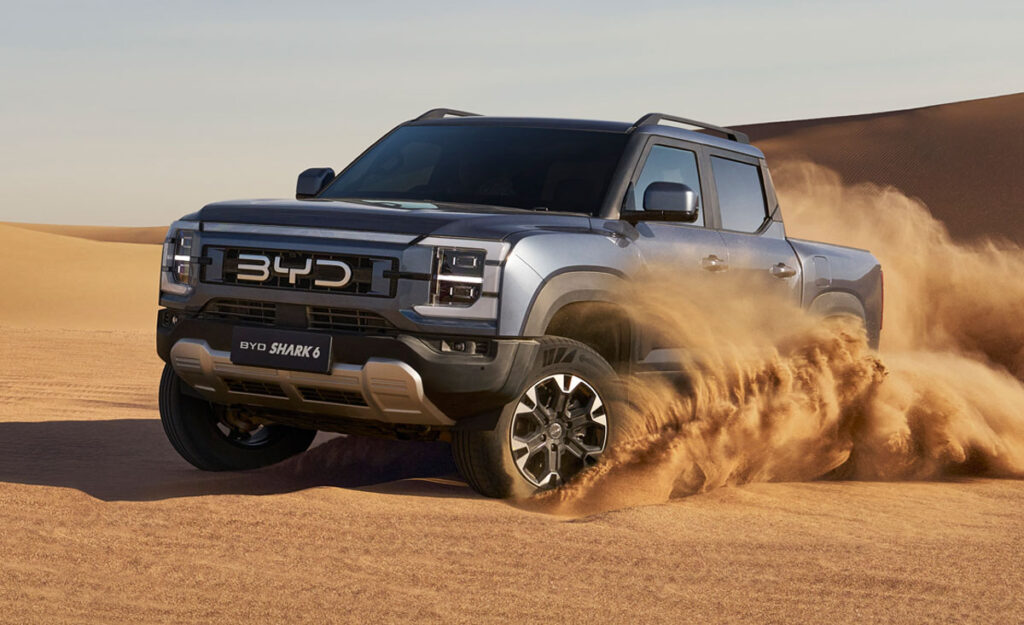
South African new car buyers are choosing new energy vehicles (NEVs), including hybrids (HEVs), plug-in hybrids (PHEVs) and fully electric cars (BEVs), twice as often as they were a year ago.
This is according to data from the Automotive Business Council (Naamsa), which stated that South Africa’s transition towards electrified mobility continues to gain momentum.
A total of 3,045 NEVs were sold in South Africa in June 2026, representing an increase of 104.2% compared to the 1,491 units sold in the same month last year.
“Based on total domestic new light vehicle sales of 51,508 units, NEVs achieved a market penetration rate of 6%, meaning that approximately one in every seventeen new vehicles sold in South Africa is now electrified,” said Naamsa.
The council noted that traditional hybrids continue to lead the market, selling 1,488 units, or 48.9% of all NEV sales, followed by PHEVs, which sold 990 units, contributing 32.5% of the NEV market.
Battery electric vehicles (BEVs) remain the smallest segment, reaching 419 units sold in June and accounting for 13.8% of total NEV sales.
Looking at the year’s sales to date, South African NEV brands have shipped 13,193 units, comprising 6,667 HEVs, 4,623 PHEVs and 1,903 BEVs.
“The sustained growth across all three technology categories demonstrates that consumers are increasingly embracing electrified vehicles, supported by a broader range of product offerings and growing awareness of alternative propulsion technologies,” said Naamsa.
It added that instead of a rapid transition to BEVs, the domestic market is following a diverse pathway reflective of local market conditions.
This includes affordability considerations, consumer driving patterns, charging infrastructure availability and technology choice.
Naamsa Interim CEO Shinny Gobiyeza said the results reflect an automotive industry that continues to adapt to changing market conditions while responding to evolving consumer preferences.
“The continued growth in domestic vehicle sales, coupled with record levels of New Energy Vehicle
adoption, demonstrates the resilience of South Africa’s automotive industry,” she said.
“The accelerating uptake of electrified vehicles across multiple technologies confirms that South Africa is steadily progressing towards a more diversified and sustainable mobility future.”
More NEVs on their way to South Africa
As a result of the increase in NEV uptake in South Africa, many carmakers are responding by bringing more options to the domestic market.
This month alone, eight NEVs were unveiled in South Africa, including hybrids, BEVs and even a few Range Extended Electric Vehicles (REEVs).
Chinese NEV builder Leapmotor added the B10 Hybrid EV, an REEV, to its model line-up in South Africa earlier this month.
Unlike conventional hybrid systems, the SUV’s wheels are driven by a 158kW electric motor, while the 1.5-litre petrol engine acts as a generator, producing electricity when the battery requires it.
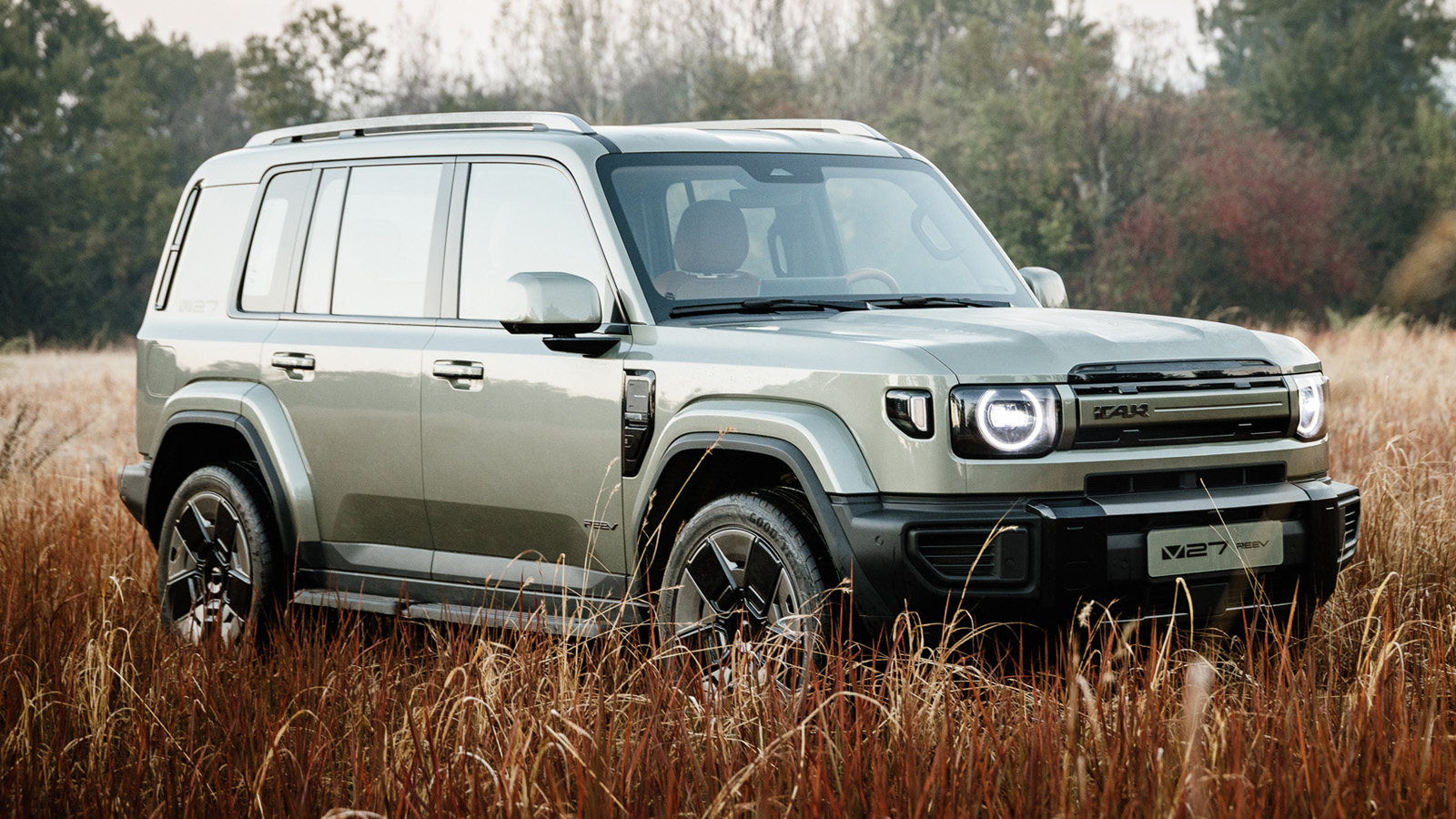
Alongside the REEV, Chery’s sub-brand iCAUR announced the unveiling of two more NEV options – the V27 and the 03T REEV – at the Festival of Motoring.
The V27 will sit at the top of iCAUR’s local catalogue once it goes on sale in South Africa, while the 03T REEV uses the same engine as the V27, though further specifications will be announced later.
Another Chery sub-brand, Lepas, announced that it will also showcase the new L6 electric vehicle at the weekend, confirming that it would be powered by a single front-mounted electric motor that generates 160kW and 275Nm.
South Africa’s second-biggest car brand, Suzuki, also unveiled its first electric car, the e Vitara, but also confirmed that its potential introduction depends on local market conditions.
Changan will also soon launch two NEVs in South Africa, including the Deepal S05 REEV and Changan Uni-S HEV.
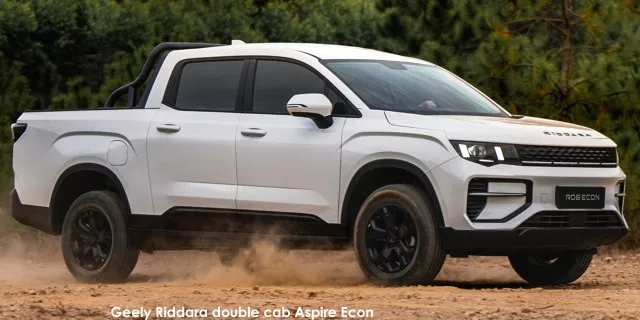
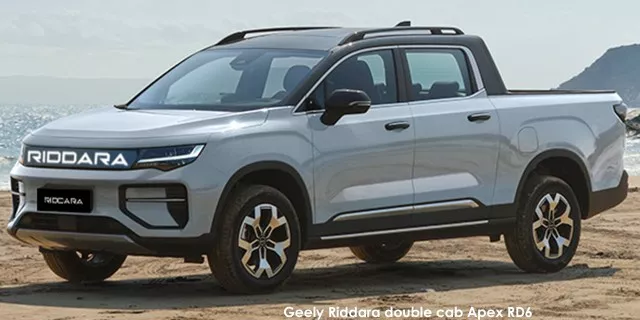
One of the most exciting launches this month is the arrival of the country’s second-most powerful bakkie, which just so happens to be a fully electric bakkie – the Geely Riddara RD6.
Several more NEVs are earmarked for local launches over the coming months and years, and this will continue as local adoption accelerates.



 Loading ...