The e-hailing service coming after Uber and Bolt in South Africa


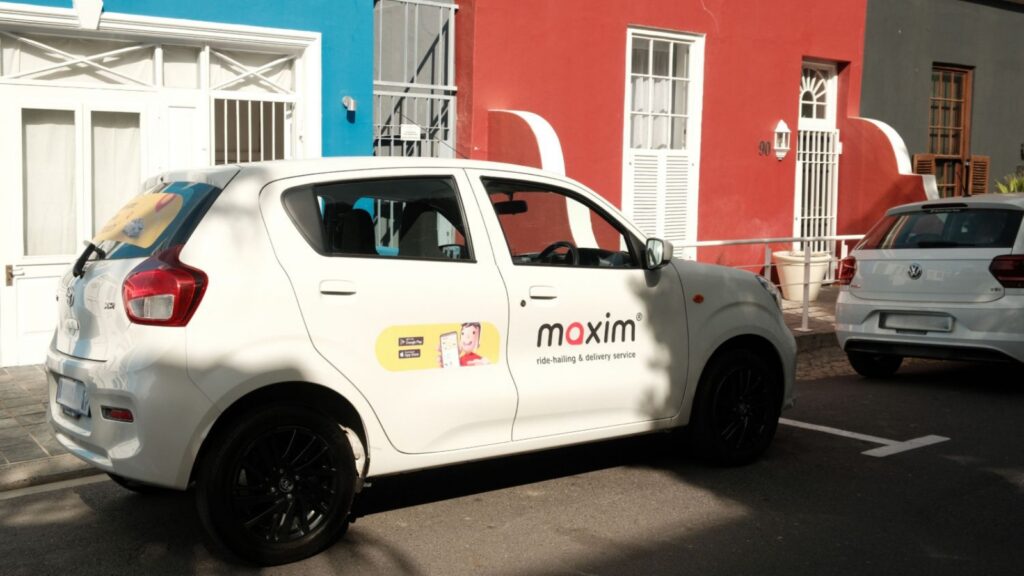
While global e-hailing giants like Uber and Bolt continue to dominate in big cities and major metros, Russia-based e-hailer Maxim is eating their lunch in South Africa’s smaller towns and secondary cities.
Over the past months, the e-hailing company added its 16th and 17th South African cities – Klerksdorp and Vanderbijlpark – and is planning to add an 18th soon.
Maxim South Africa has been operating since 2023 and was one of the first services to receive South Africa’s new e-hailing operating licence, and continues to expand its operations across the country.
It first launched in Cape Town, and followed this up with successful launches in Welkom, Bloemfontein and other smaller regional cities before adding Klerksdorp as its 16th city and Vanderbijlpark the 17th.
“The arrival of Maxim gives residents and visitors another convenient way to travel at affordable rates for daily commuting, errands, work travel and getting home safely,” the e-hailer said.
The first ride order in Vanderbijlpark was received on 28 June, when a passenger requested a trip from Intercity on Frikkie Meyer Boulevard for a fare of R155, marking the beginning of Maxim’s operations in the city.
As with other e-hailing apps, passengers can request a ride, view trip details and connect with drivers, with the company claiming to offer rides and delivery services at 10% below market prices.
To ensure the safety of drivers and passengers, the Maxim app also includes real-time tracking, which allows passengers to share their live location with their contacts during a trip.
Both Klerksdorp and Vanderbijlpark form part of the company’s “Standard” cities, which accommodate up to four passengers.
Maxim’s delivery services will also be introduced in Vanderbijlpark soon, allowing customers to send parcels, documents and essentials through the Maxim app.
Securing its local operating licence

A year ago, the Department of Transport gazetted new legislation, which has been in the works for over ten years.
The National Land Transport Amendment (NLTA) Act allowed e-hailing drivers to receive official e-hailing operating licenses rather than charter permits and meter taxi operating licenses.
However, it required operators to register and carry documentation or signage showing that they are an e-hailing vehicle, while their licenses indicate which geographic area they are approved to operate in.
The first two operators that got the green light from the National Public Transport Regulator (NPTR) were Bolt and Wanatu, followed by Maxim, which beat Uber to the punch.
Maxim’s certificate was issued on 27 February and confirms that it complies with the requirements of Regulations 15, 16, 17 and 18 of the Second National Land Transport Regulations 2025.
The e-hailer confirmed that it began its regulatory journey well ahead of the government’s deadline, formally submitting its application in November 2025.
“The closing of this registration window marks a new chapter for the industry,” noted Lesoli Lemphane, Head of Development at Maxim South Africa.
“We are fully committed to the South African market and to providing safe, reliable, and accessible transportation options.”
He added that the formalisation of the e-hailing sector is a positive development that benefits the entire industry, including drivers, passengers, and regulators alike.
Maxim noted that establishing clear regulatory standards for e-hailing as a distinct economic sector is crucial for modern transportation in South Africa.
Uber has since received its approval to continue operations in South Africa, albeit three months after the initial deadline had passed.
As a result, all major e-hailers in South Africa are fully licensed to continue operations under the country’s new National Land Transport Act.


 Loading ...