


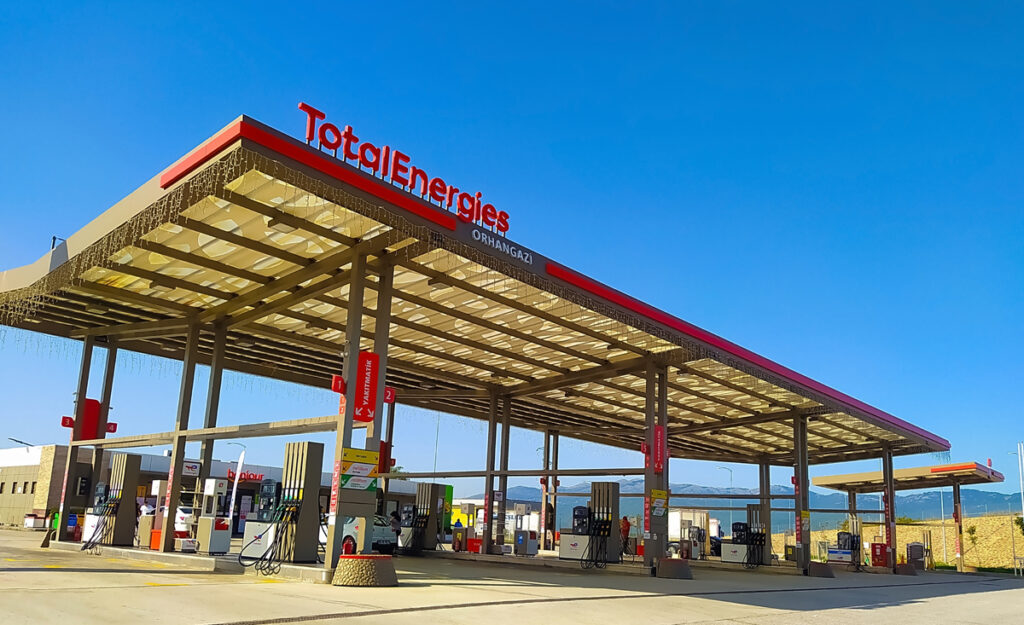
With petrol prices reaching record highs in South Africa this month, many motorists may think that fuel retailers and petrol stations are benefiting, but this is not the case.
The South African Petroleum Retailers Association (SAPRA) noted the fuel price adjustments for October 2026 were among the steepest single-month increases on record.
As of today, 7 October 2026, the official fuel price adjustments for South Africa will be as follows:
- Petrol 93 – Increase of R3.12 per litre
- Petrol 95 – Increase of R3.33 per litre
- Diesel 0.05% (wholesale) – Increase of R2.84 per litre
- Diesel 0.005% (wholesale) – Increase of R3.58 per litre
Alongside these, and in line with the provisions of the Self-Adjusting Slate Levy Mechanism, a Slate Levy of 87.66 c/l will be implemented in the price structures of petrol and diesel this month.
As a result, the petrol and diesel prices for October are as follows:
| Fuel type | Inland price | Coastal price |
|---|---|---|
| Petrol 93 | R29.88 | R29.09 |
| Petrol 95 | R30.25 | R29.38 |
| Diesel 0.05% (Wholesale) | R31.95 | R31.08 |
| Diesel 0.005% (Wholesale) | R33.29 | R32.03 |
According to SAPRA National Chair Henry van der Merwe, these increases are the result of global instability and are now affecting South African household budgets.
“South Africa is a net-importer of petroleum. Conflict and supply disruption in oil-producing regions, pressure on key shipping routes and a weaker rand all feed into the basic fuel price within weeks,” he said.
“Because we now import a large share of our refined product rather than refining it locally, we import the volatility along with the fuel. Nothing a retailer or a motorist does in South Africa changes that calculation.”
SAPRA explained that a shock of this size moves quickly through the economy, as diesel underpins several major industries, meaning the adjustments appear in food prices, transport fares and delivery charges.
This also complicates the inflation outlook and may narrow the room for interest-rate relief, leaving indebted households facing both higher running costs and elevated repayments.
At a micro level, the effect is also immediate, since filling a 50-litre tank with 95 petrol costs around R166 more than it did in September, and a 60-litre tank close to R200 more.
“Commuters face fare pressure, and small businesses running delivery vehicles absorb a cost they often cannot pass on,” SAPRA said.
No benefit for South Africa’s fuel retailers

Local motorists may look at fuel retailers and petrol stations and think they must benefit from higher petrol prices, but according to Van der Merwe, this picture is frequently misunderstood.
He explained that the regulated retail margin on petrol sales is a fixed amount in cents per litre, and this does not rise when the fuel price rises.
As a result, record pump prices add no additional margin to the retailer, but every cost attached to each litre of fuel sold climbs.
That is because more capital is tied up in deliveries, while card transactions and bank charges increase with the value of the sale, and stock losses carry a higher cost.
Alongside these, wages, electricity, security and compliance costs continue to rise independently.
“These are not abstract numbers. Each forecourt is a business in a community, and service stations are significant employers of young and low-skilled workers,” said Van der Merwe.
“Our sector has protected jobs through successive shocks, but margins have been compressed to the point where that becomes harder every month.”
Recent data shows that fuel and retail sales rose 18.0% in value while activity declined 6.5%, so turnover is being inflated by price, and not by business health.
The chairman explained that retailers are selling fewer litres at higher prices, carry more risk and require more working capital for the same or less real income.
The association warned desperate motorists that record diesel and paraffin prices widen the incentive for illicit operators selling adulterated product.
Anyone who suspects illegal activity can report it confidentially and anonymously through SAPRA’s whistleblower platform at sapra.co.za/whistleblower.





 Loading ...

-facelift-2-2025.10.webp)
