


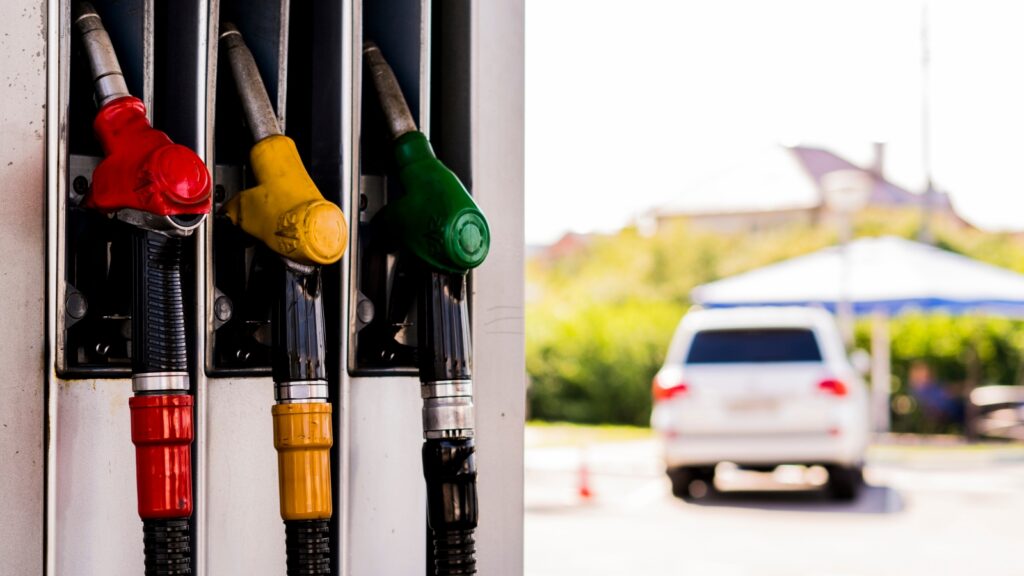
Petrol prices are going up by R3.33 per litre today, and next month is likely to be even worse for motorists in South Africa.
Early data from the Central Energy Fund (CEF) for October 2026 shows that petrol and diesel prices are experiencing a massive under-recovery, which could result in another price hike this November.
Petrol is facing an under-recovery of R4.28 and R4.57 per litre, while diesel prices are set for an under-recovery of between R2.56 and R2.91 per litre.
This would put the price of both fuels at historic highs, with petrol and diesel reaching R34.82 per litre and R36.20 per litre, respectively.
Investec’s Chief Economist, Annabel Bishop, noted that diesel prices have doubled in 2026, rising from R17 per litre in January to over R34 per litre in October.
This is an unprecedented jump in fuel prices not seen since 1994, placing a heavy burden on consumers and businesses with no renewed government support.
Petrol prices, meanwhile, have increased by a third since the start of the year, and are now on their way to doubling, too, with a price hike of nearly R5 per litre on the horizon.
Bishop argued that another fuel tax cut is warranted in the face of the additional potential consumer stress, as the incoming petrol price hike would drive CPI inflation to over 5.0% year-on-year while also placing direct pressure on commuters.
While she acknowledged that it is still early in the month and that the CEF’s data will fluctuate in response to international market conditions, she warned that these early reports demonstrate a clear risk.
“For South Africa, currently very large transport cost increases are being signalled down the line again, with the price increases in October already having taken domestic fuel prices to historic highs,” she said.
Energy prices increased worldwide in the third quarter of 2026 as the Middle East war intensified, with disruptions to oil exports moving through the Strait of Hormuz.
Saudi Arabia also shut down its vital East-West oil pipeline due to attacks launched by the Houthis, and Russia has also suffered damages to its energy production facilities.
Additionally, the United States slowed the release of its Strategic Petroleum Reserve in September, further limiting global supplies.
The price of Brent Crude oil increased from $87 per barrel in late August to a high of $108 per barrel in mid-September.
While prices have recovered slightly to $102 per barrel, they are still much higher than they were when the war began.
At the same time, the rand’s value has dropped against the US dollar, making it more expensive to purchase and import petroleum products.
The exchange rate was on a downward trend for most of July and August, reaching a low of R15.9 per USD at the beginning of September. However, the exchange rate has since gone up to R16.71 per USD.
Bishop noted that the volatile global energy market has created an environment “supporting a switch in the global interest rate cycle, from a cutting to a hiking cycle, and then a steepening of the hiking cycle, which has spurred risk off in global financial markets, in turn driving the rand weaker.”
“While the Reserve Bank has taken a cautious approach to the oil price shock and its impact on fuel prices and inflation in South Africa, hiking interest rates by 25bp at alternative MPC meetings since May, inflation pressures are likely set to intensify.”
Another 25bp hike is on the cards for November, though this is highly dependent on the final fuel price changes for the month.



 Loading ...

-facelift-2-2025.10.webp)
