



Vodacom has launched a programme aiming to add another 55,000 vehicles and 110,000 e-hailing drivers on South Africa’s roads over the next 9 to 12 months.
Launched during Transport Month, the initiative brought together several industry stakeholders to reach this target, including local fleet enablement and e-hailing technology platform SmartOps Fleet.
The venture is also targeting a fleet mix of 66% electric vehicles (EVs) to support further growth in South Africa’s e-hailing sector.
The partnership hopes to broaden participation in the local e-hailing economy through vehicle ownership.
Nedbank, Motus, Tiger Wheel & Tyre, Tyres & More, Renault, Dongfeng, and the Thiba Ingozi Safety App create a network that enables programme-supported vehicles to operate on e-hailing platforms such as Uber and Bolt.
Similar to its operations with local e-hailing company, Wanatu, Fidelity Services Group provides vehicle tracking and dash camera solutions for safer operations.
SmartOps Fleet has committed to managing vehicles, drivers, maintenance, insurance, tracking and day-to-day e-hailing operations.
“The programme demonstrates what can be achieved when organisations across different sectors combine their capabilities around a shared challenge,” said Sitho Mdlalose, Chief Executive Officer at Vodacom South Africa.
“South Africa’s mobility economy presents an opportunity to connect more people to economic participation through technology-enabled partnerships.”
“By bringing together capabilities across technology and financial services, we are helping to create an ecosystem that supports broader participation for both vehicle owners and drivers.”
Vehicle ownership has a high barrier to entry in South Africa is considered high, and for those looking to participate in the e-hailing economy, the operational requirements can be significant.
The same can be said for investors looking to enter the sector, who will need to source and manage drivers, maintain vehicles, arrange insurance, and oversee daily operations.
According to Vodacom, this programme is designed to reduce the operational complexity and lower the barrier to entry.
Investors will also earn up to 40% commission while retaining ownership of the e-hailing vehicle and remaining responsible for the underlying vehicle-finance agreement and the first instalment of the vehicle.
Mahene Benzane, CEO of SmartOps, said what makes the new model different is the ecosystem behind it.
“By bringing together expertise across finance, technology, fleet management, automotive and e-hailing services, we can support the management of a vehicle throughout its e-hailing journey while creating opportunities for both vehicle owners and drivers,” he said.
Electrifying South Africa’s e-hailing sector

Peter Malebye, Managing Executive for Fintech at Vodacom South Africa, said technology remains central to the programme, helping support vehicle visibility, driver connectivity and operational management.
“The programme demonstrates how cross-sector collaboration can help broaden participation in the future mobility economy while supporting sustainable livelihoods and economic opportunities for young people,” he said.
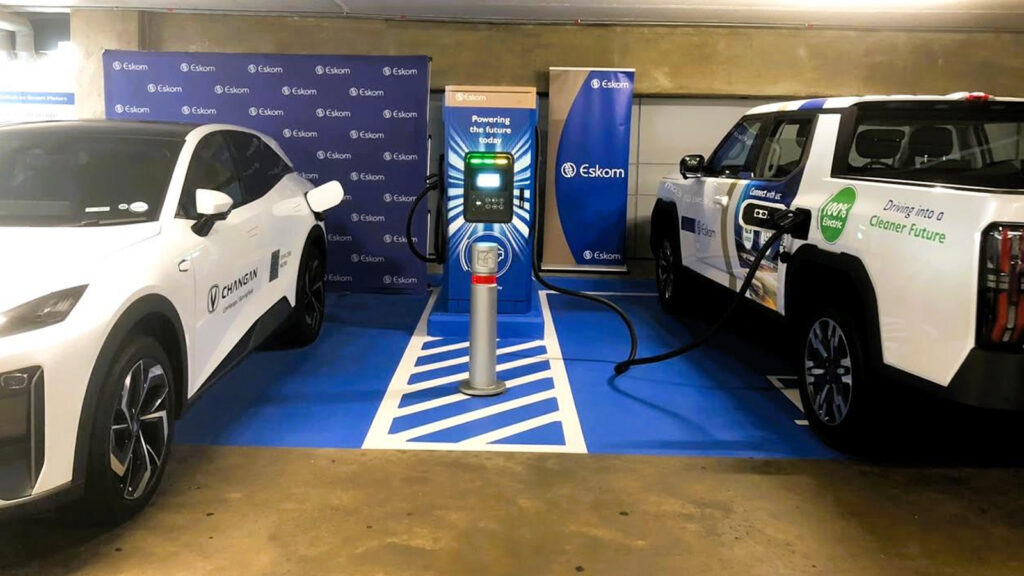
It also places a strong emphasis on electric mobility, with EVs targeted to account for two-thirds of the planned fleet and support increased adoption within South Africa’s e-hailing sector.
Benjamin Motitswe, Chief Director for the Gauteng Provincial Regulatory Entity (GPRE), said that as South Africa, and Gauteng in particular, continues to grow, so too must its transport system.
“We are embracing innovation, technology and integrated mobility solutions to ensure our transport network keeps pace with the needs of a modern province,” he explained.
“Partnerships such as these demonstrate the power of collaboration in addressing some of our country’s most pressing challenges, particularly youth unemployment and economic inclusion.”
Motitswe explained that the initiative has the potential to create meaningful job opportunities for young South Africans, expand participation in the growing e-hailing economy, and contribute to a more inclusive and connected transport ecosystem.
Gauteng’s e-hailing sector is gaining multiple new players, including OMN1, which will launch early next month.
This locally developed platform uses a “super-app” to combine e-hailing, food delivery, creator monetisation, and messaging on a single platform.




 Loading ...

-2026.10.webp)
