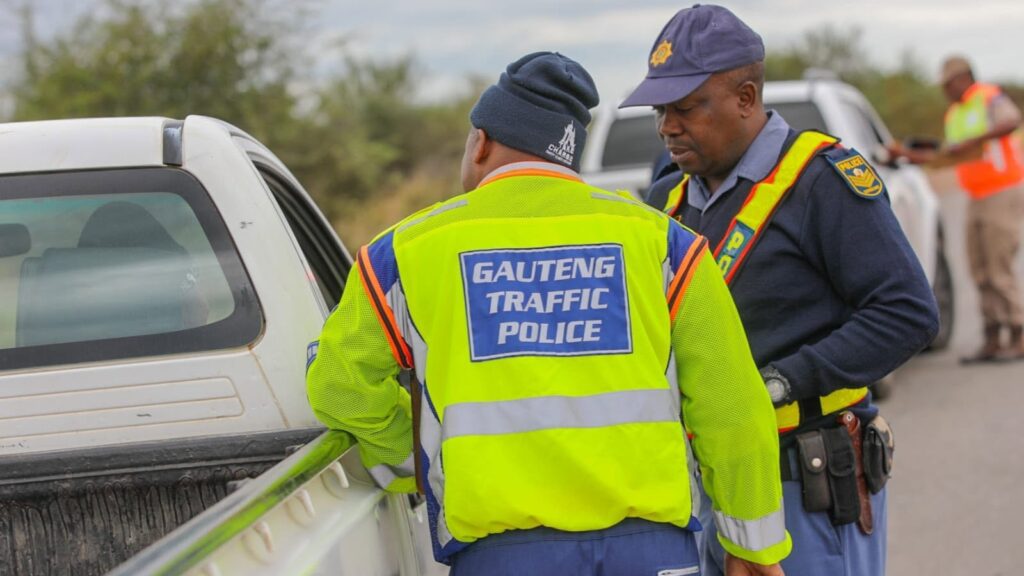
The national rollout of Phase 3 of the Administrative Adjudication of Road Traffic Offences (AARTO) Act was scheduled for 1 September 2026, but has still not been implemented.
It is currently stuck in Phase 2, which took effect on 1 July 2026 in 62 municipalities, including several metros.
The rollout was expected to reach Phase 3 by the third quarter of 2026 and be implemented in all 151 municipalities before the demerit points system is introduced in Phase 4.
However, the final phase has no specified launch date in the Road Traffic Infringement Agency’s (RTIA’s) Annual Performance Plan, though the agency plans to issue demerit notices over the medium term, beginning in 2027/28.
That said, if it experiences further delays, RTIA’s broader strategy has always been to roll out the system over the 2025- 2030 term.
This seems to be the case, since the Phase 3 deadline has already been missed, prompting National Assembly MP Dr Chris Hunsinger to question Transport Minister Barbara Creecy about the rollout.
Hunsinger asked the Minister whether every municipality and metro was integrated with the AARTO system and capacitated to process infringement notices and adjudicate representations from the go-live date.
He also sought clarity on the contingency measures put in place to prevent a surge in unresolved infringements from overwhelming the system in its first three months.
In response, Creecy confirmed that all Phase 2 issuing authorities have been technically integrated into the AARTO system and capacitated to process infringement notices.
“However, the adjudication of the representations is the sole responsibility of the RTIA in terms of the AARTO Act, and there are no shortfalls in the adjudication process,” she said.
Creecy added that the RTIA put measures in place within its structures, appointing the adjudication personnel and ensuring that the established AARTO War Room meets regularly to support all provinces.
The Minister confirmed that, despite being delayed, the next phases will still be implemented, with the Demerit Points System scheduled after AARTO has been rolled out to the whole of the Republic.
Several attempts have been made to stop AARTO
Two prominent critics of the Act, the Organisation Undoing Tax Abuse (OUTA) and the South African Local Government Association (SALGA), filed urgent High Court applications to halt the AARTO rollout.
OUTA claimed that the government implemented the new laws without the legal safeguards required to protect motorists, while SALGA raised concerns about the system’s funding model.
One of OUTA’s main concerns was the absence of an Independent Appeals Tribunal, the body motorists must appeal to over infringements they disagree with, ahead of the rollout.
Details on the tribunal have since been shared, shifting OUTA’s focus to why its existence wasn’t disclosed before AARTO came into operation.
“In simple terms, government has switched on enforcement before switching on one of the most important protections available to motorists,” OUTA executive director Advocate Stefanie Fick said.
“When government removes or limits existing remedies, it has a legal duty to ensure that the alternatives created by Parliament are available and functional. That has simply not happened.”
The South African Local Government Association applied to the Gauteng North High Court in Pretoria to stop the launch of the country’s new traffic fine laws in July.
It sought to block implementation due to concerns about AARTO’s funding model and highlighted that many municipalities in South Africa already operate in an increasingly constrained fiscal environment.
The association said that while it has consistently supported AARTO’s objectives, it has also raised serious concerns about its funding model and its regulations.
However, the High Court dismissed SALGA’s application based on a lack of urgency, but the association confirmed it would continue to pursue the matter.





 Loading ...