
Plans to use taxpayer money to give taxi industry better vehicles in South Africa


The Department of Transport is considering a plan to use the Taxi Recapitalisation Grant to help the minibus taxi industry transition to electric vehicles (EVs).
This was revealed by Transport Minister Barbara Creecy during an interview with Newzroom Afrika, where she noted that EV sales have grown substantially in 2026.
“I suppose it’s a no-brainer that consumers would look for ways of reducing the cost of fuel,” Creecy said.
The minister said that the government was exploring plans to accelerate the shift to EVs, including possible support for the minibus taxi industry.
“For example, the Taxi Recapitalisation Grant, whether there’s a way in which we could use that to give the industry access to electric vehicles.”
She explained that her department’s concern was that EV adoption would be limited to those who can naturally afford them, while the public transport sector would be left behind with older vehicles that are more expensive to run and maintain.
This issue has become more prevalent at a time when petrol and diesel prices have surged past R30 per litre, disproportionately impacting low-income commuters who rely on public transport to get to work.
The Taxi Recapitalisation Grant is a capital subsidy allocated from the National Revenue Fund, meaning it comes from taxes paid in South Africa, reported MyBroadband.
While the taxi industry is not exempt from taxes, the vast majority of payments are made in cash, making it difficult for the South African Revenue Service (SARS) to track earnings and enforce compliance.
A R100 billion industry that pays virtually no tax
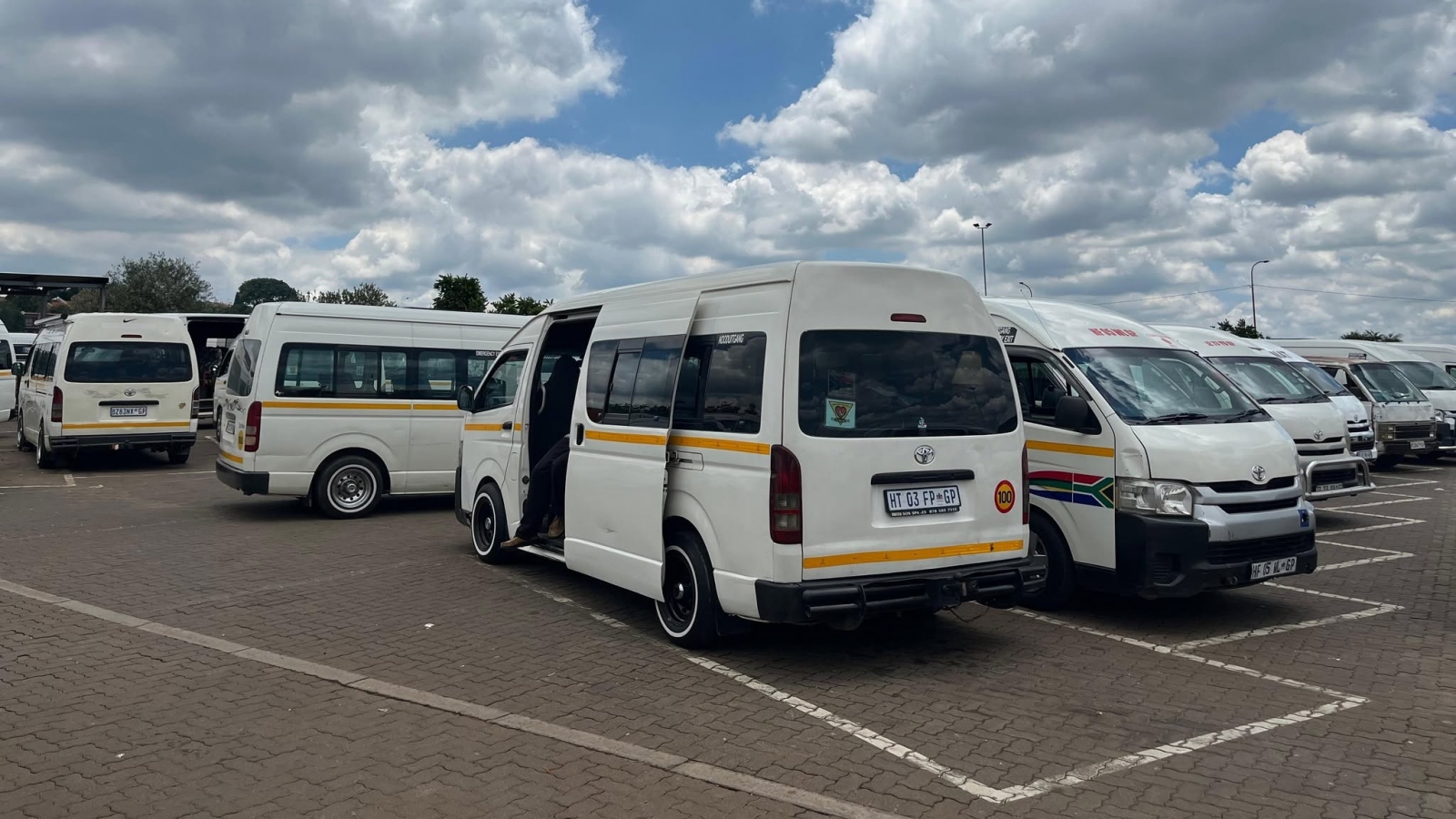
The plan to subsidise the taxi industry’s transition to EVs with taxpayer money highlights a long-standing issue with the sector: it pays very little tax.
Earlier this year, Finance Minister Enoch Godongwana revealed that SARS would crack down on the informal economy in an attempt to broaden the country’s tax base.
This includes the taxi industry, which generates an estimated R90 billion to R100 billion per year in revenue, yet pays virtually no tax.
In 2021, the finance minister revealed in a parliamentary Q&A that the taxi industry only pays around R5 million in taxes each year.
“The Minister of Finance has revealed that only approximately R5 million in tax is collected from the entire minibus taxi industry,” the DA said at the time.
“This means that the vast majority of taxi operators and owners are declaring no corporate tax income at all and are not paying payroll tax for their drivers and employees.”
Under-declaring income and tax evasion are crimes under the Tax Administration Amendment Act, carrying a possible prison sentence of two years.
To address this issue, Godongwana announced this year that SARS is implementing measures to improve compliance.
“SARS continues to broaden the tax base by improving registration, filing and payment, where tax compliance remains low,” the minister said.
“This includes the informal economy and the taxi industry. SARS is also working to detect and respond to illicit financial flows and other forms of non-compliance.”
SARS said it is focusing more on helping businesses register, understand their tax obligations, submit returns, and pay what is due through support, education, simpler processes, and risk-based action.
During the 2024/25 financial year, SARS added 21,890 previously unregistered taxpayers to its books, contributing an additional R314 million in revenue.




 Loading ...

Conversation
1 commentsEV Taxis? Admirable but not practical the way these drivers operate. Since Toyota dont make EV HiAce’s means the taxis will probably be sourced from China in some type of cadre deal. Expect many breakdowns and fires, one only need look at the amount of EV fires in China.