Big problem with South Africa’s new law to stop people drinking at restaurants


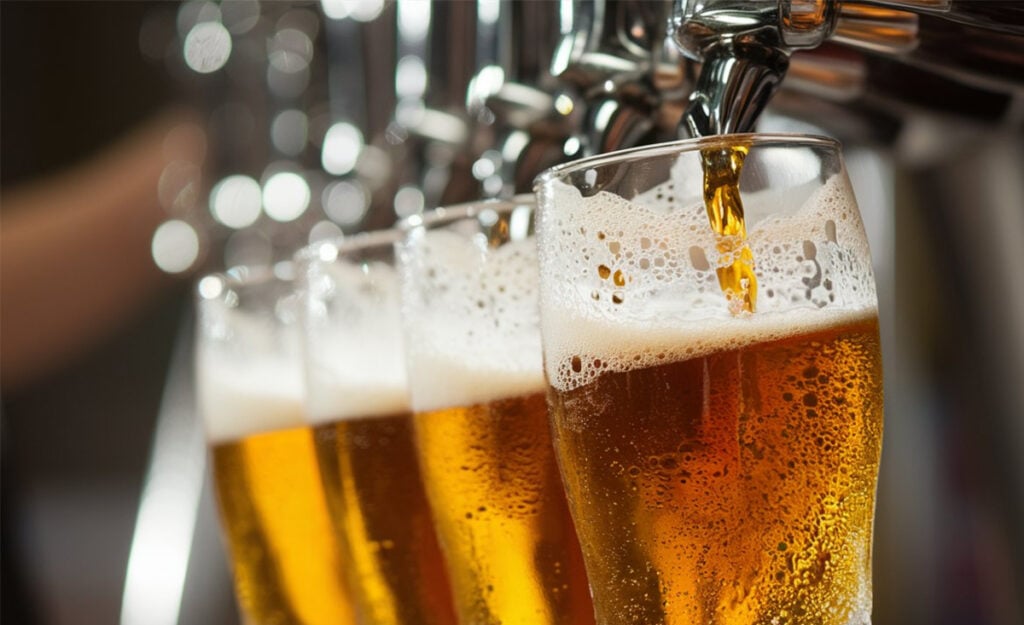
The Department of Transport is pursuing legislative amendments to reduce South Africa’s legal drink-driving limit to zero, effectively making it illegal to consume any amount of alcohol at restaurants or bars if you plan on driving.
However, this change focuses almost entirely on motorists while doing nothing to address drunk pedestrians.
The amendments, which will be made to Section 65 of the National Road Traffic Act, will reduce the legal blood alcohol content (BAC) from 0.05g per 100ml to 0.00g per 100ml.
It will also reduce the breath alcohol concentration limit from 0.24g per 1,000ml to 0.00g per 1,000ml.
In September, Transport Minister Barbara Creecy announced that the government was working to obtain approval from the Chief State Law Advisor and the Socio-Economic Impact Assessment System (SEIAS).
This approval is necessary to secure cabinet agreement for the proposed amendment by the end of 2026, according to BusinessTech.
Creecy argued that the change is necessary to bring about a meaningful change in people’s attitudes towards drunk driving.
She highlighted that 18,000 people were arrested for drunk driving between March and August 2026, accounting for a third of all traffic arrests.
However, traffic experts and industry stakeholders have raised concerns about the new laws, arguing that they won’t bring about the desired changes and will penalise responsible motorists.
Legal experts at Van Deventer Dowlath & Marx noted that the law does nothing about intoxicated pedestrians, which are a major contributor to road accidents in South Africa.
A large portion of traffic accidents take place within the vicinity of liquor stores, which has prompted some to call for the operating hours of these establishments to be reduced.
“A decision to ban alcohol for drivers will have long-reaching, potentially positive implications, but what about the other risk profile? Intoxicated pedestrians are a large part of the crisis,” Van Deventer Dowlath & Marx said.
Pedestrians are also required to adhere to the National Road Traffic Act, which prohibits individuals from being on the road while intoxicated. However, the law firm argued that the enforcement of this law is inconsistent.
“The Minister’s own statements point to intoxicated pedestrians being a major cause of fatalities. Zero‑tolerance will change driver behaviour, but it won’t fix the pedestrian crisis,” said van Deventer.
“If South Africa wants to reduce its fatalities, enforcement will have to go beyond the people in the driving seats.”
“The proposed amendment seems to deal with only one part of it, but the pedestrian risk that’s so deeply embedded in the country’s fatality profile needs to be addressed just as firmly.”
Another concern is that the lack of a tolerance band will lead to false positives where motorists are flagged for drunk driving because they used products containing trace amounts of alcohol.
This includes certain kinds of over-the-counter medicines, mouthwashes, and food products like vanilla and almond extracts, cooking wines, vinegars, and sauces.
Van Deventer argued that the success of the new law will depend on how well it is enforced, which highlights issues with South Africa’s overburdened legal system.
“This means the calibration of breathalysers, officer certification, device logs, roadside procedures and safeguards against false-positive results are all going to become critical,” said van Deventer.
“Moving to such a strict driver limit has the potential to introduce operational and evidentiary challenges for a legal system that’s already under pressure, and there will be no margin for error,” van Deventer said.
He also raised concerns that the lack of a tolerance window will lead to problems with fairness, equality, and due process, especially when minor evidence leads to criminal charges.
Without strict procedures in place, charging someone for trace amounts of alcohol when they are not impaired could be a concern under the General Limitation clause in Section 36 of the Constitution.






 Loading ...