Big win for one of South Africa’s most affordable crossovers


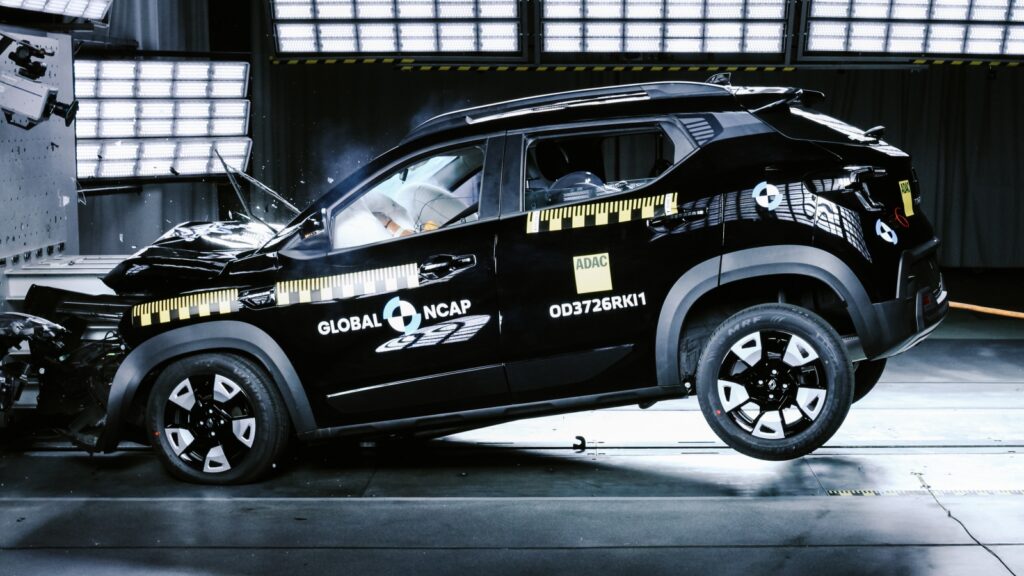
The Automobile Association (AA) of South Africa has commended the Indian-built Renault Kiger for improving its safety rating from two stars to four stars during the latest round of testing.
According to the AA, Global NCAP initially selected the Renault Kiger for testing when it was sold with two airbags, without ISOFIX or electronic stability control (ESC), giving the car a two-star safety rating.
Since then, the French auto giant has updated the Kiger to offer six airbags, ESC, ISOFIX, and pedestrian protection as standard, and voluntarily submitted the updated model to Global NCAP for testing.
The six-airbag Renault Kiger, which the Global NCAP tested under the AA’s Safer Cars for Africa campaign, scored as follows:
- In the frontal test, the footwell area and bodyshell were rated unstable and unable to withstand further loadings.
- In the side impact test, one door opened during the test, resulting in a point deduction. Head, abdomen and pelvis protection were good, and chest protection was adequate.
- In the side pole impact test, head and pelvis protection were good, abdomen protection was adequate, and chest protection was marginal.
- In the frontal test, the head of the three-year-old dummy contacted the vehicle interior and the chest showed high decelerations.
- In the side impact, head exposure brought all of the three-year-old’s side impact points to zero.
- The 18-month-old dummy showed full protection in both frontal and side impact tests.
- The car met pedestrian protection regulation UN127 and complied with Global NCAP’s ESC and seatbelt reminder (SBR) requirements.
Following these results, Global NCAP CEO Richard Woods said it is satisfying to see the safety improvements Renault has introduced with the updated Kiger in South Africa.
“We welcome their positive engagement and hope that this approach now becomes a trend across the industry,” he added
“It demonstrates what can be achieved when a manufacturer seeks to prioritise safety, and it shows why six airbags must become a standard requirement.”
A poor showing from the two-airbag model
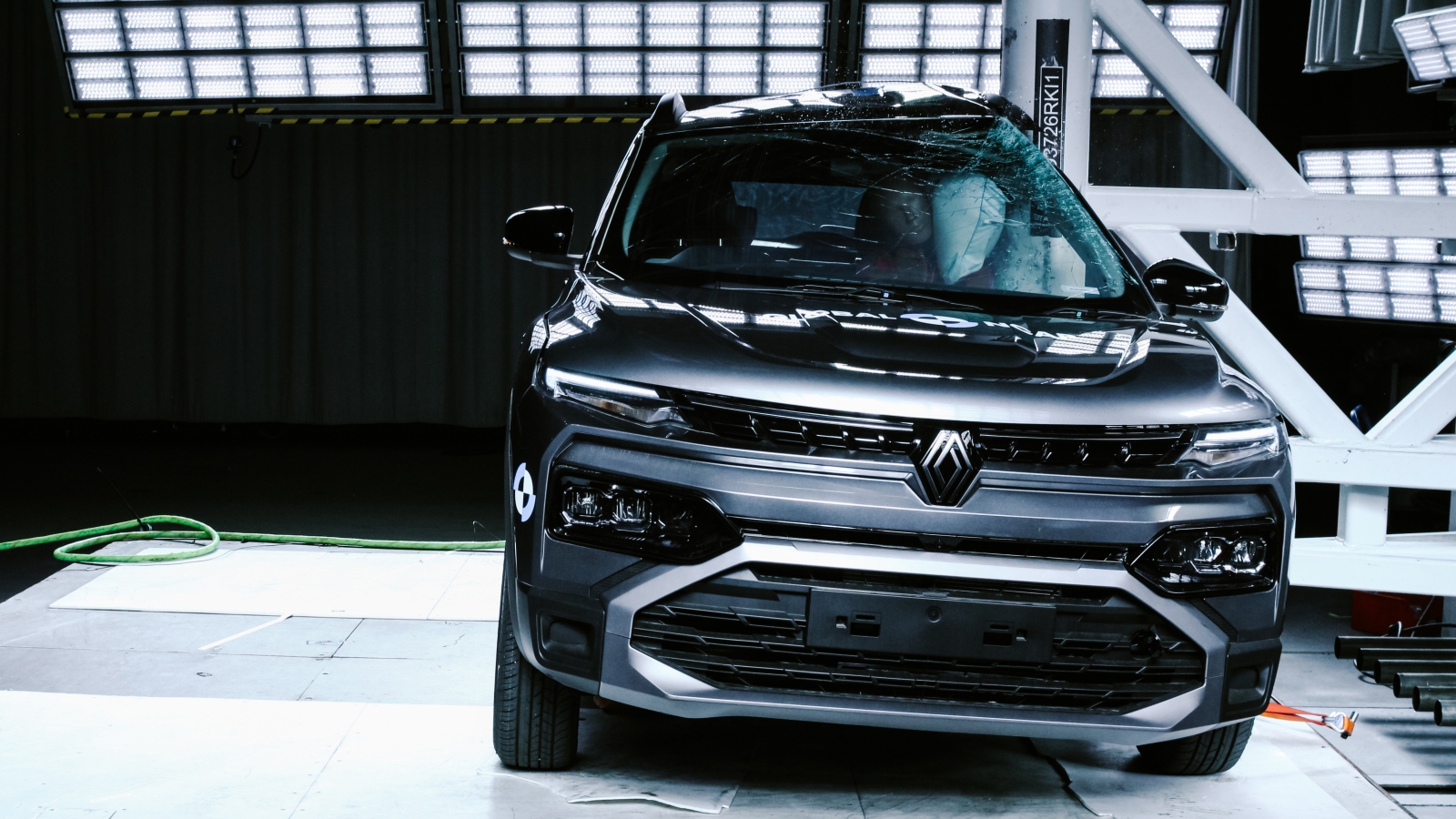
Compared to the updated model, the two-airbag Renault Kiger achieved significantly worse crash test results, resulting in its two-star safety rating.
Global NCAP’s assessment for the two-airbag Renault Kiger found the following:
- In the frontal test, one door opened during the test. The footwell area and bodyshell were rated unstable and unable to withstand further loadings. Driver chest protection was marginal, and passenger chest protection was adequate.
- In the side impact test, head and chest protection were weak, abdomen protection was adequate, and pelvis protection was good.
- The side pole test was not conducted because side head protection airbags were not fitted as standard.
- Without ISOFIX and 3-point belts in all seating positions, Renault recommended fitting child restraints with the adult seatbelt and forward-facing for the three-year-old. This does not comply with Global NCAP best practice. The dummy’s head struck the vehicle interior, with high neck loads and limited chest protection.
- For the 18-month-old, the lack of ISOFIX meant the recommended child restraint, fitted with the adult seatbelt, could still end up rearward-facing. The dummy showed full head and neck protection in the frontal test but only limited chest protection.
- The car did not demonstrate compliance with pedestrian protection regulations UN127 or GTR9.
Commenting on the major improvements, CEO of the AA of South Africa, Bobby Ramagwede, said going from a concerning two-star rating to a four-star result was commendable.
“This updated Indian-built Kiger proves that the #SaferCarsForAfrica program is indeed yielding real change and saving many lives on South African roads,” he said.
“It is also a reminder to both the manufacturer and the consumer that improving safety needn’t cost much nor affect the production of entry-level model ranges.”
Ramagwede added that when manufacturers prioritise customer safety, they save many lives and revive the industry’s image.
He also encouraged local brands with recent poorer results to work with the AA on improving the safety of affected entry-level models, to ensure safety is prioritised over cost.




 Loading ...