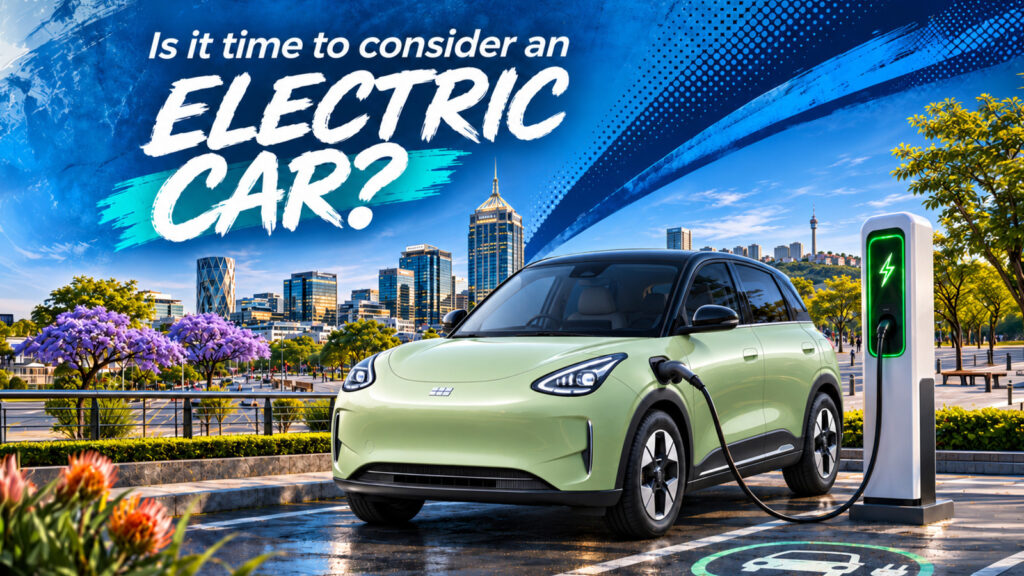
Is it time to consider an electric car? What SA motorists should know


South Africa’s electric-vehicle market looks very different from even a few years ago. In McCarthy’s October 2026 pricing, fully electric passenger cars start at around R340,000, and the wider line-up now covers family crossovers, SUVs, double-cab bakkies and commercial vehicles.
The timing is notable. From 7 October 2026, 93 octane petrol rose by R3.12 a litre and 95 octane by R3.33 a litre, while diesel went up by between R2.84 and R3.24 a litre, depending on the grade.
A higher fuel price on its own does not make swapping your current car for an EV the right financial decision. Purchase price, finance, insurance, charging arrangements and the way you actually drive all play a part. What has changed is that far more buyers now have a realistic EV option worth investigating.
Compact EVs now start at around R340,000
The most affordable EVs in McCarthy’s line-up are the Geely E2 Aspire at R339,900 and the BYD Dolphin Surf Comfort at R341,900. Higher-spec derivatives of both models still come in below R400,000.
That matters. For a long time, the EV conversation in South Africa centred on vehicles priced well above R1 million. For buyers who mainly need a compact commuter or a second household car, these smaller EVs offer a far more accessible way in.
Family and crossover EVs widen the choice
Move up in size and price, and the options include the BYD Atto 2 Dynamic BEV from R529,900 and the GWM ORA 5 Electric from R549,900, with the BYD Dolphin Extended adding another hatchback option above them.
Further up the market, the BYD Seal sedan, BYD Sealion 7 SUV and Toyota bZ4X SUV broaden the selection.
These vehicles are not direct rivals. Together, though, they show that battery-electric technology now spans far more than one price bracket or body style.
Electric bakkies and commercial vehicles join the line-up
The Geely Riddara brings battery-electric power to the double-cab bakkie segment, while Foton’s eTruckmate is offered in chassis-cab, dropside and box-body configurations. The larger Foton eView adds an electric panel van.
For private buyers and fleet operators alike, suitability comes down to more than the purchase price. Daily distances, payload, towing, downtime and whether the vehicle returns to the same charging point each day will all influence whether electric operation makes practical sense.
How does EV charging work?
A battery-electric vehicle (BEV) stores energy in a rechargeable battery and uses electric motors to drive the wheels. Unlike a hybrid, it has no petrol or diesel engine, so charging becomes part of your regular routine.
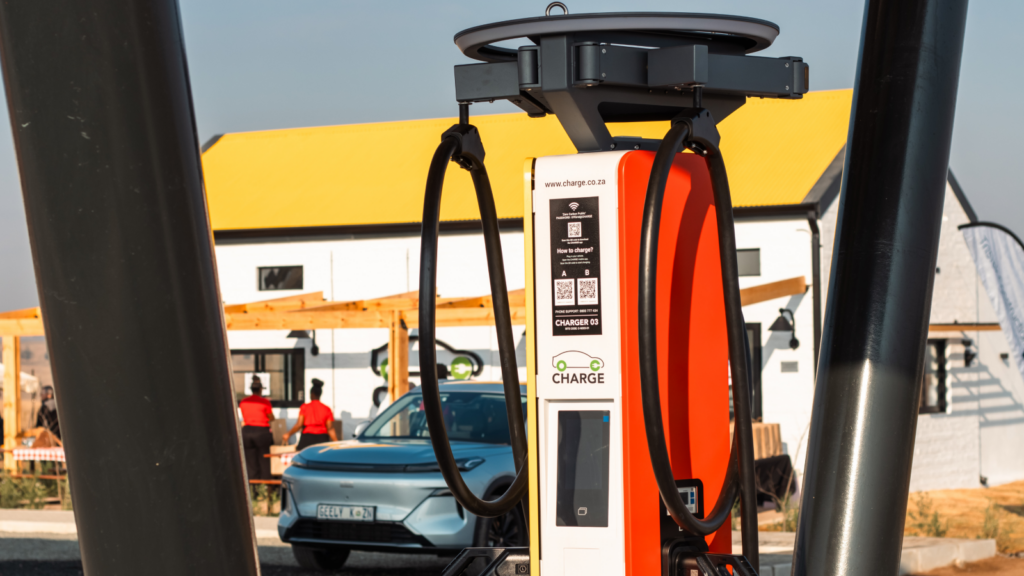
There are two main types of charging. AC charging is typically used at home, at work and at destinations where the car stays parked for a few hours. DC fast charging is designed for quicker top-ups, usually during longer journeys.
How long a charge takes depends on the vehicle, its battery size, the charger’s output, how much charge is already in the battery and the conditions on the day. A charger’s headline power rating does not, on its own, tell you how quickly a particular EV will charge.
Before you buy, work out where you will charge
Start with the basics: where will the car usually be parked overnight, and can it be charged there? A driver with secure off-street parking and a suitable electrical supply faces a very different ownership experience from one who relies mostly on public chargers.
Then think about the trips you actually take. Are there suitable chargers along your regular routes, how long would you need to stop, and can the vehicle comfortably reach the next charging point? Official range figures are useful for comparing models, but real-world range varies with speed, load, weather and driving style.
So, is it time to consider an electric car?
For a growing number of South Africans, an EV deserves a place on the shortlist. The Geely E2 and BYD Dolphin Surf open the door at around R340,000. The BYD Atto 2, GWM ORA 5 and BYD Dolphin expand the passenger-car choice, while the Geely Riddara, Foton eTruckmate and Foton eView take electric power into utility and commercial use.
At the upper end, the BYD Seal, BYD Sealion 7 and Toyota bZ4X show how broad the category has become. The Leapmotor B10 Hybrid EV and C10 Hybrid EV provide a different electrified option; unlike battery-only EVs, they also incorporate petrol power.
The sensible approach is to choose a vehicle that suits your passenger, load and budget needs, confirm where it will charge, and then decide whether electric driving fits the way you live and work.
Thinking about going electric? Compare the EVs that suit your budget and driving needs, then speak to your nearest McCarthy dealership about charging, range and ownership before you decide.




 Loading ...