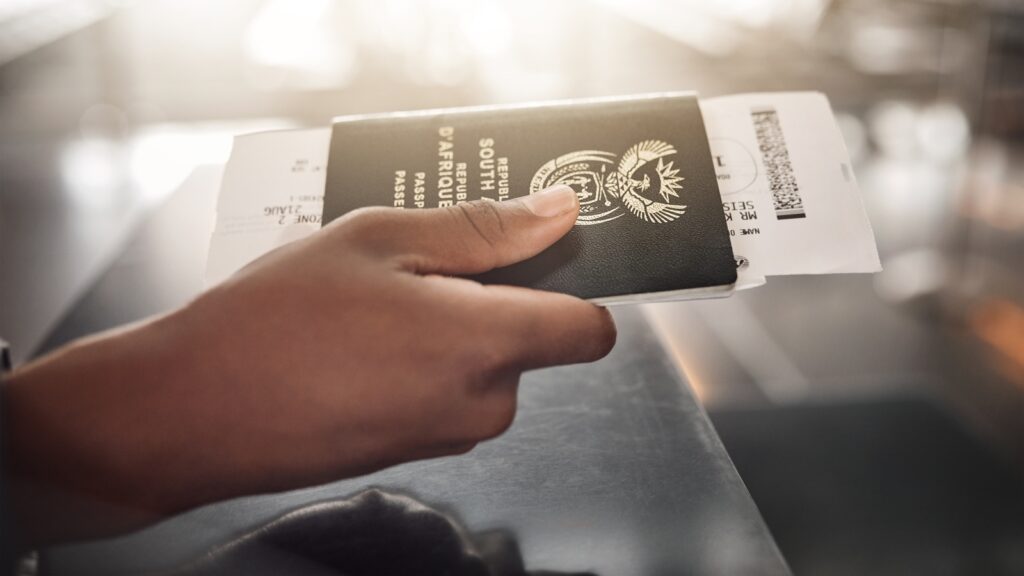
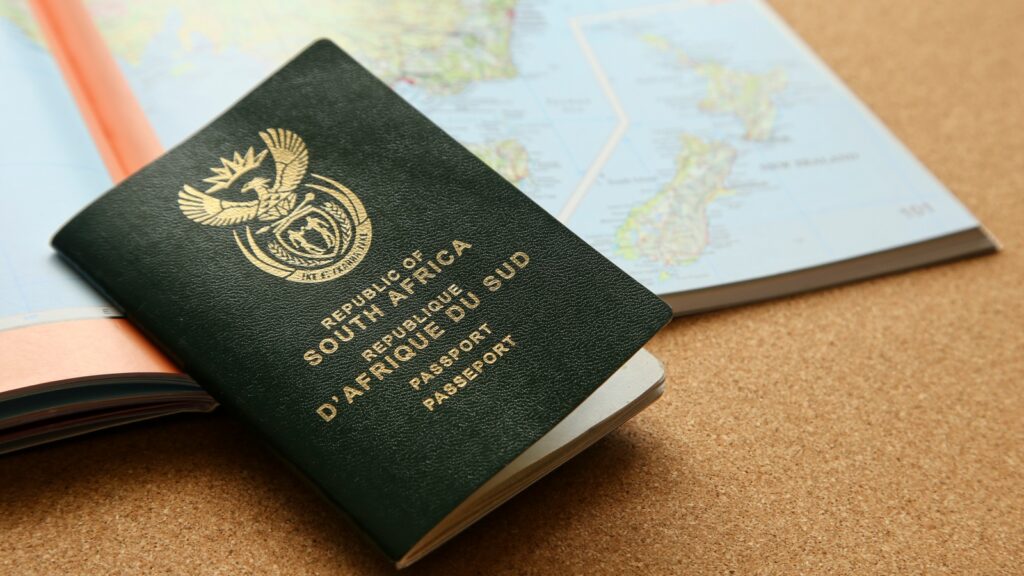
The Department of Home Affairs (DHA) will launch new e-passports to replace South Africa’s traditional passport books, also called the “Green Mamba”, next year.
Home Affairs Minister Dr Leon Schreiber revealed this during a press conference launching passport application services at 68 Absa branches and 412 Capitec branches across the country.
He explained that the new, biometric-based passports will contain metallic chips that store the passport holder’s biometric data, making them harder to forge and bringing local passports in line with international standards.
Our sister publication, MyBroadband, reports that the new passports were originally scheduled for launch in the next two years, but the deadline has since been moved up to next year.
While announcing the expansion of South Africa’s public-private partnership with the country’s banks, the Minister said digital reforms reduced application times to five minutes.
He added that the expansion means South Africa’s national passport service footprint grew from 228 Home Affairs offices to 708 service locations nationwide.
“We have more than tripled the number of locations where South Africans can apply for Passports. We have done this literally overnight, through the power of digital transformation,” said Schreiber.
Additionally, passport applications at participating bank branches are fully automated and based on biometric technology, eliminating the scope for fraud and photo-swapping.
This is a fraud technique that involves swapping the physical photo in an identity document with another using rudimentary methods and tools.
“If the photo of the applicant does not match the record we have on the population register, the passport will not be manufactured,” Schreiber added.
“In this way, we are also using this project to systematically enhance the security of our passport.”
According to the Minister, the rollout of new biometric passport applications at banks in South Africa was part of the department’s preparatory work to introduce new e-passports.
Future-proofing South Africa’s passports

Plans to introduce e-passports in South Africa were first announced in October 2026, when the Minister said a launch would be a joint effort between Home Affairs and its Government Printing Works division.
“Once we have fully automated the process to eliminate any scope for human manipulation or fraud, we will take the proposal to Cabinet for a new e-passport,” he said.
“This will introduce a secure chip containing a traveller’s biometrics, and for the first time render that new South African passport readable by electronic gates at airports around the world.”
More than 180 other countries have already adopted passports with contactless near-field communication (NFC) chips that contain digitally transmissible biometric information, scanned at border posts.
Some of these are developing nations like India, Jordan, Mongolia, Bahrain, Jamaica, Pakistan, and the Seychelles, while some European nations are already legally mandated to issue biometric e-passports.
These include standardised security features like high-resolution facial images, fingerprints, and physical and biographic descriptors such as sex and nationality.
Officials who scan the chips in e-passports can access this biometric data alongside additional cryptographic data that helps confirm whether any of the biometric data has been tampered with.
According to the Minister, this is the next part of the plan, which will follow the distribution of e-passports to South Africans.
He added that once these passports have been protected from fraud, his department will begin working to increase South Africa’s passport power.
“We will embark on negotiations to obtain visa-free access for more countries around the world for South Africans who use the new secure passport,” he said.
This comes after the La Vida Passport Value Index 2026, which measures the economic and travel value of international access, ranked South Africa lower than 118 other countries.




 Loading ...