


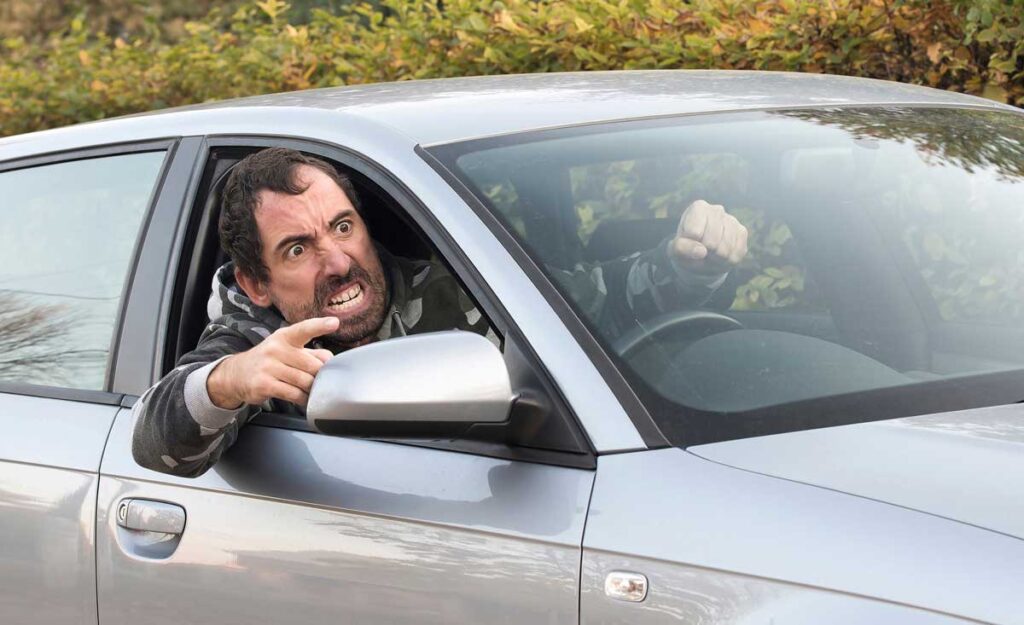
For years, South African motorists have used social media platforms like Facebook groups to report bad driving, parking violations, or even road rage incidents, but a new platform – Padvark– aims to consolidate all of that.
Stefan Verster founded and developed the platform, running it on his own and funding it out of his pocket since there is no cost to register, report or browse reports.
Arrive Alive, which is one of the platform’s partners, explained that all South Africans know the feeling when someone skips a stop sign, overtakes on a solid line, or weaves through traffic as if the rules apply to everyone else.
“You shake your head, maybe hoot, and the driver disappears down the road with no consequence at all. Padvark was started to change that,” Arrive Alive added.
The platform lets ordinary road users report reckless and inconsiderate driving, backed by photo and video evidence.
Approved reports are published on the site to ensure that bad driving is no longer something that happens and is immediately forgotten.
“The idea is simple: drivers behave better when they know someone may be watching. Padvark gives the public a responsible way to be those eyes on the road,” explained Arrive Alive.
The organisation has spent years campaigning for South Africans to share road responsibility, since enforcement officers cannot be on every corner.
It added that the platform does not replace the authorities or ask anyone to confront another driver, but instead asks users to record what they see safely, report it properly and let the right channels deal with it.
“That is why reporters are pointed to the RTMC and to Arrive Alive, and why Arrive Alive’s road safety articles are featured on Padvark,” the organisation said.
“The goal is not to shame people for the sake of it. It is to make reckless driving visible, to start conversations about it, and to remind every driver that the rules of the road exist to get all of us home.”
How Padvark works

Before motorists can report on the platform, they will need to create a Padvark account with a username that keeps reporters anonymous.
Below is a breakdown of how to set up an account and report bad drivers:
- Create a free account. Sign up with Google or an email address at padvark.co.za/login. Email verification is required before you can submit a report.
- Submit your proof. Upload photos showing the vehicle and its number plate, together with a video of the incident. Video is the evidence that makes a report credible.
- Wait for approval. Every submission is reviewed by a moderator before it goes live. Nothing is published automatically.
- Take it further. Reporters are given the option to send the same report to the Road Traffic Management Corporation (RTMC), with the details the authorities need to look up the vehicle and act on it.
The platform explained that it only works if its users are responsible, which is why Padvark has strict content posting rules, including:
- No faces. The occupants of a vehicle are never shown.
- No personal details. Padvark shows only what anyone on the road could see: the number plate and the driving behaviour. It never shares the owner’s name, address or any other information linked to a plate.
- No filming while driving. A reporter may not use a phone behind the wheel. Footage captured illegally or dangerously is declined, no matter how bad the other driver’s behaviour was.
- Nothing goes live unchecked. Every report is approved by a moderator first.
“The third rule matters most. Reporting a road hog should never turn the reporter into one. A dash cam, or a passenger doing the filming, is the right way to capture an incident,” said Arrive Alive.
At the time of writing, 83 motorists have been reported on the platform, including 13 instances in November across five of South Africa’s nine provinces.


 Loading ...


Conversation
2 commentsSo basically it is a local (un)Social Media App for roadhogs?