BMW’s first hydrogen car lands in South Africa – The most powerful of its kind in the world


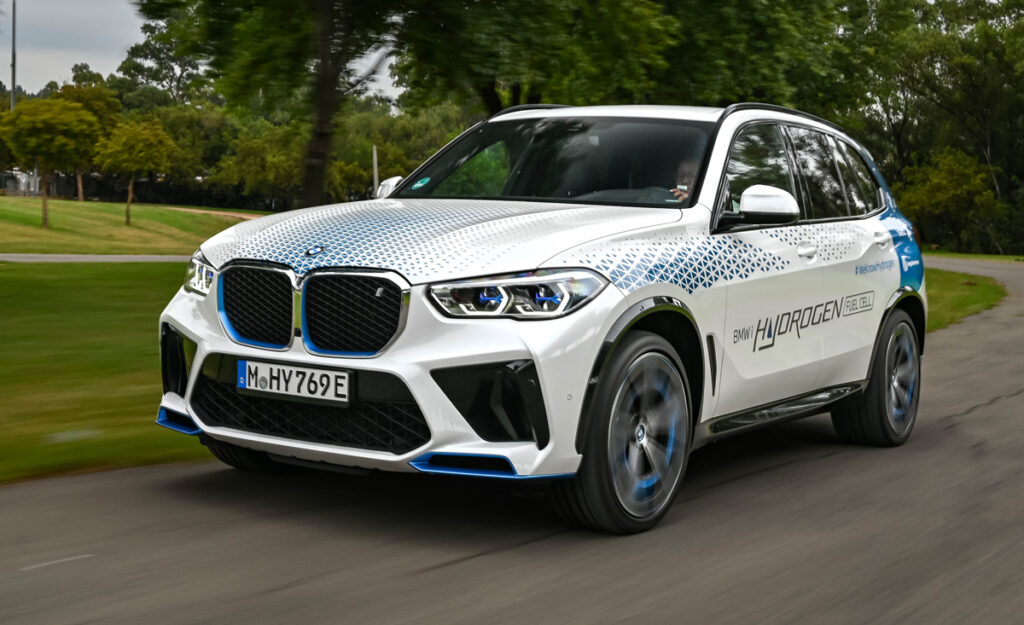
BMW’s hydrogen-powered iX5 has officially touched down in South Africa, the result of an agreement signed between the manufacturer, Anglo American Platinum, and Sasol back in October 2023.
While Toyota’s lone hydrogen Mirai has been in the country for a good few years by now, BMW said that the arrival of the iX5 marks the “first trial on public roads of a fleet of hydrogen vehicles in South Africa.”
The three companies involved in the project will each provide a unique part of the value chain to demonstrate their individual capabilities in this budding sector of the automotive industry.
“Collaboration across industries would be key to unlocking the huge potential of green hydrogen as a critical technology in the decarbonisation challenge,” said Peter van Binsbergen, CEO of BMW Group South Africa.
“We see Hydrogen as the ‘missing piece’ of the energy transition puzzle and, in the transport sector, it has the potential to become another pillar in the BMW Group’s drivetrain portfolio for local CO2-free mobility, alongside our established battery-electric mobility option.”

BMW iX5 specs
The iX5 Hydrogen was first presented to the world in prototype form at the 2019 IAA Show.
The hydrogen fuel-cell version of the X5 has been adapted to accommodate two 700-bar tanks constructed out of carbon fibre-reinforced plastic which carry a combined 6kg of hydrogen in a gaseous state, providing up to 504km of range at a rate of 1.19kg/100km.
The powertrain is capable of generating an impressive 295kW, the hydrogen system providing 125kW with the other 170kW supplied by “lithium-ion technology”, which allows the SUV to sprint from 0-100km/h in under 6 seconds and reach a top speed of 180km/h.
This, said BMW, makes the iX5 Hydrogen “the world’s most powerful passenger hydrogen fuel-cell electric vehicle.”
BMW South Africa confirmed to TopAuto last year that it will not be offering local customers a production version of the hydrogen-motivated SUV until the second half of the decade at the earliest.
By this point in time, the fuel-cell drivetrain is planned to be in its third generation and “will be able to offer a complete package that meets our customers’ high expectations.”
BMW iX5 Hydrogen




 Loading ...