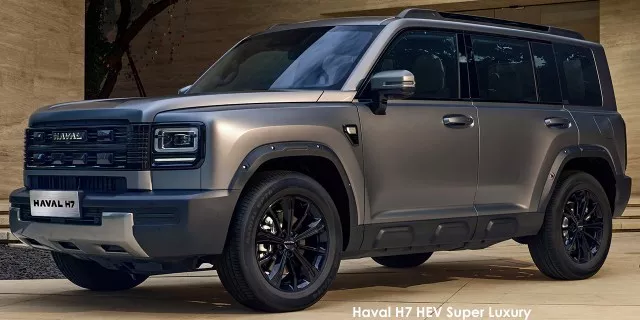
Car prices are going up faster than salaries in South Africa


South African employees planning to spend their salary increases on a new car may want to hold off on pulling the trigger.
This is because new vehicle inflation, despite hitting a record low of 1.5% last year, still outpaced the average “real” salary increase last year.
Statistics South Africa (Stats SA) reported in the third quarter of 2025 that year-on-year average monthly earnings had grown by 4.3%.
That means the average monthly salary in South Africa at the end of last year was R29,490.
Stats SA also reported that the average rate of inflation in 2025 was 3.2%, which is the lowest recorded annual inflation rate since 2004.
When calculating effective, or “real”, salary increases, payroll specialists Axiomatic propose subtracting the average inflation rate from the received increase in salary.
Considering this, the average real salary increase in South Africa last year was 1.1%, meaning the average employee effectively has 1.1% more money in their pocket than the year prior.
According to Axiomatic, the general “rule of thumb” is that a 1.0% real salary increase is the “new normal”.
It must, however, be noted that the average 5-year real increase is only 0.6% because of much lower increases in both 2022 and 2023.
With the average price of new vehicles growing by 1.5%, that means new cars continue to be a luxury not every South African can afford.
While it must be noted that South Africans tend to rely on credit when making vehicle purchases, this does increase the total price paid for a new vehicle.
Naamsa reports that thanks to improved interest and lending rates, South Africans are spending more on vehicles, despite them becoming more expensive on average.
The prime lending rate in South Africa is 10.25%, although not all motorists qualify for this rate due to their credit scores, meaning they may end up paying much more for a new vehicle than its sticker price.
Another factor that may make a new vehicle purchase unattainable despite salary increases is a balloon payment of 30-40% of the vehicle’s retail price.
As such, many South Africans are opting for cheaper new vehicles or shopping in the used market instead.
New cars continue to be expensive

Employees earning South Africa’s average salary of R29,490 can potentially afford to finance a new vehicle that costs less than R275,000.
This is according to calculations based on expert opinion that buyers should not spend more than 20% of their gross salary on new car repayments.
A new car purchased would need to be financed at the prime lending rate for five years and include no balloon payment at the end.
That being said, the total repayment on said vehicle would still amount to over R350,000 despite its R275,000 retail price.
Several popular new cars fall within this bracket, including the VW Polo Vivo, Toyota Starlet, Hyundai Grand i10, Suzuki Swift, and Nissan Magnite.
That being said, South Africa’s salary increases over the next few years need to continue to grow annually for real increases to beat new car inflation.
The South African Reserve Bank’s Monetary Policy Committee (MPC) projects the next three years’ inflation to be 3.3%, 3.5%, and 3.1%, respectively.
If this holds true, and salaries increase by less than 5% again this year, and new vehicle inflation remains the same, real increases won’t reach new vehicle inflation levels.
At the end of the day, South Africa’s motorists and new car buyers need to look at their budgets before making the decision to buy a new car following a salary increase.




 Loading ...