The South African Reserve Bank (SARB) has raised interest rates in response to rising consumer goods prices, dealing a blow to motorists taking out car loans.
The price of fuel has skyrocketed in the wake of the Iran war, causing a knock-on effect across the economy with increases in the price of most goods and services.
Consequently, the SARB has raised interest rates by 25 basis points.
This means that the central bank’s Monetary Policy Committee (MPC) has decided to increase the repo rate to 7.0%, while the prime rate has risen to 10.50%.
Six members of the MPC voted on the decision, with four ruling in favour of the change while the other two argued to keep rates as they are.
This latest turn of events illustrates the negative impact that the war in the Middle East has had on South Africa, as the country was previously set to enjoy interest rate cuts.
Fuel prices rose 11% in April 2026, following the US and Israel’s attacks on Iran, and consumer inflation rose to 4%.
This was at the upper end of the SARB’s one-percentage-point tolerance band for its 3% target.
The SARB expects headline inflation averaging 4.4% in 2026 and 3.7% in 2027, before returning to the 3% target in 2027.
While the Reserve Bank noted that South Africa’s economy is showing signs of life, it nevertheless lowered its growth forecast for the next wo years.
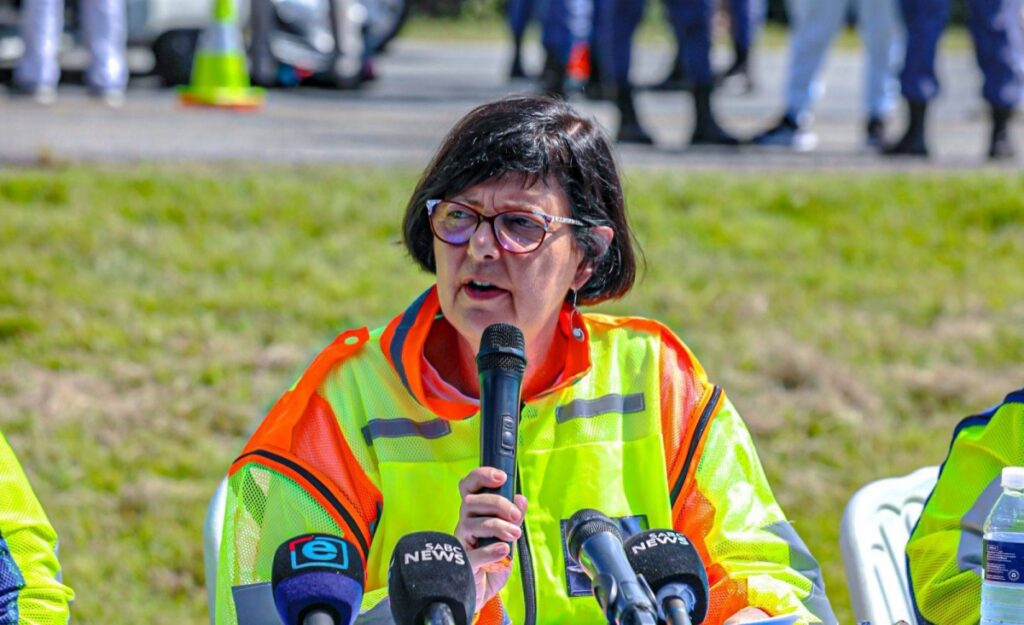
“We face a painful combination of higher global uncertainty and reduced disposable income,” said SARB Governor Lesetja Kganyago.
“This will hit both investment and household consumption, which have been our main growth drivers.”
Another blow for motorists
The interest rate hike comes at a time when car owners are grappling with record-high fuel prices.
As of May 2026, households are paying R26.63 per litre for petrol, and over R32.09 per litre for diesel.
The silver lining is that the Basic Fuel Price is set to come down this June, though motorists will not see the full benefit.
In fact, petrol is still likely to increase next month due to the return of the General Fuel Levy (GFL).
The GFL was reduced by R3 per litre in April as a temporary relief measure. This measure was later extended into May; however, the National Treasury now plans to add half of the tax back in June.
This means that, even though the petrol price should drop by roughly 46c per litre next month, motorists will actually pay R1 more than they are now.
Thankfully, diesel is likely to see a much larger reduction of R5.57 per litre, meaning that drivers will still see a drop in prices next month, even with the return of the GFL.



 Loading ...