The used-car market can be a minefield for the inexperienced, as the wrong decision can end up costing you a lot more than you bargained for.
While there are obvious red flags you should look for on any pre-owned car – such as shoddy paintwork, sagging panels, and funny engine noises – there are also other components one regularly overlooks that could make or break a bargain buy.
Without further ado, here are seven parts you should check before signing that all-import purchase agreement on a shiny new-to-you set of wheels.
Battery
When looking at a used car always pop the bonnet to check if its battery is still in good shape or needs replacing.
Obvious signs of a failing battery include swelling, corrosion around the terminals, a sluggish starting procedure, and glitchy electronics.
A battery could cost anywhere from a few hundred to thousands of rands, so be sure to ask the owner or dealer when it was replaced. A proof of purchase would be even better.
Note that most dealers will charge the power module before a viewing to avoid detection, so always be on high alert and pay close attention to the failure indicators.
Electronics
As you inspect a car, also make sure to press all the buttons and fiddle with all the controls to guarantee that its electronics work.
Especially when it comes to the exterior lights, fogged lenses and uneven beams can all be considered red flags, whereas a dim beam indicates that it’s time to replace the bulbs, according to mobile mechanics Michanic.
Additionally, check that the radio, infotainment system, climate control, locks, central locking, and all other accessories function as they should.
Apart from being irritating if something doesn’t work, it can be dangerous and pricey to fix.

Handbrake
Most buyers assume that a used car’s handbrake will be fine as it is not a component that is prone to failure, but it should not be ignored in your pre-purchase inspection.
A worn handbrake may not perform up to scratch, putting yourself and your vehicle in potentially dangerous situations.
It could also put unnecessary pressure on the gearbox as it will now be more responsible for keeping your car in one place while it’s parked.
You can test the effectiveness of a handbrake by checking how far the handle pulls up before the brakes bite.
Alternatively, stop on an incline or decline during a test drive to see if the vehicle moves while the handbrake is activated.
Brake lights
Ensuring that the brake lights work when you step on the pedal is another important thing to consider.
If you’re out and about in your new ride and the person behind you can’t see that you have hit the brakes, they may not know you are slowing down and subsequently send your car to the body shop, maybe worse.
Depending on the type of lighting fixture – halogen bulbs or LEDs – it could be inexpensive or very costly to fix a broken taillamp.
In any case, it’s recommended to have it taken care of by the seller before you drive the car home.

Tyres
Tyres with excessive wear and tear and shallow tread will hamper a car’s road-holding ability, safety, and efficiency.
Most tyres come with a tread-wear indicator which is a small rubber bump between the grooves of the tyre that shows you how much life it still has left.
Also inspect the shoes for cuts, tears, bubbles, and patches for signs of their condition.
Most motorists who have owned a car for any number of years can tell you tyres are not cheap to replace. You might be able to get a couple thousand rand knocked off the asking price by bringing up this point, or get the dealer to flip the bill on new rubbers.
Shock absorbers
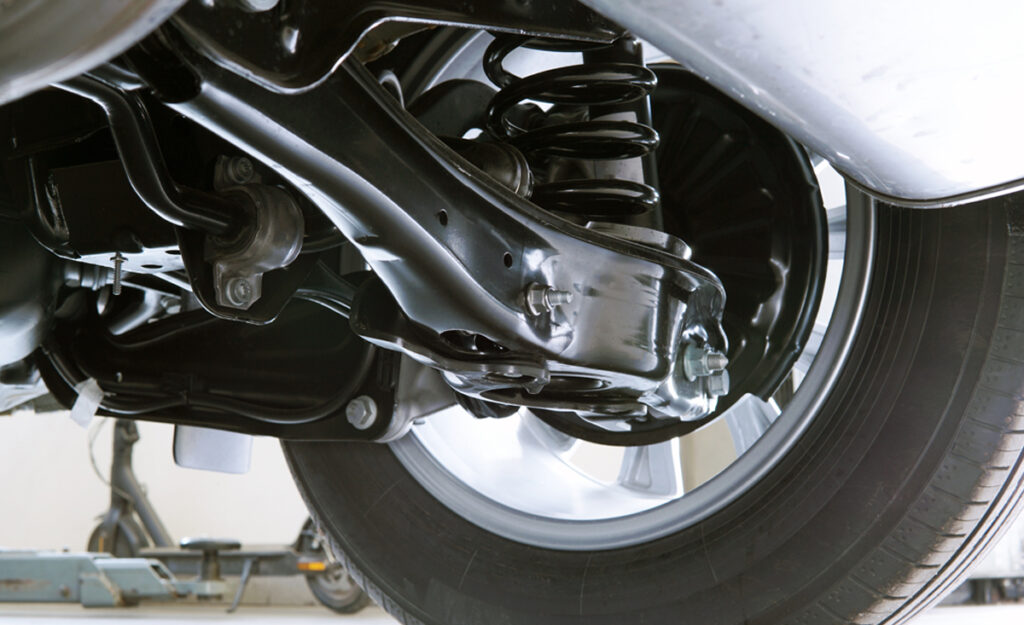
An often-forgotten element of shopping for a used car is checking the health of its shock absorbers.
If in poor shape, they can result in a rough ride, poor handling, reduced safety, and accelerated tyre wear – which you should be able to notice during a routine test drive.
Shock absorber manufacturer Monroe states that these components usually show measurable degradation around the 80,000km mark, hence, it’s of vital importance to have them looked over for leaks or excessive play if you’re considering a car with higher mileage than this.

Exhaust smoke
Abundant exhaust smoke is a telltale sign of engine issues, especially if it is dark gray or black.
To check for this, start the engine while stationary and wait at the rear of the car for a few minutes to see if any smoke appears. Also pay attention to this in the rear-view mirrors when performing a test drive.
If you’re not keen on haggling for a better deal and carrying out your own repairs, consider sidestepping the vehicle completely as it could very well turn into a money pit.





 Loading ...