Petrol stations in South Africa eyeing this one province – and it’s not Gauteng or Western Cape


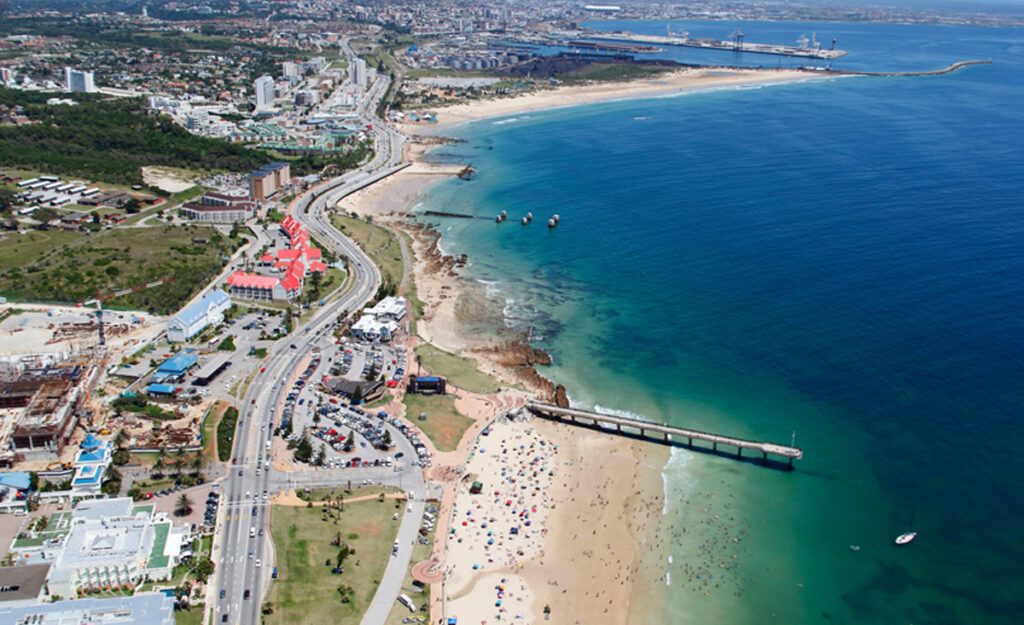
The Eastern Cape (EC) is emerging as an attractive market for service station investment in South Africa.
As per data analytics platform Kalibrate, major oil companies have traditionally focused their investments on South Africa’s three key markets: Gauteng, Cape Town, and Durban/KwaZulu-Natal.
These regions serve as the country’s main economic hubs where wealth is concentrated, and they benefit from the presence of refineries and ports, offering a significant supply advantage.
However, as these regions have matured they have become increasingly saturated and in turn, rendered growth opportunities more difficult to find. This has led to service stations diversifying their offerings to retain a competitive edge as growing their footprint in these provinces is no longer an option.
Consequently, oil companies are now focusing their attention on other regions in South Africa, with the Eastern Cape standing out as one of the premier destinations for investment.
Other attractive locations include the Free State, Limpopo, and Mpumalanga.

Eastern Cape
At present, there are approximately 490 service stations in EC.
At the time of Kalibrate’s survey of the region in 2024, there were 13 sites under construction compared to just six in 2022.
The number of open sites increased by 15 between 2023 and 2024, indicating interest by oil companies in investment in this region.
“The Eastern Cape has historically suffered from high unemployment and a weak economy. The province contributes 7.6% to GDP, ranking 7th out of the nine provinces in terms of GDP output,” the firm said.
“The province is technically in recession having experienced three consecutive economic contractions up to Q1 2024. However, there are many areas along the Eastern Cape coastline that are very attractive tourist destinations resulting in pockets of attractive growth and opportunity.”
Kalibrate’s Eastern Cape market study area stretches along the coast from Port Edward in the north to Mossel Bay in the south and incorporates the inland town of Queenstown.
Key growth areas identified along this avenue include the holiday destinations of Cape St Francis, George, Kenton on Sea, Knysna, Mossel Bay, Plettenberg Bay, and Port Alfred.
The Eastern Cape is also home to the National Roads Agency’s (Sanral) flagship N2 Wild Coast Road Project.
The undertaking comprises a major 110km upgrade to one of the country’s most important connectivity roads which will reduce travel distances and by extension, travel times, between four of the nation’s biggest provinces – the Western Cape, Eastern Cape, KwaZulu-Natal, and Mpumalanga.
It will also allow freer movement between previously underserviced areas in the province.
For example, the R1.7-billion Msikaba Bridge near the town of Lusikisiki – which will be billed as the longest suspension bridge in South Africa upon completion in 2025 – will slash travel times for vehicles driving from the Eastern Cape to KwaZulu-Natal, with the current road consisting of an 80km inland diversion passing Kokstad.
The N2 Wild Coast Road Project boasts a budget of R20 billion and is expected to be completed by the last quarter of 2027.

Free State
The Free State (FS) is significantly smaller than most other provinces in terms of its contribution to the national GDP which is pegged at 4.9%, however, its GDP growth in 2022 was 1.5% which is above Mpumalanga, Limpopo, and KwaZulu-Natal.
Likewise, fuel demand in FS is the lowest among all provinces in South Africa, with sales 15% lower than Mpumalanga, the next smallest market.
With an average fuel throughput of 218kl/month per site, FS stations on average do slightly better than those in Limpopo, primarily due to the region’s smaller number of sites which culminates to 470.
On the downside, average monthly turnover for petrol station convenience stores in FS is almost half of those in Cape Town and Durban, reflecting the lower per capita income and weaker economy.
Between 2023 and 2024, only one new site opened in the breadbasket of South Africa, with an additional seven currently under construction.
“Although fuel volumes have remained flat over the three years since Kalibrate started surveying this market in 2022, the South African government predicts growth between 2021 and 2026 of 1.45% largely driven by the finance sector,” said Kalibrate.
“This market could be attractive to investors interested in transient traffic service station investment, as it is at the confluence of major logistics arterials such as the N1, N6, N5, N8, and N3.”

Limpopo
Limpopo in the far northeast of South Africa borders Gauteng and Mpumalanga as well as neighbouring countries of Botswana, Mozambique, and Zimbabwe, accounting for 7.7% of the national GDP
Limpopo experienced a contraction in fuel volume between 2021 and 2022, but grew year on year since then by approximately 2% per annum.
Fuel sales in the region is comparable to the EC and Mpumalanga markets, however, with 597 service stations, the higher number of sites has led to a lower average fuel throughput of 206kl/month per site.
“This growth suggests a possible oversupply of service stations, indicating that some networks may need to consider optimization,” said Kalibrate.
As in the case of FS, shop average revenue per site in Limpopo is shy of half that of Cape Town and Durban, reflecting the lower average earning power and lower investment of the major oil conglomerates.
Since 2023, 17 new stations have been built, with another 17 currently under construction.
Limpopo is unique in that it is currently the only province where TotalEnergies leads the market, with approximately 13.5% share. Additionally, a significant 27% of sites are independently owned, capturing nearly 10% of the aggregate fuel volume.
“Limpopo is increasingly attracting the attention of oil companies seeking new investment opportunities. There is growing interest in specific areas with promising potential,” said Kalibrate.
“Key towns across Limpopo, including the capital Polokwane, as well as Bela-Bela (Warmbad), Lephalale (Ellisras), Makhado (Louis Trichardt), Musina (Messina), Thabazimbi, and Tzaneen, present significant investment prospects. Additionally, Limpopo’s strategic location along transient routes to neighboring countries enhances its appeal to investors.”

Mpumalanga
Mpumalanga nearly matches Limpopo in the size of its contribution to the national GDP at 8% despite being the second-smallest geographic region behind Gauteng.
It benefits from its proximity to Gauteng and advantageous fuel supply routes through the Maputo Development Corridor.
Once again mimicking Limpopo, Mpumalanga showed a slowdown in propellant demand from 2020 to 2023, but there has been an encouraging recovery in 2024 with volumes increasing by over 3%.
Fuel sales in the region mirror the EC and Limpopo, averaging 234kl/month per site in 2024.
Mpumalanga hosts 522 service stations and diesel volumes remain robust likely as a result of higher levels of transient traffic.
The number of open sites in Mpumalanga has increased by 14 in the past 12 months, with a further eight sites under construction.
Significantly, unbranded independent sites make up 16% of the Mpumalanga market, far higher than the three top provinces where independents only hold 5% or less.
“With saturation of the three key markets of Gauteng, KZN/Durban, and Cape Town, investors have identified this market as a new growth area where property is less prohibitively expensive and barriers to entry are lower,” said Kalibrate.
“The size of the Mpumalanga market and the number of sites has taken many by surprise. The robustness of the average fuel throughput per site at 234kl/month makes Mpumalanga a market to consider for future investment. The large number of independent sites and smaller brand networks offers acquisition opportunities for investors.”




 Loading ...