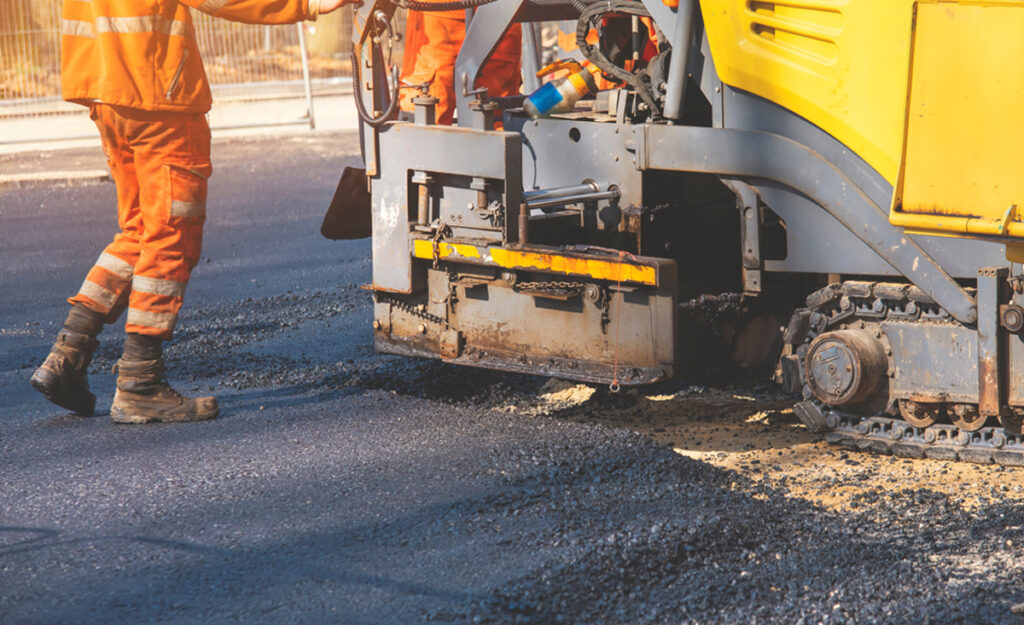
Concrete roads and ones made from recycled tyres have been touted as viable alternatives to the traditional asphalt being used on the vast majority of streets and highways today.
These materials are more resistant to pothole formation than tarmac and could thus be a boon for cash-strapped municipalities that are behind on road maintenance.
In a piece on GroundUp, Cole Potgieter, a biomedical engineering student at Wits, explains that given the ongoing challenges with asphalt roads, alternative materials should be considered by authorities in the country.
One of these is concrete, which is more durable and requires less maintenance than asphalt.
While concrete is more expensive to pour and produces more road noise, it boasts a longer lifespan which could offset the initial costs and maintenance needs.
This makes it an attractive option for road construction, particularly in rural areas, said Potgieter.
Another option currently under investigation by the Council for Scientific and Industrial Research is using recycled tyres as road surface material.
It’s hypothesised that tyre-based roads could offer both environmental and durability benefits, however, the long-term reliability of the technology is still being studied.
Why potholes form
Roads are made up of several layers, each with a specific function.
At the bottom is a compressed level of road surface soil. Next, a base layer composed of gravel is topped with a cement-stabilised gravel layer for added strength.
Above this is a layer of crushed stone, followed by the final surface which consists of an asphalt mix.
“The quality of these materials, and the way they are applied, is critical for road durability,” said Potgieter.
The other crucial factor in road construction is drainage.
“Water is a road’s greatest enemy, and if proper drainage is not built into the design, water will infiltrate the layers beneath the surface,” said Potgieter.
“Unfortunately, in South Africa, road construction often neglects drainage systems, or the drainage becomes blocked and ineffective over time, accelerating road degradation.”
He notes that the asphalt mix used for many roads in the country is often substandard which leads to cracks shortly after application.
These crevices allow water to seep into the layers beneath the asphalt, weakening both the road and the soil foundation.
Inadequate drainage systems exacerbate the problem, causing water to pool underneath the road surface.
“Over time, as traffic moves over these weakened areas, the material erodes and collapses, forming potholes,” said Potgieter.
Compounding this is a lack of timely road maintenance and monitoring.
“Once cracks begin to form, they should be addressed quickly to prevent potholes, but maintenance does not happen frequently enough to stop the issue at its source,” concludes Potgieter.
“Tarred roads generally require resurfacing to maintain their integrity after ten years. Unfortunately, this is often delayed, leading to more frequent and severe potholes.”





 Loading ...