Warning for motorists using this car feature in South Africa


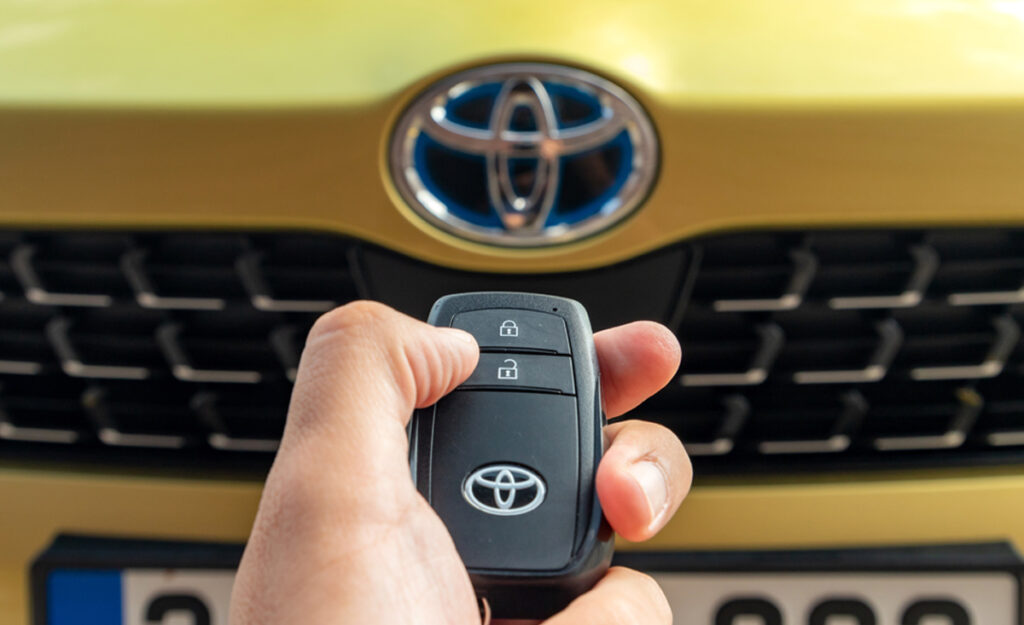
Keyless entry is a convenient feature found on many new cars, but it is also a major safety risk.
Private security companies, car tracking firms, and insurance companies have all warned about a surge in keyless car thefts in South Africa as criminals adopt increasingly tech-savvy methods to break into vehicles.
Since 2022, there has been a notable increase in reports of so-called “replay attacks” or “relay attacks,” which exploit the way keyless entry systems function.
A car with keyless entry transmits a short-range radio frequency communication between the key fob and a receiver in the vehicle connected to the locks and alarm.
With a regular car remote, the receive is constantly listening for a signal from the remote to unlock the doors and deactivate the alarm.
This signal is represented by a string of binary numbers with a unique identifier code that matched the receiver, essentially functioning like a passcode.
In newer cars, the code frequently updates to improve security.
The signal is only sent when the owner presses the button on their remote, at which point the car receives the code and unlocks.
It is possible for criminals to capture this code with specialized equipment. However, the code is useless once the person locks or unlocks the car as it will have updated.
The issue with keyless entry is that the fob is essentially transmitting a signal nonstop, almost as if the person is holding the button down.
The idea is that the car will pick up the signal once the owner approaches and unlock automatically, making it very convenient for individuals to hop in and go, especially if their hands are full of shopping bags.
Keyless entry cars still require a person to press a button or put their hand inside the door handle first as a way to prevent it from accidently unlocking whenever they are in the vicinity.
These models will also lock automatically when you close the door and walk away, as they can detect when the fob is no longer in range.
The problem with keyless entry is that, by constantly transmitting a rolling code, it is far easier for criminals to intercept one that is valid.
A “replay” attack typically involves car theft syndicates that monitor parking lots for vehicles with a high resale value, such as a Toyota Hilux or Ford Ranger.
A thief will then follow a chosen victim as they move around a public space such as a shopping mall.
Using signal-capturing equipment, typically hidden in a bag, the thief can pick up the codes transmitted from the key fob in the victim’s pocket.
The first thief sends these codes to an accomplice in the parking area, who uses them to unlock and start the car.
A similar method, known as a “relay” attack, targets cars in peoples’ homes, and requires the first thief to attempt to open the vehicle.
This makes the car transmit a ‘challenge’ signal from its receiver, which helps the criminals to locate where the key fob is stored.
This allows them to hijack the code, which is transmitted back to the car to unlock it.
The solution

While there are a few solutions to reduce the risk of keyless car theft, all of them involve methods that essentially mitigate the feature’s purpose.
One of the most common pieces of advice is to use a Faraday pouch for your key in public.
A Faraday pouch is lined with conductive materials like a metal mesh, which blocks electromagnetic signals.
This prevents the fob’s signal from being picked up by external sources, meaning criminals can’t copy the unlock code.
The downside is that the fob can no longer connect to the car and the owner will need to take it out of the pouch, essentially defeating the hands-free aspect of the feature.
Certain car brands will allow you to disable keyless entry entirely, at which point the fob works just like any other vehicle’s.
If you still want to use your car’s keyless entry, it’s best to exercise caution and pay attention to your surroundings and other people in public to see if anyone is monitoring your actions.
Unfortunately, it will require an innovation on the part of manufacturers to develop a keyless entry system that is less vulnerable to these exploits by making it more difficult to capture the unlock signal.
As things currently stand, the safest solution is to disable the feature, which is an unfortunate reality for South African motorists.




 Loading ...

-2026.10.webp)