The biggest winners of the Chinese car takeover in South Africa


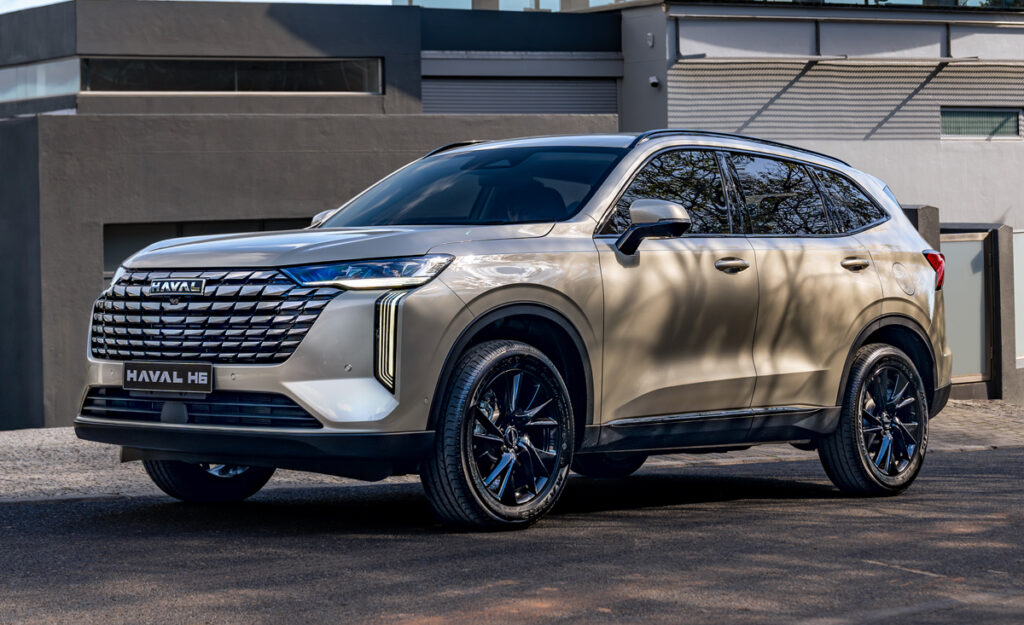
The rapid growth of Chinese brands in the automotive sector has been highly beneficial for some local vehicle and asset financiers.
This is thanks to these companies’ securing partnerships with these Chinese brands and benefiting from their strong sales.
Two of the largest examples of this are WesBank and Nedbank MFC, which have seen considerable returns after shifting their perspective of Chinese brands from a potential threat to a possible opportunity.
A key consideration is that vehicle lending, particularly for new vehicles, is quite different from other kinds of credit extension, as they don’t focus on lending to individuals.
With vehicles, it is usually done through lending to the dealership and the assorted financial service companies that work behind the scenes.
This makes it difficult for new entries to break into the market; for instance, Discovery Bank has made it clear that it has no intent to enter the vehicle financing sector since its behavioural model is centred around individual behaviour, limiting its ability to offer a unique service.
On the other hand, Capitec has partially entered the sector but has focused on lending to individuals directly when buying used cars rather than trying to enter the new car market.
The emergence and growth of Chinese brands have shaken up the industry, with initial fears that their emergence would impact existing deals and eat into the market share of established players.
However, WesBank and Nedbank MFC have both seen continuous strong growth, with WesBank posting a 20% rise in normalised earnings over the past year, amounting to total earnings of R2.38 billion.
WesBank has cited the rise of Chinese car brands in South Africa as a key opportunity and has secured partnerships with several foreign brands.
These partnerships are usually done through multiple supplier and dealer alliance agreements, which have all boosted WesBank’s loan growth.
Risk to reward

Nedbank MFC is South Africa’s largest vehicle financier, with its market share growing to 36.2% over the past financial year.
The bank’s operating division has noted the shift in preferences towards value over the past few years, with the growth of Suzuki, Chery, and Haval, as well as the used car market, with players such as WeBuyCars.
It had previously said that Chinese cars could face headwinds in the market due to the sheer number of brands in play, with established players benefiting until the new arrivals begin eating into their market share.
However, Nedbank CEO Mike Davis has noted that the emergence of Chinese cars and used car players has not significantly impacted its vehicle financing business.
He said this to Daily Investor, noting that one of the bigger threats to the company is the rise of used car sales, given their affordability relative to new models.
This is coupled with the arrival of Chinese brands that do not have a pre-existing dealership network, which could also pose a risk to financiers.
“We currently hold a 36% market share in the vehicle financing segment, and we have continued to take market share in the past year,” Davis said.
“We have gotten a lot of questions about new versus used and new Chinese vehicles coming into the market and the impact those trends would have on our financing.”
He noted that in answer to such questions, he has explained that they have grown their market share effectively and are comfortable in vehicle finance.
This means that Nedbank MFC is one of the few areas where the bank has managed to grow its lending market share.
Davis also said that faster-growing real incomes and lower interest rates will improve the economies of the motor vehicle finance business in the second half of the year.
He explained that we’re coming off the end of an interest rate hiking cycle from 2021, followed by a rate cut of 50 basis points in 2024 and 75 basis points in 2025.
“Typically, it would take 18 months before this translates into a positive impact on impairments,” he said.
“So, we should see the economics of that business improve in the second half of the year through a lower bad debt impairment number.”





 Loading ...

-2026.10.webp)