5 ways to permanently escape high petrol prices in South Africa


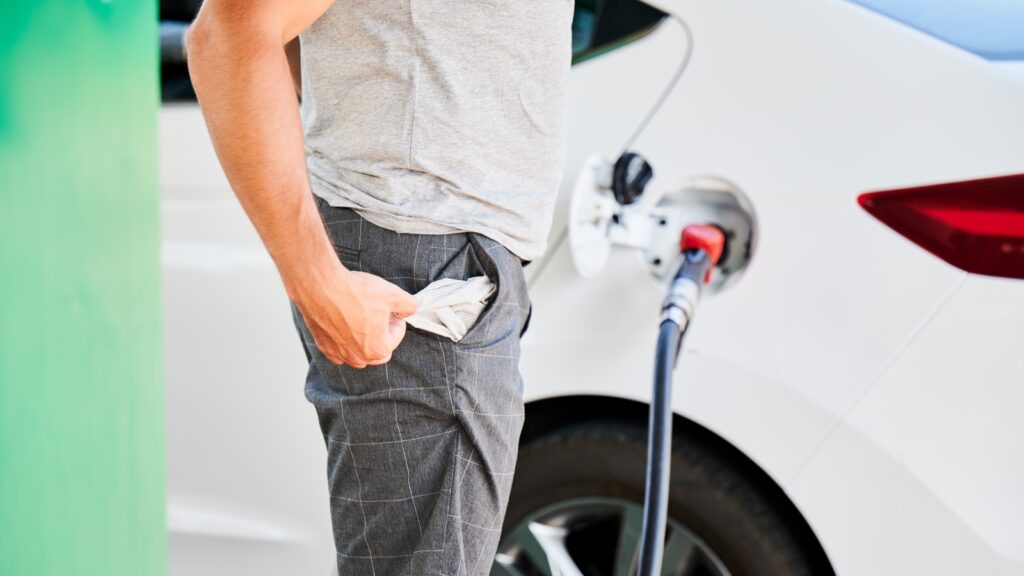
Car owners hoping to escape the cycle of petrol prices rising and falling as the situation in the Middle East plays out have a few options, but there is a catch.
Petrol prices fell slightly at the start of the month, while diesel got slightly more expensive, highlighting the volatility in the market right now.
As a result, many motorists are looking towards behaviour changes, including driving less, carpooling, or even buying more efficient vehicles.
These are all good ways to lower monthly fuel spend and save a few rands, but some South African motorists have found a permanent solution.
Motorists in South Africa who convert their vehicles to run on autogas typically reduce their cost per kilometre by 20 to 30% compared to petrol, depending on vehicle and usage.
This is according to Isinkwe Energies, a Durban-based provider of advanced alternative fuel systems, including five conversions that suit most vehicles and driving needs.
Solutions range from everyday passenger vehicles, which the company proved with its Toyota Corolla Cross conversion a few years ago, to high-performance vehicles like a converted Ford Mustang.
Earlier this year, LPG Autogas installed a Prins Autogas liquefied petroleum gas (LPG) system on a 5.0-litre V8 Ford Mustang in South Africa.
The bi-fuel system the company installed was engineered for efficiency with “zero compromise” in performance, and allows the vehicle to still run on petrol if it runs out of LPG.
A stock model of this particular Mustang produces 328kW and 540Nm, which, according to Isinkwe Energies, were not affected by the conversion.
The project included adding LPG injectors to the vehicle’s engine, along with an all-new air-fuel control (AFC) controller and an eVP-500 vapouriser.
The Mustang conversion saw LPG Autogas install an LPG fuel tank, various pressure safety relief valves, and a Prins Autogas control switch in the cockpit.
Every fuel conversion offered by Isinkwe

Isinkwe offers Prins Autogas conversion kits for most major manufacturers and can tune converted cars according to each customer’s preference for economy and performance.
The first system, which is only suitable for 3- or 4-cylinder engines with power outputs up to around 135kW, is the Prins Silverline Bi-Fuel System.
It allows the converted vehicle to run on both petrol and LPG, giving drivers the freedom to switch between two fuel options effortlessly, ensuring a greener and more cost-effective driving experience.
For high-performance petrol-powered vehicles that produce up to 670kW, the Prins VSI (Vapour Sequential Injection) system can be installed to convert them into ‘eco-friendly machines’.
This system injects LPG or Compressed Natural Gas (CNG) into the engine in vapour form, ensuring smooth and efficient combustion, resulting in lower emissions and better fuel economy.
Isinkwe also has a solution for direct-injection engine vehicles, thanks to the Prins VSI-DI system, which delivers precise fuel injection, optimising performance and efficiency.
It integrates with modern direct-injection engines, providing the benefits of Autogas without compromising on power.
For motorists looking to future-proof their conversion, Isinkwe offers the Prins VSI-3 DI LPG conversion, which complies with global emissions standards.
This system also offers a universal solution for a wide variety of vehicles, as an ‘extremely efficient’, higher-performing system to enable a smooth driving experience, similar to regular petrol cars.
When powered by autogas, this system saves fuel costs and lowers CO2 emissions by 21% and particle emissions by up to 95%.
The final solution is the Prins Dual Fuel System, and despite its name, it enables converted vehicles to run on not just one or two, but four alternative fuels – LPG, CNG, LNG, and hydrogen.



 Loading ...
-2026.10.webp)