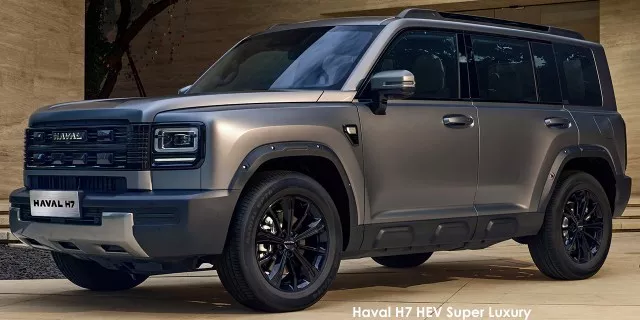
South Africa has seen the introduction of several new Chinese car brands over the past two years, and they are all starting to run into a big problem – each other.
You’re not alone if you’ve thought that there seems to be news of a new Chinese car brand coming to South Africa every other week, as these companies have dominated headlines over the last few years.
The list of Chinese car brands operating within our borders now includes:
- BAIC
- BYD
- Chery
- Dayun
- Foton
- GAC
- GWM
- Haval
- JAC
- Jaecoo
- Jetour
- LDV
- Leapmotor
- Maxus
- MG
- Omoda
These 16 names now account for roughly a third of all the automakers in South Africa, and several more are still on the way, such as:
- Changan
- Deepal
- Denza
- Dongfeng
- Geely
- iCaur
- JMC
- Lepas
- Riddara
Right now, there are more than 40 different Chinese passenger cars on sale locally, and this number is expected to shoot up as more manufacturers enter our market.
While the price of Chinese cars currently ranges from R269,900 up to R1.4 million for luxury models, the vast majority of these models are competing in similar segments with crossovers, SUVs, and bakkies that retail for between R400,000 and R800,000.
Naturally, this has raised questions regarding how all of these companies expect to compete with one another, especially when you consider there are still popular legacy brands to compete with such as Toyota and VW.
Mazda Southern Africa’s incoming CEO, Bonite van der Merwe, recently gave her thoughts on the matter, suggesting that the local car market risks “cannibalisation.”
She argued that too many similar cars are competing against each other, weakening the brands rather than strengthening them.
While Chery and GWM have managed to establish themselves as top players in the local auto scene, regularly appearing in each month’s best-seller lists, other brands have a long road ahead to prove themselves to consumers.
One issue is that most Chinese brands haven’t been around long enough to populate the second-hand market, which will give the public a better sense of how reliable these cars are, and how well they hold their value.
van der Merwe said that this will be the real test for these marques, as customers will be able to assess the quality of the cars, the cost and availability of parts, and whether there is a reliable service network to support owners.
She warned that, until this happens, consumers will remain skeptical because they could be left with cars that are expensive to maintain and worth little when the time comes to sell them.
“At the end of the day, the consumer is the one who will be left with the vehicle and the financial burden, if they do not have strong residual values or there are issues with the after-market parts supplies,” she said.
This sentiment is shared by WeBuyCars CEO Faan van der Walt, who previously warned motorists to consider whether these brands will retain their value.
He explained that the flood of Chinese brands is unsustainable and that the market will need to “sort itself out” over the next few years.
van der Walt theorised that the market cannot support so many different brands competing for the same customers, and that at least a few companies will be forced to pull out in a few years until only the dominant players remain.
Responding to a query from TopAuto, Hans Greyling, General Manager of Omoda & Jaecoo South Africa, said that “there is a possibility of oversaturation of Chinese brands in South Africa,” but that the company believes it can stand out thanks to a comprehensive dealer network, and that the various brands in the Chery Group are distinct enough from one another to not compete for the same customers.
Government thinking of getting involved

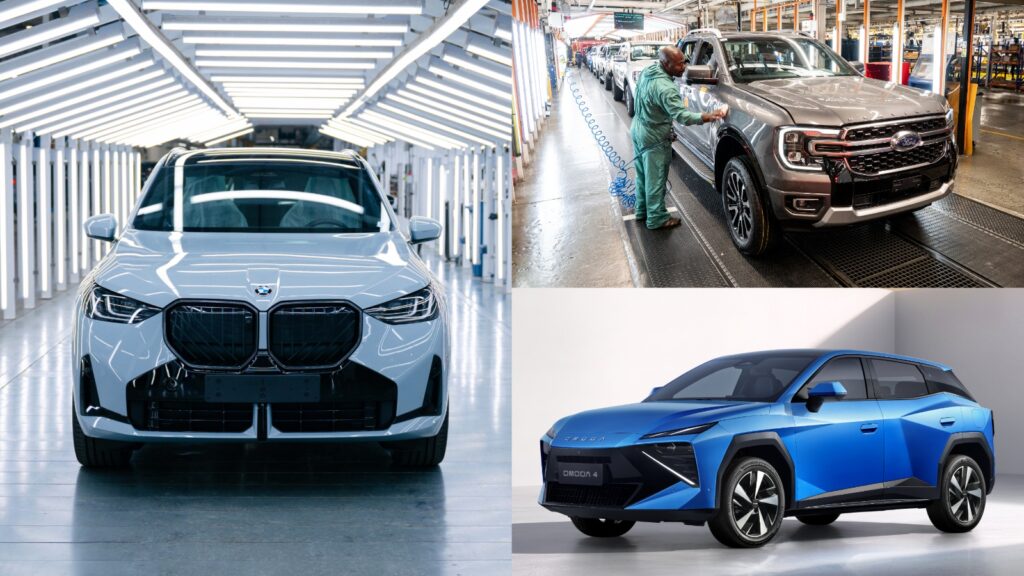
The onslaught of new Chinese makes has not gone unnoticed by VW, Toyota, Ford, and BMW, which have called on the government to take measures to support local manufacturing.
One possibility is that the government may impose higher tariffs on imported vehicles, which would make Chinese cars more expensive.
A big reason why cars from the People’s Republic have become so popular is that they are more affordable than their legacy competitors, so higher import duties would be a major blow to their appeal.
Trade Minister Parks Tau warned that the growing number of cheap imports is hurting the nation’s automotive industry.
In response, South Africa is thinking of adjusting government subsidies and incentives to encourage local production.
Stakeholders across the industry have warned that, while motorists may benefit from lower prices and a variety of options in the short term, it remains to be seen how well these Chinese cars hold their value, and whether many of these companies will still be around in 5 to 10 years.





 Loading ...