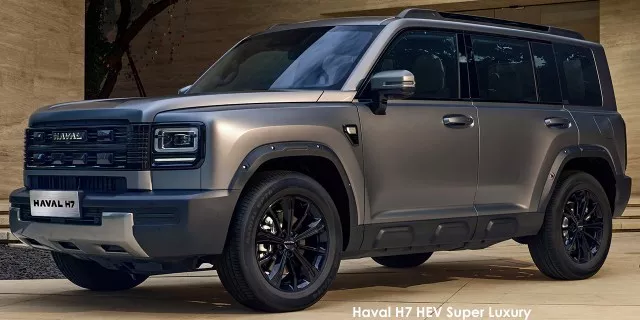
Chinese carmakers posted their best month ever in Europe, roaring past previous highs in September on surging demand for battery-powered and hybrid-electric models.
Companies led by BYD, SAIC Motor’s MG and Chery Automobile captured a record 7.4% of all passenger-car sales across Europe, according to researcher Dataforce, and surpassed South Korean carmakers like Kia for the first time.

September’s acceleration follows months of steady growth.
BYD, the world’s largest maker of electrified vehicles, expanded its dealer network and lineup of plug-in hybrids and EVs, as did others targeting categories driving most of the region’s growth.
The blowout is “a pointer to what might lie ahead,” said Benjamin Kibies, a Dataforce analyst.
“We see a constant increase in Chinese brands’ penetration of the European markets.”

The change was especially stark in the UK, which accounted for nearly half of Chinese manufacturers’ European sales.
Demand was boosted by the country’s twice-yearly license-plate changeover, but also underscored the brands’ growing appeal.
UK import tariffs of 10% are well below the stepped-up duties placed on Chinese-made EVs by the European Union last year.
“The British market is key,” Kibies said. “The Chinese are very strong in the UK.”
BYD’s UK sales jumped sixfold from August, a pace nearly matched by MG, originally a British brand.
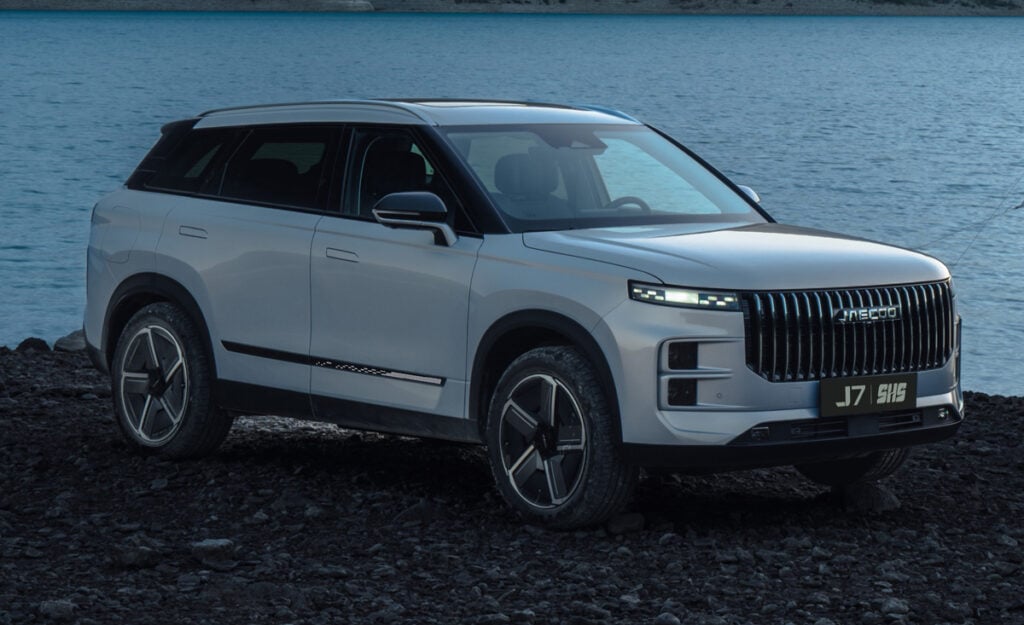
Chery’s Omoda and Jaecoo nameplates also gained ground with new hybrid SUVs.

The inroads made in Europe highlight a growing mismatch in the auto trade, where cheaper battery technology gives Chinese manufacturers a competitive edge.
European brands that have already lost share in EV-dominated China now face growing competition at home as Chinese firms accelerate an overseas push amid overcapacity on the mainland.
As of yet, there’s no sign of a slowdown. “Considerable growth in China” drove an increase in global auto production in the third quarter, Markus Kamieth, chief executive officer of auto supplier BASF SE, said Wednesday on a call with analysts.
On the political front, Europe is also playing defense. EU tariffs only temporarily slowed the rise of Chinese brands.
The continent’s own carmakers face disruption from a new trade dispute over control of a Dutch chip supplier, after China banned the export of some of its products.
Some European carmakers may have to halt production within days, the European Automobile Manufacturers’ Association, or ACEA, warned on Wednesday.
Chinese brands still have only a small foothold in Europe, but are targeting fast-growing segments.
They’ve rolled out competitively priced plug-in hybrids that offer lower running costs without full reliance on charging — an increasingly attractive option for buyers.
Plug-in hybrid sales surged 62% across greater Europe in September, according to the ACEA, the industry’s main lobbying group. Hybrids that don’t require a charge rose 15%.
Robust demand for more affordable models boosted sales for European carmakers such as Volkswagen AG and Renault SA too.
Still, Chinese manufacturers captured an outsize portion of the growth — reaching 8% share in western Europe to pass South Korean brands for for the first time, according to Schmidt Automotive Research.

Across Europe, Chinese brands’ share of plug-in hybrids leaped more than 7 percentage points sequentially to 20% in September, according to Dataforce.
Their EV share jumped 1.7 points to 11% in September — and would have reached 13% if sales from Zhejiang Leapmotor Technology’s partnership with Stellantis NV and an Ebro-Chery venture were included, Kibies said.
Not all of the volume looked healthy, Kibies said.
MG, BYD and Leapmotor had a significant number of “tactical” registrations in September — cars sold to rental fleets or dealers.
BYD has reached 100 franchised retail sites less than 2.5 years after opening its first UK showroom in 2023, and now has coverage across most of the country.
“They’re paying to play — making very attractive offers to dealers to take on the brands,” said Stephen Reitman, analyst at Bernstein.
“The dealers like the value in the offer and the customers are impressed by the product — there’s a certain amount of shock and awe in the dealership.”
New Plug-ins
China’s latest plug-in hybrids offer long electric-only ranges, rapid charging and generous standard equipment at prices below European rivals.
Launches this year include Chery’s Omoda 7, with a 50-mile pure EV range, and the Jaecoo J8 sport utility vehicle.

BYD added the Seal U DM-i SUV and a plug-in version of the Dolphin hatchback.
Its DM-i hybrids pair an electric motor with a small petrol engine to boost range and fuel economy, and now sit at the core of its lineup alongside all-electric cars.
Last week in London, Geely showed off its EX5 electric SUV. The brand plans 10 models in the UK over the next three years, from small runabouts to large family vehicles.

Omoda’s UK sales quadrupled in September from August, while Jaecoo’s rose more than fourfold after entering the market this year.
Chery is targeting European and South Korean rivals with mass-market crossovers and SUVs.
“Consumers are clearly leaning toward plug-in hybrids — and right now, it’s only the Chinese brands offering them at reasonable prices,” said Bloomberg Intelligence analyst Michael Dean.
“The question now is whether European automakers can ramp up PHEV production fast enough — and affordably enough — to compete.”




 Loading ...