


Johannesburg traffic is growing increasingly worse as the city’s system of robots falls further into disrepair.
This is chiefly due to vandalism and poor construction, which has resulted in a vast number of traffic lights being inoperative at any one time.
Earlier this year, the Johannesburg Roads Agency (JRA) indicated that it would take R70 million to repair the stolen and broken traffic lights.
Adding to this were statements from JRA’s acting head of mobility and freight, Sipho Nhlapo, who said that nearly 400 traffic lights were vandalised to some extent.
“If you had to go to many of the sites, you won’t find a pole, you won’t find cable, you won’t find anything, and we need to rebuild those from scratch,” he said.
Adding to this issue is the reliability of power, which is hindered by the difficulties Eskom and City Power are facing.
This has resulted in approximately 25% of Johannesburg’s intersections being without power at any given time.
Finally, even if there is power and the traffic lights haven’t been vandalised, many traffic lights are at risk of malfunctioning due to poor construction.
Many of Johannesburg’s older intersections were constructed with an unreliable form of paper insulation, making them vulnerable to heavy rain.
This, Nhlapo added, then explained leads to around 488 traffic lights not working at any given time, which rises to over 600 when adding in the functional but vandalised robots.
Patchwork solution

Johannesburg was one of the first cities in South Africa to have traffic lights, with the first intersections getting lights in the 1920s.
Prior to this, traffic was managed by traffic officials with hand signals and whistles.
It’s therefore ironic that the current situation in Gauteng has seen a return to that system in many cases.
However, rather than traffic officials, those who have taken on this role in the current year are usually the homeless.
Occasionally, one might see an OUTsurance pointsman as well; however, due to the number of intersections that require assistance, these pointsmen are spread thin and can only focus on the busiest areas.
The OUTsurance Pointsmen Project was launched in 2005 to smooth traffic congestion and improve road safety.
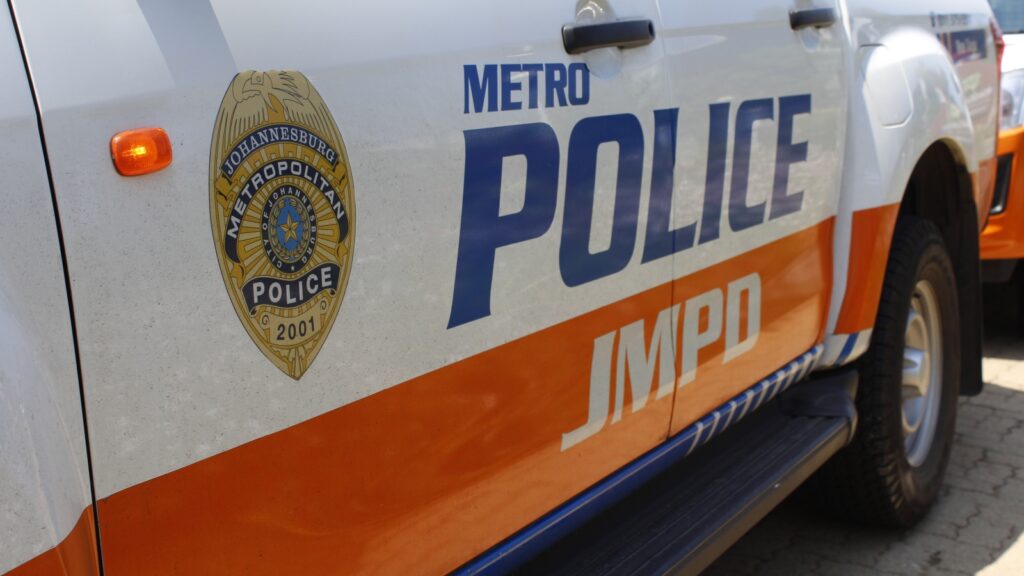
However, it’s telling that this project needed to be introduced in the first place, as this job should technically be handled by Johannesburg Metropolitan Police (JMPD).
Despite this, it is very rare to see any police officer directing traffic due to a faulty robot.
While numerous initiatives have been launched to address this issue, there is still a long way to go before any meaningful results may be seen.



 Loading ...