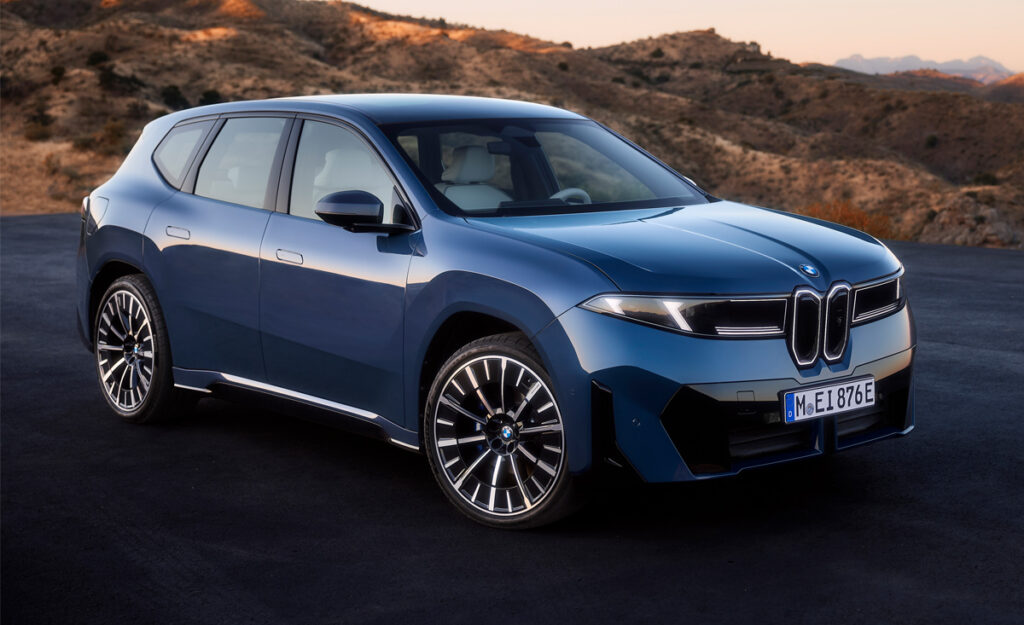
BMW said demand for the first model in a new generation of vehicles is exceeding expectations as the luxury automaker steps up the fight to meet growing competition in China.
Orders for the new iX3 sport utility vehicle model — the first of a suite of longer-range electric vehicles with high-powered computers — have been particularly strong in Europe, the company said Wednesday.
The so-called Neue Klasse, featuring distinctive design, marks a comprehensive shift in software, production methods, and battery technology aimed at restoring momentum in China, where competition remains fierce.
“We have started taking customer orders for the car, which have exceeded our expectations,” Chief Executive Officer Oliver Zipse said in comments during third-quarter results.
“Just looking at Europe, we see orders already extend several months into 2026 already.”
The shares were little changed at 11:30 a.m. in Frankfurt trading, paring back gains of as much as 2.6%.
The Neue Klasse, unveiled earlier this year, is central to BMW’s multibillion-euro push to compete with a new wave of electric vehicles from Chinese manufacturers such as BYD and Xiaomi, as well as renewed efforts from German rival Mercedes-Benz.
While the model has drawn strong early reviews from Europe’s automotive press, it faces stiff headwinds in China, where homegrown automakers are rolling out similarly capable EVs at competitive prices.

European carmakers are losing ground in the world’s largest auto market where domestic players offer tech-heavy, aggressively priced models.
Volkswagen reported lower deliveries in China last quarter, with its Audi division cutting its outlook amid rising tariffs and shrinking market share.
Mercedes-Benz has also struggled with a sales slump.
On Wednesday, BMW trimmed its fourth-quarter sales outlook for China, while still targeting a slight rise in deliveries there.
Volume growth in the country is concentrated in the mass-market, BMW said, a segment where the company has few offerings.
The firm’s shrinking market share in China may be “irreversible,” according to Citi analyst Harald Hendrikse, triggering risk to earnings.
“Today’s results further reinforce our view that BMW is no longer competitive in China.”
The manufacturer also warned earnings could be hit by changes in tariff policy or Chinese export curbs on key materials, though easing trade barriers could also offer relief.
For the third quarter, BMW reported a return on automaking of 5.3%, toward the lower end of a 5% to 6% guidance range the automaker had reduced last month.
BMW has been exposed to the turmoil gripping the luxury-auto industry this year, as tariffs and changing tastes roil its biggest overseas markets.
Levies in the US and the European Union shaved some 1.8% off automotive margins during the third quarter, BMW said.
The Munich-based company, which counts the US as its second-biggest overseas market, imports the electric Mini Cooper and Aceman models to the EU from China that are subject to EU import duties.
Still, BMW’s earnings before interest and tax jumped by a third to €2.26 billion from a year earlier, helped by a favorable comparison with last year’s quarter, which was hit by a costly recall of 1.5 million vehicles over faulty braking systems.
The company is also keeping a firm lid on costs, it said.
BMW scaled back research and development spending in the first nine months of the year with a drop of nearly 11% to €5.94 billion a year earlier and accelerating during the third quarter.




 Loading ...