There is a bakkie made right here in South Africa, but you can’t buy it.
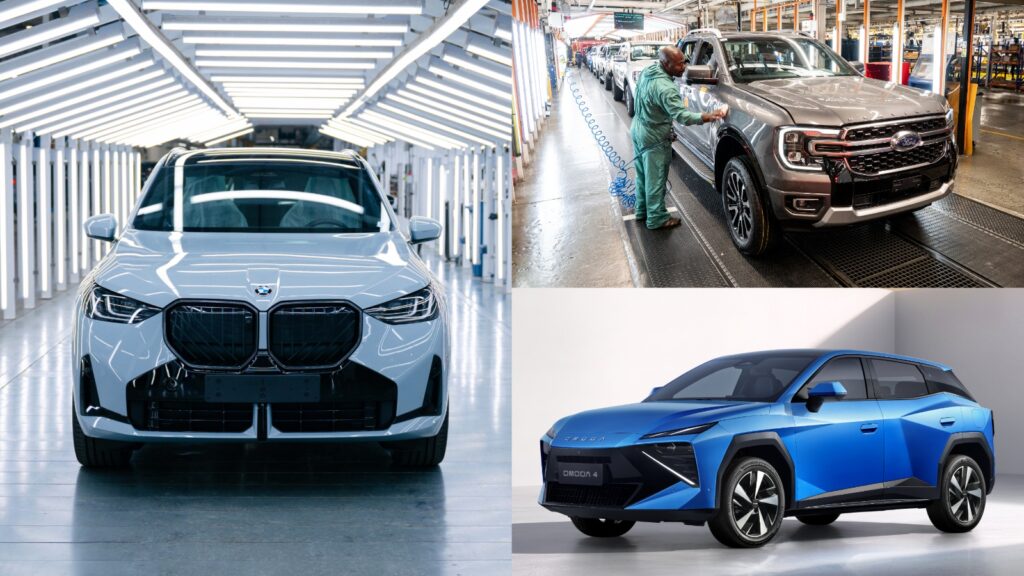
Ford has a factory in Silverton on the outskirts of Pretoria in Gauteng, which manufacturers the Ford Ranger and VW Amarok for South Africa and for export to markets overseas.
The one exception to this is the Ranger plug-in hybrid (PHEV), which is exclusively made for export to key markets like Europe, Australia, and New Zealand and is not available locally.
The Blue Oval invested R5.2 billion in its Silverton plant to prepare the site for the new PHEV, constructing a new battery pack assembly facility and a new chassis plant in the Tshwane Special Economic Zone to assemble the unique chassis required for the model.
Furthermore, the vehicle necessitated upgrades to the factory’s robots, welding equipment, control systems, conveyors, and skids, and the assembly operation was adapted with changes to the handling equipment, turnover fixtures, charging systems, leak detection and testing equipment.
The refurbished site is Ford’s sole designated global production hub for the Ranger PHEV.
Despite these significant enhancements to Ford South Africa’s operations, the Ranger plug-in hybrid is not sold locally.
“As with the current Ranger models, the new Ranger plug-in hybrid will be exported to Europe as part of our commitment to offer a wide range of powertrain options for customers in this important mid-size pickup segment,” the company said in a statement in late 2023.
“For the first time in about two decades, the Silverton plant will also be supplying vehicles to Australia and New Zealand, as it will be the source market for the Ranger plug-in hybrid for these countries.”
Ford previously indicated that the model was “under consideration” for our market, but there has been no update since the new Ranger went into production at the end of 2024.
The speculated reason is that the automaker does not think there is sufficient demand in South Africa to justify the PHEV’s rollout.
This is understandable given that South Africa still does not have any meaningful incentives for new-energy vehicle (NEV) adoption, such as tax rebates, which have helped to stimulate demand in other countries.
However, even without government incentives, hybrid adoption is starting to take off thanks to an influx of new models, many of which are coming from Chinese brands.
This even applies to bakkies, as the BYD Shark PHEV has seen steady interest from consumers since its introduction, even with its price tag of R959,900.
What South Africa is missing out on

The Ranger PHEV uses a 2.3-litre, four-cylinder turbocharged petrol engine, which is paired with a front-mounted electric motor.
The e-motor generates 75kW all on its own, but combining it with the combustion engine leads to an output of 207kW and 411Nm.
For comparison, the 2.0-litre single-turbo diesel Ranger produces 125kW and 405Nm.
Since it’s a plug-in hybrid, the bakkie is also capable of full-electric driving thanks to an 11.8kWh battery.
The battery, which powers the e-motor, affords an electric range of roughly 50km, letting owners make short trips around town without dipping into the 70-litre petrol tank.
Because of this, the carmaker claims that the PHEV achieves an average fuel consumption as low as 2.9l/100km, assuming owners make extensive use of the electric mode.
The electric underpinnings have also not affected the bakkie’s practicality, as it is still capable of towing 3,500kg like the other Ranger models.




 Loading ...