Speeding fine warning for people living in estates in South Africa


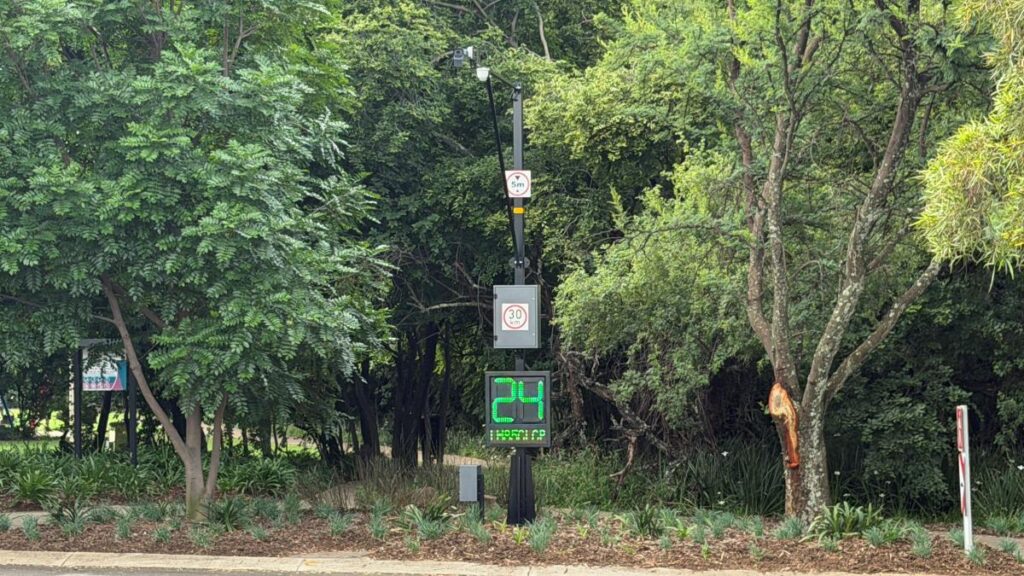
It is legal for homeowners’ associations (HOAs) in estates in South Africa to fine residents for speeding and other traffic violations committed by visitors and delivery people.
However, homeowners must have contractually agreed to such rules, and the rules themselves must meet several conditions, explained Johlene Wasserman, Community Schemes and Compliance Director at VDM Law.
The fining of estate residents for speeding and traffic offences by third parties recently came under the spotlight at one of Gauteng’s top residential estates, Midstream.
Residents complained of fines of up to R4,400 for couriers exceeding the estate’s 30km/h speed limit that were caught on automated, unmanned, back-to-back speed cameras.
The estate has since stopped fining residents for speeding by third parties, after many complained it was implemented unilaterally by the HOA.
Several other estates, including Jackals Creek in Johannesburg, and the Woodhill and Willow Acres estates in Pretoria East, also fine residents for speeding by visitors or couriers.
Wasserman explained that this practice can be legally valid, provided that the estate’s governing documents clearly allow it and the resident has contractually agreed to be bound by them.
“South African courts, including the Supreme Court of Appeal, have confirmed that the relationship between a homeowner and their Homeowners’ Association (HOA) is contractual,” she said.
“When a person buys property in an estate, they voluntarily agree to the HOA’s rules and its MOI. These rules are enforceable as a private contract between the resident and the HOA.”
On South Africa’s public roads, a person may not be punished for the illegal actions of another motorist. For offences committed by another driver using your car, you can nominate them for the fine.
However, roads inside estates are generally not ‘public roads’ under the National Road Traffic Act. “This allows estates to set their own speed limits and traffic rules,” Wasserman said.
“Because HOAs operate under private law rather than as public authorities, they regulate conduct through their own governance documents, not through public traffic legislation.”
Wasserman said that most memorandums of incorporation (MOIs) and conduct rules expressly state residents are responsible for the behaviour of their visitors, contractors, couriers, and other invitees.
“When a visitor violates the rules, the contractual breach is attributed to the resident who permitted their entry,” Wasserman said.
“Visitors are not parties to the HOA contract, which is why the resident, the actual HOA member, is held accountable.”
Rules support safer roads — but come with conditions
The legal framework for HOAs allows private communities to regulate safety and behaviour within their own environments, often to a higher standard than municipal traffic enforcement.
“Holding residents responsible for their visitors encourages better compliance with estate rules, ultimately protecting residents, pedestrians, and children who use the internal roads,” Wasserman said.
However, Wasserman said even though HOAs had broad contractual powers, they must still act reasonably, follow a fair process, provide notice of the infringement, and allow the resident to respond.
The rules and associated penalties must be clear and specific in describing prohibited conduct, properly adopted, and communicated to residents. If the rule is vague or unpublished, the fine is invalid.
Even with a valid rule, the HOA must notify the resident of the alleged breach, provide incident details, and give an opportunity to respond or contest the fine.
A penalty imposed without basic procedural fairness can also be set aside. The penalty must also be reasonable in amount and proportionate to the seriousness of the offence.
The fines must also be consistently applied and aimed at ensuring compliance rather than punishment. “Excessive or arbitrary penalties will not withstand scrutiny,” Wasserman said.
Lastly, there must be proper and objective evidence of the violation, which can include CCTV footage, speed camera data, security logs, or eyewitness accounts. Unsubstantiated fines are unlawful.
It is also important to note that these penalties are considered contractual fines. Therefore, they can be added to a resident’s levy account and recovered as a civil debt if the governing documents authorise it.
“HOAs may also impose non-financial penalties (such as temporary access restrictions), but only if expressly authorised in the rules and applied fairly,” Wasserman said.
This article was originally written for MyBroadband and was republished with permission.




 Loading ...
-2026.10.webp)