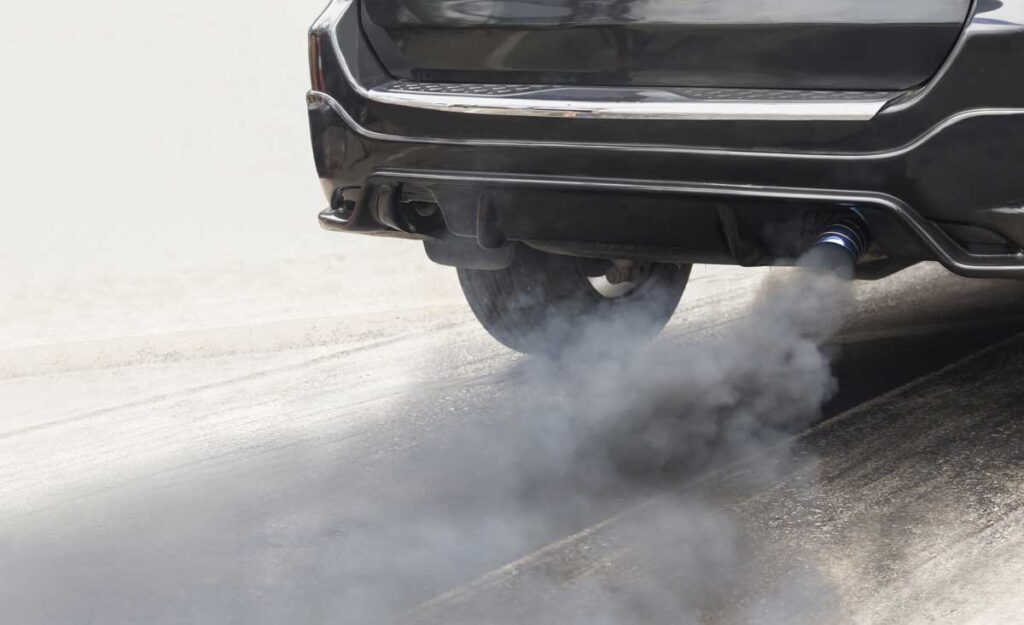
All industries, at one point or another, have watershed moments where a standard or accepted belief is so irreconcilably broken that it changes perceptions from that point onwards.
For the automotive industry, the closest it has come to such an event is the Volkswagen Emissions Scandal, otherwise known as Dieselgate or Emissiongate, which began in September 2015.
This scandal is among the most notable in not just the automotive industry but also in business, as it involved a multinational corporation not simply lying to authorities but actively taking steps to circumvent policies.
Such a flagrant and criminal action is rarely documented at the highest levels of business; therefore, Dieselgate is infamous simply because no one at the time expected a large company to be involved in such a level of deception.
Context
In September 2015, the United States Environmental Protection Agency (EPA) issued a notice of violation of the Clean Air Act to the German automaker Volkswagen Group, following its discovery that the company had used a device to circumvent the requirements of the act.
The Clean Air Act is a long-standing regulation in the US that is intended to regulate air quality and control pollution, which includes the pollutants produced by cars.
For petrol engines, the act focuses on carbon dioxide, while for diesel engines, the concern is around nitric oxide and nitrogen dioxide production.
To ensure the enforcement of these policies, vehicles are tested to ensure their emission levels do not exceed the maximum benchmark.
Volkswagen diesel vehicles were found to comply with these standards for several years and even promoted itself as offering fast, affordable, and environmentally friendly diesel vehicles.
This was not actually the case.
40 times too much
It was discovered that, to pass the emissions tests for the Clean Air Act, Volkswagen had intentionally programmed its turbocharged direct injection (TDI) diesel engines to activate their emissions controls only during laboratory emissions testing.
What this means is that while testing the diesel cars would seemingly pass with flying colours, for actual day-to-day operation, the pollutants produced vastly exceeded the limit.
This resulted in diesel Volkswagens producing around 40 times more pollutants in real-world driving than during testing.
The software used for this system was deployed in approximately 11 million cars worldwide for models produced between 2009 and 2015.
It should be noted that while Volkswagen was the focus of this scandal, several Audi vehicles were also found to be using the same trick.
Consequences
Following the initial announcement by the EPA that Volkswagen had violated the Clean Air Act using unlawful software, other regulatory bodies around the world began investigating the carmaker.
Volkswagen initially denied the allegations, claiming the results were due to a technical glitch rather than an active deceit, but in the face of considerable evidence, it eventually admitted its guilt.
In 2016, Volkswagen announced plans to spend €16.2 billion in relation to the scandal and pay $14.7 billion to settle civil charges in the United States.
In 2017, it pleaded guilty to criminal charges and signed an agreed Statement of Facts.
This statement outlined how the company’s management had asked engineers to develop the devices because its diesel models could not pass US emissions tests without them and deliberately sought to conceal their use.
Following this, a US Federal Judge ordered it to pay a $2.8 billion criminal fine for “rigging diesel-powered vehicles to cheat on government emissions tests”.
By June 2020, the scandal had cost Volkswagen a cumulative $33.3 billion in fines, penalties, financial settlements, and buyback costs.
This scandal led to heightened awareness of the levels of pollution produced by diesel-powered vehicles and investigations that uncovered other, less severe diesel emission scandals from other car makers.

 Loading ...