The company that forced carmakers to recall 100 million vehicles


Vehicle recalls have become an increasingly common occurrence in recent years, with many well-regarded carmakers announcing the recall of tens of thousands of vehicles.
This includes brands such as Audi, Chrysler, Citroën, Jeep, Mercedes-Benz, Volvo, and Volkswagen, which have all announced recalls due to production issues in recent years.
However, while this is noteworthy, the greatest vehicle recalls in automotive history began in 2013 and have continued to the present.
This massive recall wasn’t a result of a specific brand of car maker but rather due to the oversight of a supplier.
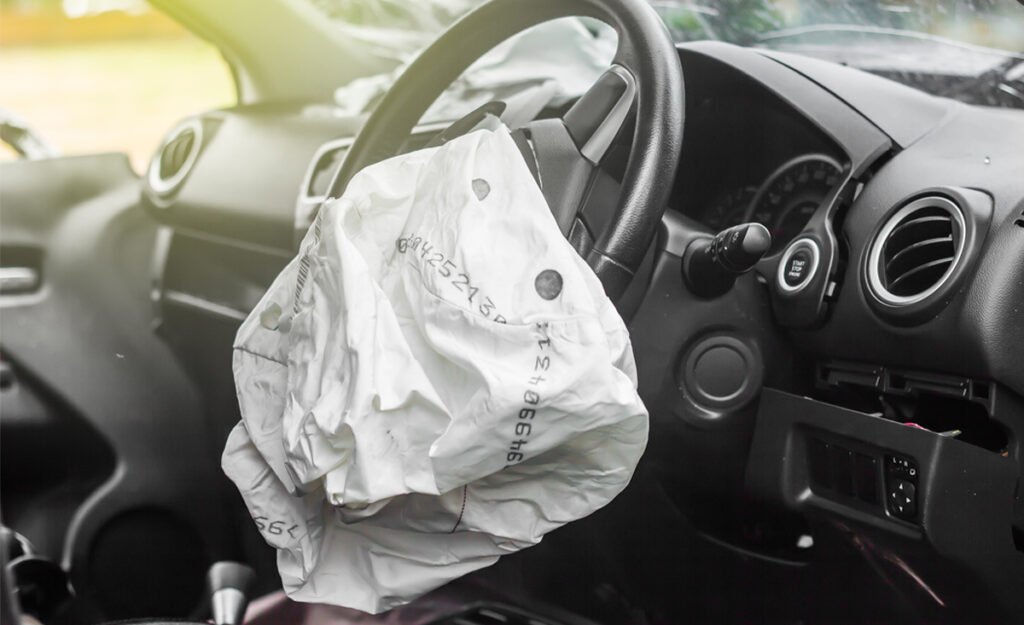
The supplier in question is Takata Corporation, which produced defective airbags that have led to deaths and injuries, as well as the recall of over 100 million vehicles.
Faulty airbags
Takata was a Japanese automotive parts company that grew to become a major player in the automotive space, with production facilities across four continents.
Among the items it produced were airbag inflators, and by 2014, it had grown to hold around a 20% market share.
However, in 2013, a series of injuries and deaths led the National Highway Traffic Safety Administration (NHTSA) in the US to issue a forced recall for more than 42 million cars, the largest the country had ever seen.
Investigations into the issue found that the airbag inflators and airbags manufactured at Takata’s Monclova Plant in Coahuila, Mexico, were defective.
This defect was due to the mishandling of explosive propellants and improperly stored chemicals used in airbags.
In a 2014 statement, Takata stated that it believed there was a risk of moisture and humidity soaking into the airbags.
The result of this was the destabilisation of the volatile propellants, causing the airbag to rupture, explode, and send debris flying inside the vehicle.
Tragically, examples of this were found, such as the death of a pregnant Malaysian woman who was killed by a shard of metal expelled by her 2003 Honda City’s defective airbag when she was involved in an accident.
At the time, Takata stated that it took the situation seriously and would strengthen its quality control, making a concerted effort to prevent future recurrences.
Continued recalls and consequences
By 2024, over 100 million vehicle recalls from more than 20 carmakers have been issued as brands struggle to rectify the impact of Takata’s poor quality control.
These recalls have outlived the company that caused them, as in 2017, Takata Corporation filed for Chapter 11 bankruptcy in the US and filed for bankruptcy protection in Japan.
This was due to the compensation it owed, which far exceeded its means.
As a result, it was acquired by its largest competitor, Key Safety Systems, and in 2018, it was announced that it would be renamed to Joyson Safety Systems.
However, before the company was acquired, the United States charged three Takata executives, Shinichi Tanaka, Hideo Nakajima and Tsuneo Chikaraishi for the problem.
They agreed to plead guilty and pay $1 billion to resolve the investigation, which consisted of a $25 million fine, $125 million for victim compensation, and $850 million to compensate automobile manufacturers.
Countries around the world have continued to issue forced recalls for vehicles suspected of being equipped with Takata airbags.
Determining which vehicles have faulty airbags has proven difficult, as it’s possible that the airbags were installed in models as early as 1998, and Takata’s failure to maintain accurate quality control records.
The Takata airbags scandal remains one of the most enduring issues in the automotive industry, and its effects are still felt today.



 Loading ...