Driving after surgery in South Africa – My experience, and what my insurer said


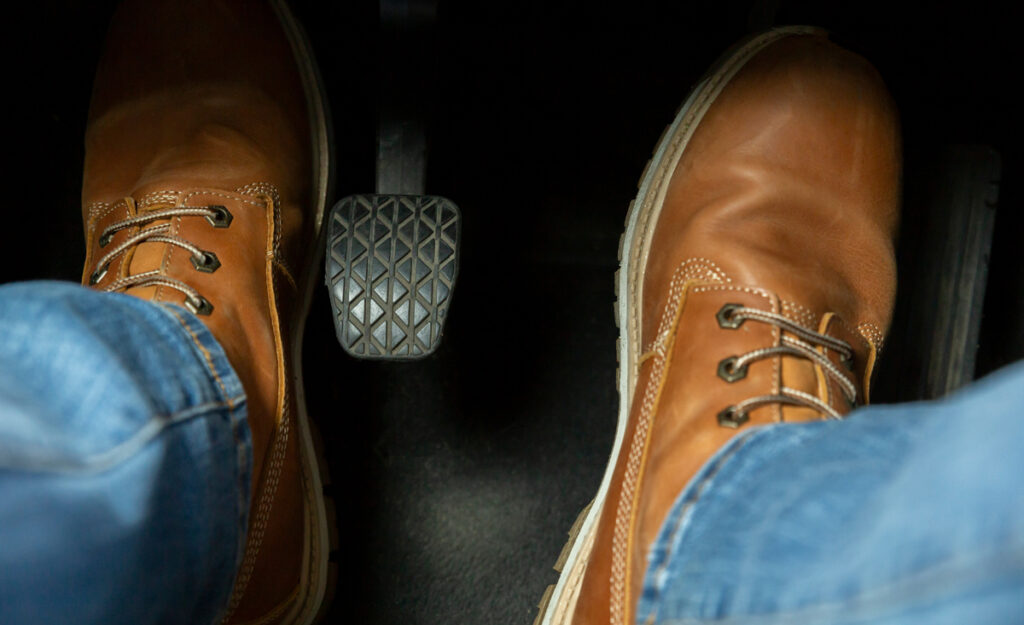
I recently had what my surgeon described as “big surgery” on my right leg, involving both the knee and the ankle, and quickly discovered that returning to driving is not necessarily straightforward.
Living alone, and as someone who enjoys driving and travelling, naturally one of my first questions was “when will I be able to drive my car again?”
The answer, it turns out, depends on various factors – such as the severity of the operation, the nature of the recovery and rehab, the opinions of your doctors, physiotherapists, and your insurer. Even your own confidence.
In my case, the procedure I underwent involved bone grafts on the knee and ankle, repairs to all the major ligaments in my ankle, and various other structural repairs, with an end result of multiple plates and screws being inserted.
Without getting into all the gruesome details, what mattered was the recovery nature and timeline, and how the operation affected my mobility.
Before the surgery, my doctor told me that it would take at least 10 weeks before I was able to drive again. That forecast proved accurate.
I spent six weeks in a cast, during which time I was not permitted to place any weight on the ankle. This made driving an impossible feat.
After that, I had to wear a moon boot for another four weeks. While wearing either a cast or moon boot, driving is unsafe.
The size and rigidity of the clumsy leg apparatus prevent precise pedal control and compromise reaction time – two non-negotiable elements of safe vehicle operation.
Vehicle type also played a significant role. Had the surgery been on my left leg, and had I owned a car with an automatic transmission, my surgeon told me I could have been driving much sooner – even while I was wearing the moon boot.
Unfortunately, I was not that lucky, as I own a 2018 1.6-litre manual Renault Duster.
Luckily for me, while I used the moon boot for five weeks in total – one week longer than the minimum planned timeline – I was cleared by my physio to start ‘experimenting’ behind the wheel after two weeks in the moon boot.
It meant I would walk to my car in my moon boot, unstrap and remove it, and then get behind the wheel. Once I was at my destination, I would lace up again.
This was two weeks earlier than the initial 10 weeks I was told – a total of eight weeks post-op. This was the point at which I was allowed to put my full weight on my leg, even if only for brief periods.
The physiotherapist’s initial guidance was cautious but encouraging – I could begin by driving only short distances, close to home, and ideally within quiet areas, such as my estate.
At this stage, longer trips were still off the table. Before increasing my driving, I needed to confirm several things, including my ability to:
- Press the brake hard – if I couldn’t stop my car fast, I shouldn’t drive yet.
- Flex my ankle – pressing the accelerator requires more ankle motion than I ever realised.
- React – I needed to be able to shift my foot quickly between the accelerator and the brake pedal.
At my next weekly appointment – after I had done this short test drive – the physiotherapist told me I could gradually increase how much I drove, provided everything continued to feel controlled and pain-free.
This was the point at which I began driving to my office, a very manageable 8km stretch in each direction.
I still did not have full motion in my ankle; in fact, I was a long way off from achieving this. But I had enough control.
What my insurance said
Even though my initial driving was short, on quiet roads, and lower risk, I wanted clarity from my insurer.
I am insured with Naked Insurance, and regardless of what my surgeon and physio said, I checked with Naked before I considered getting back behind the wheel.
I asked them several things and explained my situation – that I had an operation on my leg, that I was wearing a moon boot (but no longer permanently) and using crutches.
I also informed the insurance company that the physiotherapist had cleared me to start driving and that I would remove the moon boot when getting behind the wheel.
Here is what my insurance said:
From a cover point of view, the key is that the person driving must be legally allowed and fit to drive.
For Naked car insurance specifically, the driver needs to:
- Have a valid driver’s licence; and
- Be medically fit to drive and in full control of the vehicle at the time of driving; and
- Follow any legal requirements (e.g. no driving with a moonboot if it stops you safely operating the pedals).
If your physio has cleared you to drive without the boot, then it’s alright with us. As long as you are confident that you can safely control the car and drive in line with road laws.
Returning to driving after “big surgery” is clearly not a one-size-fits-all situation, as I ended up behind the wheel two weeks earlier than planned, but could only drive reasonable distances a week later.
However, as I wore the moon boot one week longer than initially planned, it could have just as easily gone the other way.
Returning to driving depends on:
- The type of surgery
- Pain levels and strength
- Reaction time and braking ability
- Advice from medical professionals
- Insurer recommendations
For motorists facing a similar situation, the decision to drive again should be guided not by the calendar, but by capability, compliance, and control behind the wheel.



 Loading ...