The new vehicle sales market saw a massive resurgence in 2025, as several brands experienced record-breaking sales figures and reached new heights in local sales rankings.
On the other hand, several brands experienced a drop-off in sales, losing market share to emerging challengers.
The majority of South Africa’s established brands managed to stay relatively stable, as major manufacturers recorded remarkable consistency.
South Africa’s best performer, Toyota, managed more than ten thousand units every month last year. Fellow local favourite, Volkswagen, hit nearly 5,000 units each month.
Suzuki has also become a consistent name at the top of the sales charts, usurping VW to become South Africa’s second-favourite brand early in 2024.
It too had a remarkable year, selling over 5,000 units in all but one month in 2025.
The brands that recorded increased sales throughout the year are, unsurprisingly, mostly newcomers and carmakers with a wide range of affordable offerings.
These brands originate almost exclusively from China, whose brands are known for their affordability and overall luxury features compared to similarly priced competitors.
More established brands, like Hyundai, recorded an steady uptick in sales as the year went on. In January 2025 the Korean automaker sold 2,760 new vehicles, compared to the 3,068 sold in December.
The biggest winners, however, are the Chinese manufacturers.
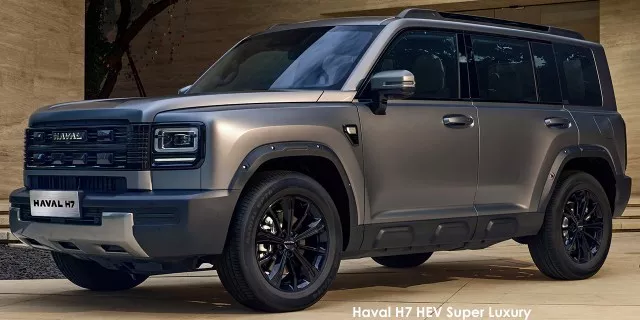
Chery found itself in the top ten best-selling brands of 2025, and was joined there by GWM, who also recorded a stellar year.
Two brands that flew slightly under the radar, yet posted great sales figures, are Omoda & Jaecoo (O&J) and Jetour.
These two brands are two of the younger players in the local market, yet have taken their market share with affordable luxury and New Energy Vehicle (NEV) options.
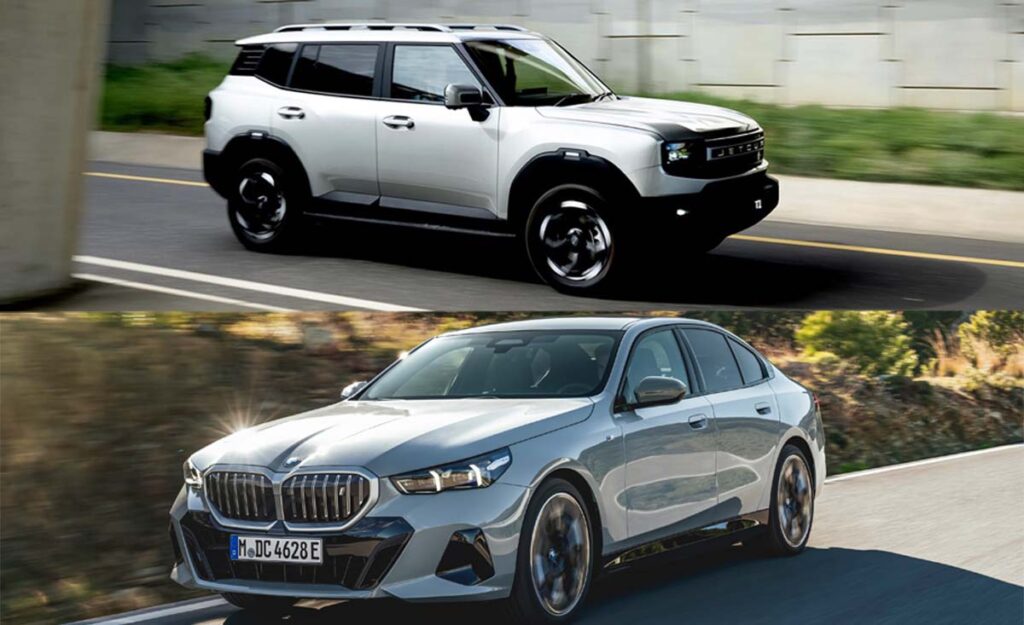
Perhaps the biggest winner of the year is the latter. Jetour made its way into the top ten best-selling brands in the last month of 2025 after starting the year barely clinging onto fifteenth place.
Winners and losers

It is hard to overlook the incredible achievement by Jetour to cement itself in the top ten list, especially in a market as competitive as South Africa’s.
The brand started the year slowly, selling only 451 units countrywide. Fast forward to December, and it managed a stellar 1,371, claiming its spot as the country’s biggest winner.
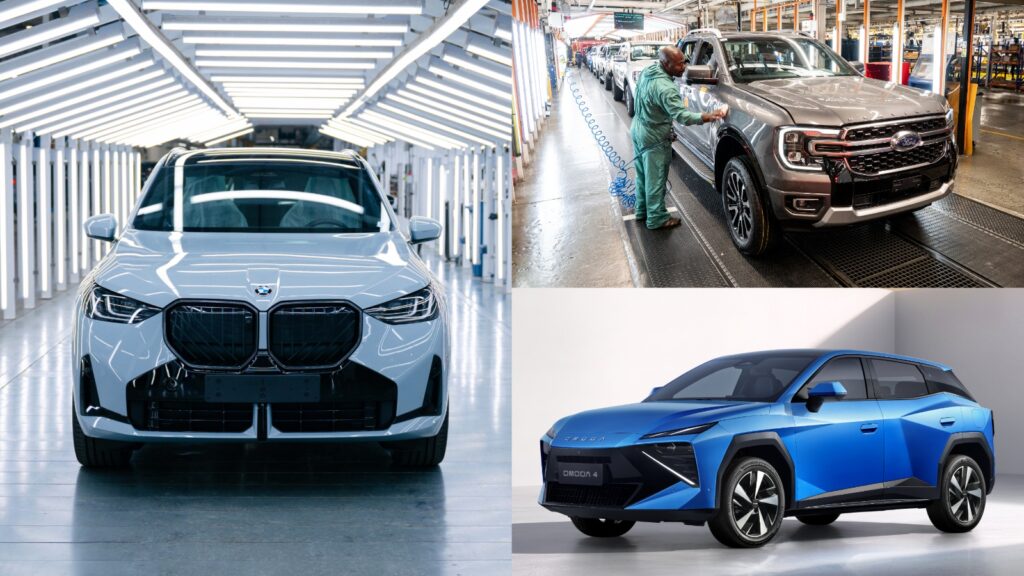
Omoda and Jaecoo’s numbers look similarly impressive. The Chery sub-brands managed to ship 1,317 of their new vehicles in December, compared to the 743 they sold in January.
One of the brands that is a little more established locally than these is GWM, which also recorded sales growth throughout the year. Its sales grew from 1,756 units in January to 2,453 by December.
Chery, like Hyundai, recorded marginal growth. It managed to ship 2,249 units by December 2025, after starting the year with 1,913 units leaving its showroom floors.
In a surprising turn of events, Suzuki recorded lower sales figures in December than it did in January. The second-best seller managed to sell 6,399 of its vehicles in January, but only 4,961 by December.
Nissan recorded up-and-down figures throughout the year, experiencing highs of over 2,000 units in March, coupled with a drastic drop off and selling only 794 units a month later.
South Africa’s luxury brands remained relatively consistent, naturally selling less than the budget options on offer.
Mercedes-Benz South Africa sold 359 units in January and 414 in December. Similarly, Volvo shipped 81 units at the start of the year, and 61 by the end of it.
Jaguar and Land Rover managed to perform well enough, shipping 241 units in January, compared to 200 in December.
Conversely, the luxury brand that ended the year with lowered sales figures was BMW. It started the year with 1,184 units sold and consistently sold over 1,000 units for the rest of the year.
That is, before December, when the German giant sold only 843 units.
The brand’s sales drop coincides with the rise of both Jetour and Omoda and Jaecoo, which may point towards their luxury offerings eating into the share of legacy badges.




 Loading ...