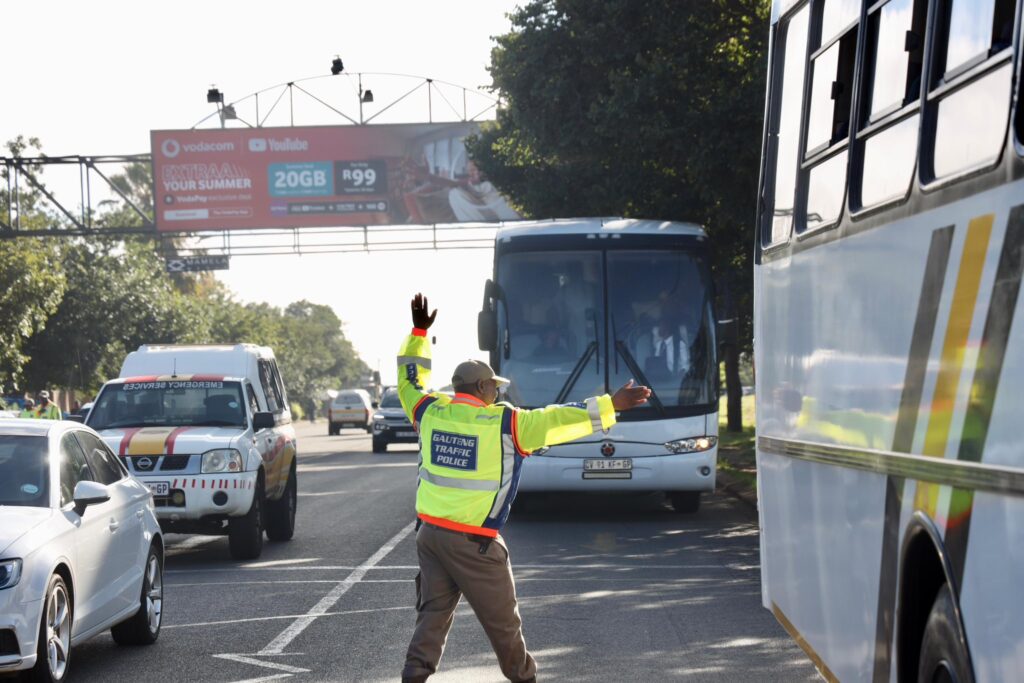
Millions of learners made a return to classrooms across the country this week, which has led to an increase in vehicles responsible for scholar transport on our roads.
As such, the Road Traffic Management Corporation (RTMC) and ChildSafe South Africa have urged parents to take on a proactive role in ensuring the safety of their children during daily school commutes.
Road injuries are the leading cause of injury and death for South African children aged 5 to 14.
School children in this age category constituted 5.61% of the 12,172 people who died on South Africa’s roads in 2024.
As a result, the two organisations have emphasised the importance of parental vigilance as a first line of defence against unroadworthy vehicles and unlicensed scholar transport operators.
“This is an unacceptable situation as these unfortunate fatalities could have been prevented if proper precautions were taken,” said RTMC spokesperson, Simon Zwane.
“Parents must understand that road safety starts at home before a child gets into a vehicle that transports them.”
Zaitoon Rabaney, Executive Director of ChildSafe South Africa, added that safety on our roads is a shared responsibility that begins long before a child reaches the school gates.
She noted that while law enforcement remains committed to strictly monitoring scholar transport, parents should conduct a basic safety walk-around of scholar transport vehicles.
If a vehicle appears unroadworthy, she advises parents to make alternative arrangements. Parents are also urged to verify drivers’ credentials before allowing their children to board vehicles.
The organisations believe that this approach is essential in ensuring that every journey to and from school is a safe one.
“Scholar transport must never be viewed as a mere convenience, but as a critical service that requires rigorous safety standards,” said Rabaney.
“Collectively, we must ensure that operators are not only legally compliant but also fit for the duty of transporting children.”
What to look for

According to the RTMC and ChildSafe, several key elements need to be in place to ensure the safety of children during school commutes.
The first is the operator’s valid driver’s licence, and verification of their identity, as a vital part of oversight involves the driver.
Parents are urged to personally confirm that their child’s driver holds a valid Professional Driving Permit (PDP), which is a non-negotiable legal requirement for public transport.
“It is essential to physically check the driver’s licence card to ensure it is current and that the identification matches the individual behind the wheel,” the organisations advise.
“Furthermore, parents should enquire about the credentials of any substitute or backup drivers to ensure they meet the same professional standards.”
When conducting an oversight, parents are encouraged to inspect the physical condition of the vehicles responsible for the transport of their children. The vehicle must meet both legal and safety criteria.
Compliant scholar transport vehicles are required to display valid operating licences, which have been issued by the Provincial Regulatory entity, as well as valid licence discs, as required by law.
Parents are urged to inspect vehicles during a walk-around, ensuring that tyres have visible tread and are free of damage.
Both organisations also added that it is not only illegal, but also life-threatening, to transport learners on the back of a bakkie or open truck.
Preventing overloading is also crucial in ensuring the safe transport of scholars.
ChildSafe and the RTMC have called on parents to verify that every child has a designated seat with a functional seatbelt, and to insist that operators carry Passenger Liability Insurance.
Once the oversight is completed, parents are encouraged to establish clear lines of communication with drivers, as well as emergency numbers and those of the transport operation’s owner.
Operators should always provide a reliable system for updating parents on delays or route changes, ensuring that each child’s whereabouts are accounted for.
Knowing which association the transport operator belongs to is also crucial, in case parents need to submit complaints.
The RTMC calls on parents who encounter non-compliant or dangerous scholar transport operators to report them immediately to the RTMC or local traffic authorities.





 Loading ...