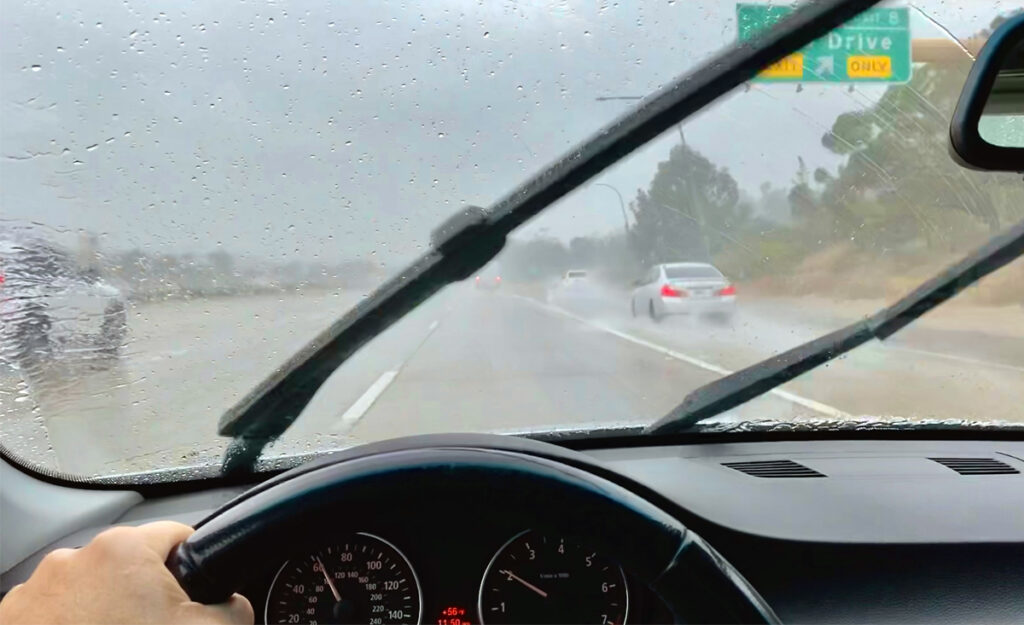
Several regions in South Africa are prone to foggy and misty conditions, especially the KwaZulu-Natal midlands and coastal areas of the Western Cape, requiring drivers to practice caution when caught in these conditions.
While it may be a challenge to drive in heavily congested traffic, Arrive Alive explains that mist and fog could lead to the most dangerous road conditions, as visibility can deteriorate within a matter of seconds.
These conditions are most common in the early morning hours, especially when colder evenings follow warm days, occurring when the air cools down below its dew point.
The difference between temperature and its dew point is usually less than 2.5 °C, and the level and thickness of the fog will vary greatly depending on the prevailing environmental and geographic conditions.
Arrive Alive notes that it is important to be alert to the changing thickness of the fog.
While foggy conditions are most likely found near river valleys, lakes and harbours, mist usually occurs near the coast, and despite being associated with fog, can be found as high as mountain tops.
What makes these conditions so dangerous, leading to more accidents, is severely reduced visibility and increased driver error.
Road users will struggle to see clearly in both misty and foggy conditions, making driving safely more difficult.
Drivers may also fail to alter their driving habits for inclement weather conditions, failing to increase following distances, and driving at inconsistent speeds.
Some drivers may drive too fast, falsely believing that they may be able to escape the conditions sooner if they drive faster.
If roads are shrouded in thick fog, traffic officials might need to close roads; failing to do so may also contribute to increased crashes.
Before setting off, drivers need to be aware of possible misty or foggy conditions and decide whether to delay the trip until conditions improve – if possible.
Preparing for these conditions is also crucial; ensuring clean windscreens, functional fog lamps, and a working defroster could save lives.
Driving in misty and foggy conditions

Arrive Alive shared driving advice for when road users are confronted by mist and fog on their commute, and avoiding the conditions is impossible.
When caught in these conditions, drivers are advised to do the following:
- When driving in fog, reduce your speed, turn on your headlights and make sure that you can be seen.
- The lamps should be used when your vision is limited to less than 100 metres in front of you.
- Beware of other drivers not using headlights.
- Always control your speed, allowing for enough space between your car and the one in front of you.
- With the decreased visibility fog causes, your minimum safety gap of three seconds should be increased substantially.
- Think about how far you can see and how long it will take you to stop.
- Use the edge of the road as a guide rather than the centre line, to avoid running into oncoming traffic or becoming distracted by their headlights.
- Signal your intentions early.
- Consider the drivers behind you and what they are seeing. If you drive with your emergency flashers on or keep tapping your brake pedal, they may try to pass you, placing both your lives in danger.
- Watch for any electronically operated warning signs.
Arrive Alive also shared tips on what not to do in fog and mist:
- Do not use your high beam headlights during fog. The bright light creates a reflection of the mist, lessening your ability to see.
- Don’t rely on your parking lights alone, as they do little to increase your visibility in fog.
- Don’t use your emergency flasher. Drivers are attracted to flashing lights and tend to drive into them inadvertently.
- Never stop in the middle of the road; you will be rear-ended.
- Do not attempt to pass other vehicles in foggy conditions.
- When you use your brakes, don’t stomp on them.
Drivers need to remain focused during these conditions, limiting distractions in their vehicle, and may need to decide whether to drive further or not.
Arrive Alive suggests getting your vehicle completely off the road in a protected area and turning on your flashers.
Not being able to see is not a valid defence in the event of a crash, and if a driver is unable to see, they should not be driving.




 Loading ...