One of South Africa’s biggest cities is getting electric minibus taxis


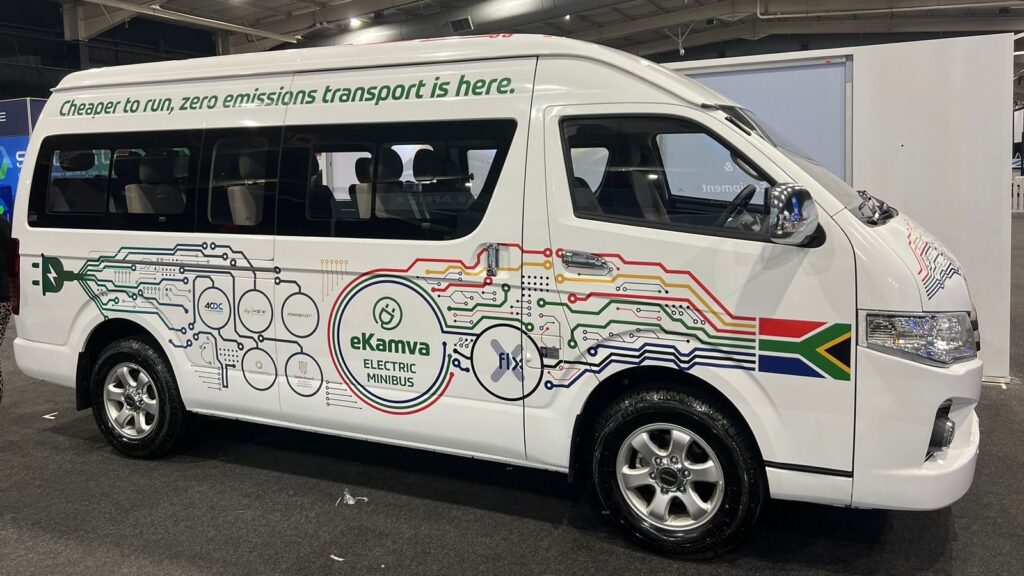
Commuters in Cape Town’s Century City can look forward to the introduction of a fleet of electric minibus taxis from as early as October this year.
This was confirmed to CapeTalk by Justin Coetzee, CEO and founder of GoMetro, the company leading the production of the eKamva electric minibus taxi.
The taxi was initially launched at the Smarter Mobility Africa Summit in 2024, aiming to reduce the 30 million tonnes of carbon dioxide produced and two billion tonnes of fuel used by the industry every year.
Since then, the company has been working on improving the vehicle to be suited for local conditions and working with the Century City Property Owners Association to identify routes that could be electrified first.
This work is now complete, and routes have been identified, allowing operations to be implemented through 15 associations in and around Century City later this year.
“We will be launching the first few routes later this year, in October,” confirmed Coetzee.
“We expect to have everything in place to test these vehicles on existing routes against existing operations.”
Once GoMetro successfully rolls out the first electric taxis, it will order and roll out more vehicles over the next few years in hopes of going fully electric at Century City in the next three or four years.
At the initial launch, Coetzee said this is an entirely new approach to electrifying the smaller-vehicle public transport industry.
“We believe it will spark an entirely new economic sector and is socio-economically very important for the automotive sector,” he said.
While it is entirely possible that electrifying Cape Town’s taxis will take off, the initial capital expenditure from operators.
“The battery is a very expensive component upfront,” explained Coetzee.
“We’re trying to match the existing prices of a diesel or petrol locally available model by financing the chassis and the battery separately.”
He said that will leave taxi owners with vehicle financing equivalent to a diesel vehicle, and a battery on an energy contract, which he compared to an airtime contract.
Coetzee believes that the initial capital investment will be worth it in the long run, as electric taxis will save between 50 and 70% in energy costs, depending on how much solar and at-home charging operators use.
How electric taxis will work

As these taxis are intended for use within the city, they are not currently geared for long-distance journeys – something Coetzee advised against.
“This isn’t a long-distance taxi, so I wouldn’t advise driving to the Eastern Cape just yet. Technology must first improve, and things must get more efficient before we can see that,” he said.
Coetzee added that the taxis GoMetro have been mapping and tracking over the last year are generally covering 120km of range in the morning, and around the same distance in the afternoon.
In the middle of the day, as taxis are less busy mid-morning to mid-afternoon, this allows them to recharge before the afternoon shift.
“Most taxis spend up to three hours a day between morning and evening peak hours at the ranks we have analysed, more than sufficient time to fast-charge an eKwamva,” project lead Rudi Kriel said.
He also added that electric taxis have fewer components and suffer fewer breakdowns than internal combustion vehicles, leading to increased profitability and a longer life expectancy.
Coetzee explained that despite eKamva taxis having a range of up to 180km, GoMetro plans to roll out a comprehensive charging network at Century City, where taxis will be able to recharge during off-peak hours.
The 15-seater eKamva fast-charges within 75 minutes via a 60kW DC charger and slow-charges overnight for 10 hours.



 Loading ...