


The Japanese automotive giant Toyota has committed to investing R10.4 billion in KwaZulu-Natal to support the South African automotive sector’s energy transition.
This was confirmed by President Cyril Ramaphosa during his closing remarks at the 2026 South Africa Investment Conference (SAIC).
Toyota’s investment forms part of the record-breaking R415 billion pledged towards projects that span all nine provinces.
President Ramaphosa welcomed the investment, noting that this year’s investments represent the highest total achieved since the first South Africa Investment Conference, and the highest number of projects.
Overall, South Africa’s automotive manufacturing sector will benefit from nearly R20 billion in investment from six international projects.
These include Toyota’s R10.4 billion, which represents more than half of the total investment, and the National Association of Automotive Component and Allied Manufacturers (NAACAM), which pledged R5.8 billion.
Further investment includes Chinese tyre brand Sailun’s R2.0 billion investment across multiple provinces, and two undisclosed investors.
The first is an automotive component producer from Japan, which pledged R1.2 billion towards its projects in KwaZulu-Natal, while the latter is an automotive company from China, whose total pledge remains undisclosed.
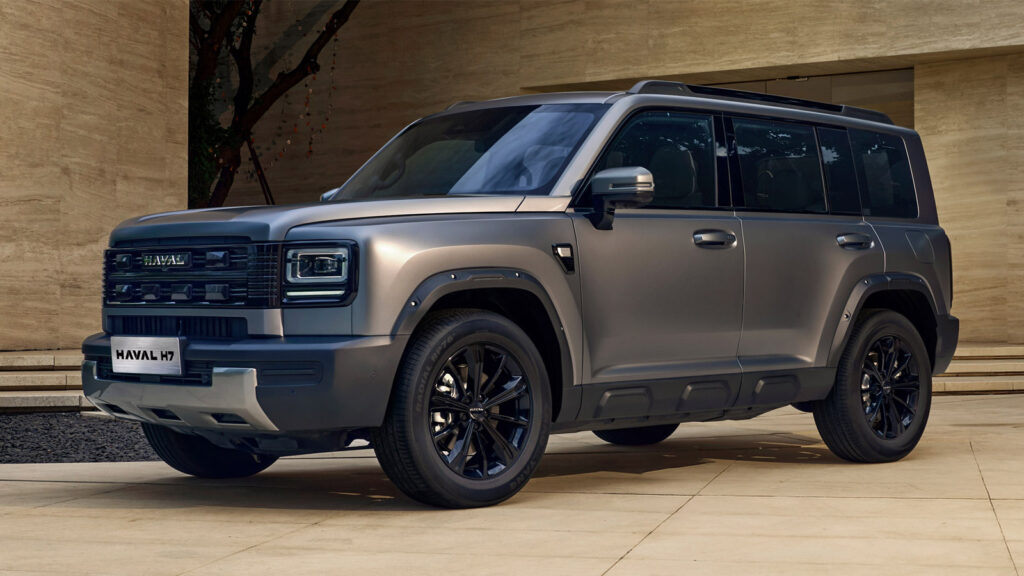
Several Chinese car brands currently hold an interest in South Africa, especially with so many brands expanding their operations in the local market and gaining large portions of market share.
One brand committed to expanding its South African operations is Chery, which is poised to take over Nissan’s Rosslyn plant and start local production soon.
Another Chinese brand already manufacturing in South Africa is Foton, whose local bakkie production is already underway.
Recently, GWM has begun talks to share a factory with Mercedes-Benz, while BYD is also looking at localising its own production.
“South Africa’s abundant mineral reserves make us uniquely placed to leverage the growing global demand for critical minerals needed for clean energy, for hybrid, electric and new energy vehicles,” noted President Ramaphosa.
Toyota’s pledge is not its first

Toyota has had a long history in South Africa, becoming a local favourite over the years with its wide range of offerings, and consistently ranking as the country’s top-selling brand.
It has managed to achieve this by investing heavily in the localisation of its production and expansion of its supply chain.
In recent years, Toyota South Africa Motors (TSAM) has spent billions on projects that include parts distribution, manufacturing and assembly at its local facilities.
This was confirmed by TSAM CEO Andrew Kirby at its State of the Motor Industry (SOMI) in 2022, where he announced that the automaker had invested R4.2 billion in three years.
More recently, Toyota contributed R545 million to a R1.1 billion joint venture at the Dube Trade Port in Durban, which increased local production of Hilux and Fortuner models, amongst others.
This also marked an important step in Toyota’s commitment to aiding the local automotive sector in transforming towards new energy vehicles (NEVs).
Fast forward to 2026, when the Japanese badge reaffirmed its commitment to South Africa during its 2026 SOMI.
Here, Kirby highlighted Toyota’s commitment to advancing South Africa’s industrial competitiveness through stable policy, by investing in its local operations and deepening supply-chain localisation.
He did warn that broader local industrial challenges, which include high energy costs, logistics constraints, high local labour costs, and rising input costs, could lead to premature deindustrialisation.
“We cannot become a purely import-driven market. With the right small policy adjustments, we can strengthen competitiveness, attract new investment and grow the economy,” Kirby said.
During his address, he added that other countries are accelerating NEV adoption with clear regulatory signals and targeted incentives, and called for South Africa to do the same.
This could improve South Africa’s automotive sector, driving vehicle sales beyond 700,000 units and production beyond 720,000 units.



 Loading ...
-2026.10.webp)

-2026.10.webp)