How much fuel you’ll use with a petrol, diesel, and hybrid SUV


Motorists have a few options when it comes to picking a fuel-efficient car, but it’s not immediately obvious which one is the best.
This is particularly relevant in light of recent events, as South Africa was recently hit with massive fuel price hikes as a result of the ongoing war in the Middle East.
Households are, therefore, currently looking for ways to slash their running costs as much as possible.
Buying a hybrid car may seem like a good long-term solution, but you need to consider the upfront cost of the vehicle if saving money is your primary concern.
This is according to AutoTrader, which provided a comparison of three comparable family SUVs to represent the fuel savings for each powertrain type.
When it comes to traditional internal combustion engine (ICE) vehicles, motorists can opt for either a petrol or diesel model.
Petrol is the most common engine type in passenger cars, typically offering a refined and responsive drive at the cost of moderate fuel consumption.
Diesel, on the other hand, is more commonly associated with light commercial vehicles like bakkies and vans because they typically offer a higher torque-to-power ratio, making them ideal for hauling big loads.
Diesel engines are still found on a number of SUVs and are generally considered a good choice if you’re looking for an economic set of wheels.
The third option motorists have is a hybrid, which pairs the combustion engine with one or more electric motors to greatly improve efficiency.
Plug-in hybrids (PHEVs) take things one step further as they are capable of full-electric driving, letting owners make trips around town without dipping into the fuel tank.
Comparing family SUVs

With all this in mind, AutoTrader made a comparison of three family SUVs in a similar price bracket to represent the running costs motorists can expect from each fuel type.
Diesel is represented by the Hyundai Tucson 2.0D, which is going up against the petrol Toyota RAV4.
These cars are market rivals and make for a reasonable comparison as both have a price tag of just over R700,000.
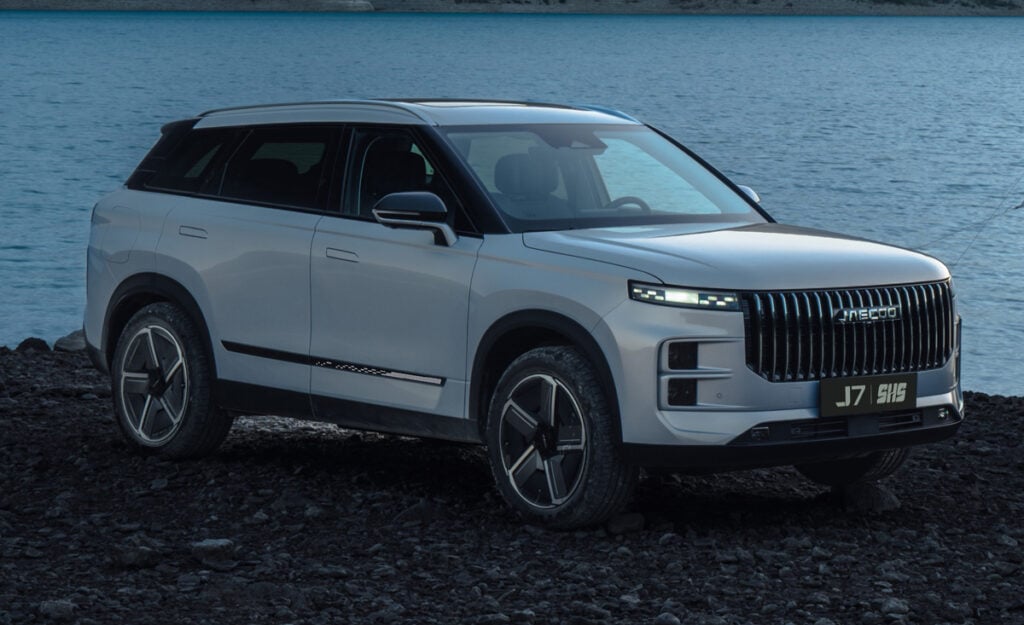
For the hybrid, we have the Jaecoo J7 SHS, a relatively new Chinese PHEV that has a similar price tag to its ICE rivals.
The fuel cost calculations were based on the official petrol and diesel prices for April 2026.
Petrol is currently trading at R23.36 per litre at inland rates, while the wholesale price of diesel is pegged at R26.11 per litre.
These were the results:
| Vehicle | Fuel type | Price | Average fuel consumption | Fuel price | Cost per 100km |
|---|---|---|---|---|---|
| Hyundai Tucson 2.0D Executive | Diesel | R709,900 | 7.4l/100km | R26.11 per litre | R193.21 |
| JAECOO J7 SHS | Petrol plug-in hybrid | R689,900 | 4.7l/100km | R23.36 per litre | R109.79 |
| Toyota RAV4 2.0 GX-R AWD | Petrol | R719,800 | 6.7l/100km | R23.36 per litre | R156.51 |
As expected, the PHEV has the lowest running costs at R109 per 100km.
The petrol ICE RAV4 came second at R156 per 100km, and the diesel Hyundai is the most expensive to run at R193.21.
It’s worth noting that the diesel cost will be even higher than advertised, too, as diesel is unregulated in South Africa.
This means that the wholesale price set by the Department of Mineral and Petroleum Resources is not the final retail price seen at the pump, which varies between petrol stations.
The war in Iran has led to concerns over possible fuel shortages, which prompted some forecourts to hike diesel prices in late March before the official adjustments came into effect on 1 April 2026.
Petrol users, by comparison, are having an easier time, though there are some caveats regarding the PHEV.
“They sit between conventional petrol or diesel vehicles and full EVs, offering lower fuel consumption than a traditional internal-combustion vehicle without relying entirely on public charging infrastructure,” said AutoTrader.
“The J7 SHS records the lowest quoted fuel cost in this comparison, but the broader point is that PHEVs can become more relevant when fuel prices are under pressure.”
However, the platform noted that a PHEV’s fuel efficiency is highly dependent on how it is used.
“To achieve the best fuel-consumption figures, the battery needs to be charged regularly, and that means electricity costs also form part of the running-cost equation.”
“Even so, for buyers who can keep a PHEV charged as intended, lower fuel consumption remains part of the appeal.”





 Loading ...