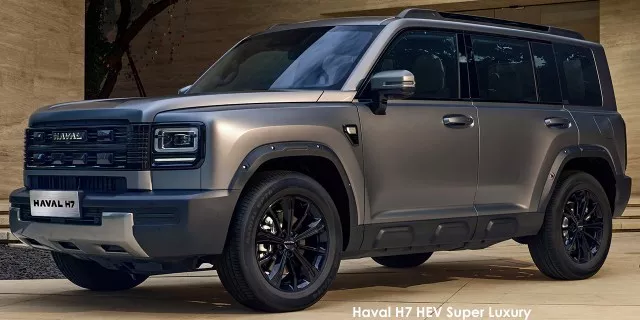
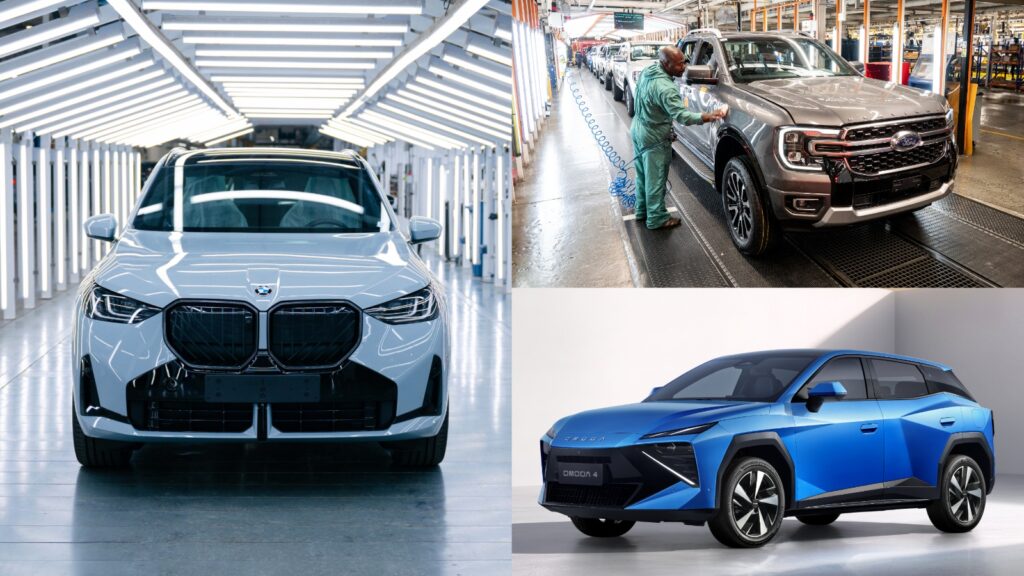
South Africa is home to some of the world’s busiest car factories, building some of the world’s favourite cars, including the VW Polo and BMW X3.
Despite the strong start to the year, carmakers exporting from South Africa experienced a turbulent first quarter of 2026, with global disruptions affecting even car sales.
January started with 24,568 total exports, according to data from the Automotive Business Council (Naamsa), which represented a year-on-year increase of 136 units, or 0,6%
This performance was supported by currency stability and easing imported input cost pressures, but despite this, Naamsa cautioned that exports are shaped by heightened protectionism across key export markets.
It also added that trade-restrictive measures and evolving industrial policies in more advanced economies continue to test South Africa’s automotive export competitiveness.
Naamsa warned that it expects deepening trade agreements between Western and Eastern economies to pose a risk to South Africa’s export competitiveness and market share in certain traditional export destinations.
In February, Naamsa was proven right, as exports dipped sharply, falling by 9,463 units, or 28,1% year-on-year, to 24,221 units.
It said this boiled down to heightened protectionism across key export markets, as well as increasingly stringent decarbonisation requirements in destination markets.
Export sales in March once again decreased to 37,388 units, representing a loss of 5,3% compared to the 39,499 vehicles exported in March 2025.
“The industry’s export performance continues to face structural headwinds amid geopolitical turbulence,” noted Naamsa.
Despite these challenges, South Africa’s top exporters managed to maintain their own competitive edge, as VW exported nearly 30,000 units in the first three months of the year.
Luxury exporters BMW and Mercedes-Benz were joined by Japanese automaker Toyota in shipping more than 10,000 units into export markets, while Ford rounded out the top five local exporters.
South Africa’s major car exporters
The only brand that consistently sells more vehicles in South Africa than it exports is Toyota, which it managed to do every month of 2026 so far.
Its close rival, Ford, managed to do so in the first two months of the year, outdoing its local sales through exports for the first time last month.
For VW, BMW, and Mercedes-Benz, the comparison is not nearly as close, with each of these carmakers specialising in models for export destinations.
VW builds the Polo exclusively in South Africa, with these destined for 38 global markets, while BMW sees more than 90% of its locally-built X3 models shipped overseas, and for Mercedes-Benz, the C-Class is mainly an export model.
Below is the breakdown of how many exports each brand managed in the first quarter of 2026.
1. VW
- Total exports in 2026 – 29,026 units
- Best month – March (12,308 units)
- Key export – Polo

2. BMW
- Total exports in 2026 – 17,583 units
- Best month – March (6,983 units)
- Key export – X3

3. Mercedes-Benz
- Total exports in 2026 – 14,200 units
- Best month – March (5,400 units)
- Key export – C-Class

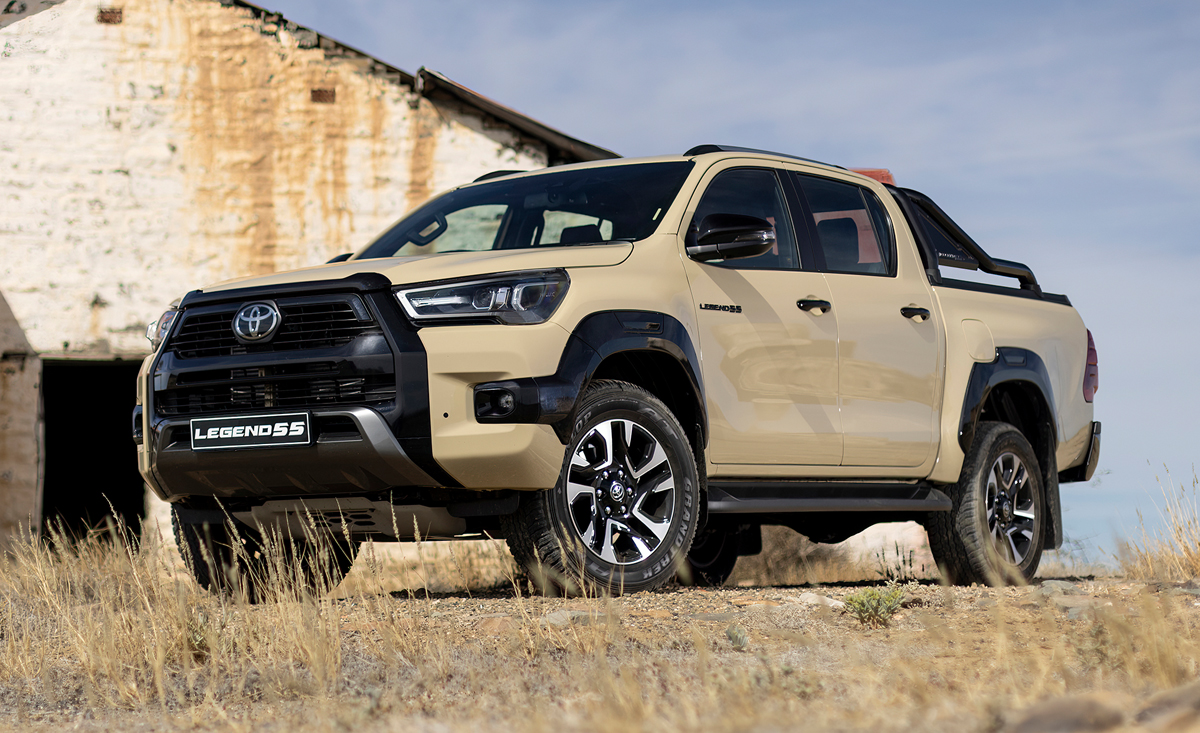
4. Toyota
- Total exports in 2026 – 13,314 units
- Best month – March (5,970 units)
- Key export – Hilux
5. Ford
- Total exports in 2026 – 7,412 units
- Best month – March (4,722 units)
- Key export – Ranger




 Loading ...