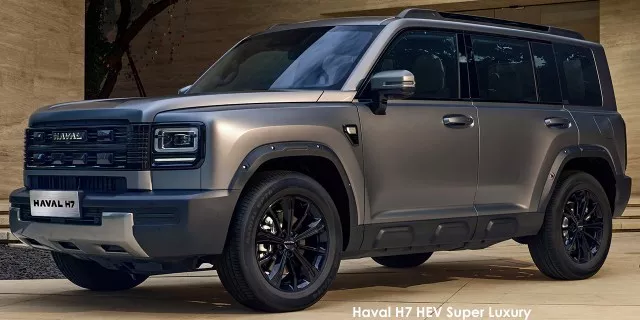
The pre-owned vehicle market in South Africa is experiencing a massive shift, as the influx of newer, low-mileage used Chinese vehicles changes buyer perspective and preference.
This is according to AutoTrader, whose data points toward a more segmented pricing environment, where pressure in some vehicle bands does not necessarily reflect the broader used-car market.
Affordable new vehicles and the growth of Chinese brands are influencing used-vehicle price expectations, and while many would expect this to lead to lower prices, the data proves otherwise.
Between January and April 2026, AutoTrader reported that the average used car prices were higher year-on-year in each of the first four months of the year.
The average sold price of a used vehicle rose from R415,770 to R430,165 in January, from R426,836 to R439,663 in February, from R428,253 to R439,614 in March, and from R430,373 to R433,318 in April.
AutoTrader CEO George Mienie noted that the data highlighted a recalibrating market rather than one in broad pricing decline.
“Pricing pressure in some parts of the market is not the same as a broad decline in used-car values,” he explained.
“The data shows that average used-car prices are still higher year-on-year, but the market is becoming more competitive.”
The influence Chinese brands have had on the used car market has become clear, as these are becoming more sought after, changing price comparisons in popular segments.
In high-volume segments, like SUVs and crossovers, Chinese models are being compared directly with established rivals on price, age, mileage, and specification.
According to AutoTrader, this is changing how buyers assess value in the used-car market, particularly where newer Chinese models are priced below or similarly to non-Chinese alternatives.
This does not necessarily lead to lower consumer spending on used cars, but rather shifts the vehicles these consumers are spending their money on.
Consumer spending has remained steady, but buyers are opting for higher-specced Chinese vehicles over comparable legacy offerings.
The data also highlights that this is not simply a case of Chinese vehicles undercutting the used-car market, but rather a shift in preference.
How Chinese cars are reshaping the pre-owned market

Quite often, used Chinese vehicles are newer and have lower mileage than their established rivals, which means buyers can weigh price against age, mileage, specification, and perceived value.
In April, the average Chinese-brand used vehicle on AutoTrader had a registration year of 2024 and mileage of 28,970km, compared with an average registration year of 2020 and mileage of 72,624km for non-Chinese vehicles.
At the same time, the average Chinese-branded used vehicle price was R382,78, compared with R437,172 for non-Chinese vehicles.
As a result, Mienie explained that this highlights why used car pricing cannot be understood as a single market-wide trend, as the used car market is not one uniform market.
“A nearly-new SUV, an older entry-level hatchback and a high-mileage family car will all respond differently to current market conditions,” he explained.
“Chinese brands are adding more choice in important segments, and that is changing how consumers assess value.”
This increased supply has led to an increased demand and sales activity, as AutoTrader recorded an increase in used Chinese vehicle sales in the first four months of the year.
Sales rose from 6,314 units in the first four months of 2025 to 10,295 units in the same period in 2026.
At the same time, their share of total used-car sales increased from 4.9% to 7.2%, while listings, leads and impressions also rose.
AutoTrader’s data suggests that South Africa’s used-car market is recalibrating rather than retreating, as average prices remain higher year-on-year, demand remains active, and Chinese brands are becoming a more visible part of the pricing conversation.
With more Chinese-branded vehicles entering the pre-owned market, the data suggests they are reshaping price-to-value expectations, rather than weakening the segments or lowering average pricing.



 Loading ...